Ask Wayne Anything, Hybrid Work, Leadership, Surviving Remote Work, Technology, Working Remotely

Who’s Really a Remote Work Expert?

Marisa Eikenberry and Wayne Turmel explore the intricacies of remote work expertise. Wayne, a seasoned professional in the field, shares his candid views on the skepticism surrounding the term "expert," the evolution of remote work expertise, and offers practical advice for discerning true expertise in this domain. The episode is a must-listen for anyone navigating the remote work landscape, seeking to understand the blend of skepticism and wisdom in identifying genuine expertise.

Key Takeaways

1. Understand the History of Remote Work: Recognize that remote work has a long-standing history and is not just a recent trend.
2. Question Titles and Expertise: Be skeptical of self-proclaimed experts, especially those with pretentious titles.
3. Evaluate Credibility: Check the background and track record of a professional claiming remote work expertise.
4. Beware of Zealots: Be cautious of those who are overly zealous about remote work; true expertise is balanced and objective.
5. Look for Practical Solutions: Seek out experts who focus on practical help and realistic approaches to remote work.
6. Utilize Resources: Explore available courses and resources to deepen your understanding of remote work leadership and management.

View Full Transcript

00;00;07;26 - 00;00;19;11
Marisa Eikenberry
Welcome back to the long distance work life, where we help you live, work and thrive in remote and hybrid teams. I'm Marissa Eikenberry, a fellow remote worker. And joining me is my co-host and remote work expert, Wayne Jamal. Hi.

00;00;19;13 - 00;00;29;24
Wayne Turmel
Hello, Marissa. How are you? And hello, everybody listening? It sounds sometimes like I'm ignoring you and I'm not, so. Hello? I'm listening.

00;00;29;27 - 00;00;50;20
Marisa Eikenberry
I'm doing great. And, you know, I'm just so excited about this topic today because I think it's gonna be really interesting for our listeners. May not be something they've really thought about before, but we're going to tackle it today. So every episode I introduce you as a remote work expert and believe it or not, we actually get snarky comments about this on our videos and our clips all the time.

00;00;50;23 - 00;01;08;04
Marisa Eikenberry
How can you be a remote work expert in something that's not been around that long? Now, for the record, and people who have listened us for a while already know that remote work has been around for a very long time. And if you are not aware of this, I would highly encourage you to listen to one of our first episodes titled When Did Remote Work Start, which I will have a link to in the show notes.

00;01;08;06 - 00;01;13;05
Marisa Eikenberry
But Wayne, let's start with the basics. How do you define a remote work expert?

00;01;13;07 - 00;01;40;27
Wayne Turmel
Yeah, and total transparency. I cringe a little every time you introduce me as an expert. I am naturally a cynic and I'm kind of a that try to be a skeptic. And I sometimes go over the line to cynicism. The minute any time somebody introduces themselves as an expert, my radar goes off and the more pretentious the title, the more it goes off.

00;01;41;00 - 00;02;09;21
Wayne Turmel
When I look at somebody's LinkedIn title and they claim to be a guru, alarm bells ring, things go crazy. I just go, no, no, no, no, no, no, no. That and living in a time just in society in general, when expertise is kind of frowned on and nobody is really an expert and, you know, yeah, that's a nice Ph.D. you've got I've got this guy on YouTube who says.

00;02;09;23 - 00;02;10;17
Marisa Eikenberry
Right.

00;02;10;19 - 00;02;23;24
Wayne Turmel
So there is a kind of general skepticism that I share to a degree. That being said, some people know more about other people.

00;02;23;26 - 00;02;25;25
Marisa Eikenberry
Right. That's going to be true for everything.

00;02;25;28 - 00;02;44;17
Wayne Turmel
Right. And if that is the case, then I suppose I am on the expert side of the spectrum. This is a topic that I started writing about in 2005 or six.

00;02;44;20 - 00;02;47;13
Marisa Eikenberry
So that's when I tell you I was a freshman in high school.

00;02;47;15 - 00;03;13;13
Wayne Turmel
And that's when I pulled the dagger out of my heart and tried to continue missing a beat. You know, I started investigating this thing called WebEx. And what did it mean back in 2005, 2006? And so you know, I have written, depending on how you counted, six books and multiple chapters and magazine articles and been doing the research and all of that stuff.

00;03;13;13 - 00;03;36;21
Wayne Turmel
So if I have to defend my status as somebody who knows more about this, then the defense rests. Your Honor. Right. That being said, that being said, it's a constantly evolving field. And this is the other thing is, as I tell people, I do all I read the research and follow the stuff and listen to a lot of nonsense.

00;03;36;25 - 00;04;03;06
Wayne Turmel
So you don't have to. And I run it through whatever filter I can to kind of separate the wheat from the chaff and present in as logical and and pertaining and kind of easily digested as possible, presented to people for them to then make their own decisions with. So, you know, that's as defensive as I get about the title.

00;04;03;08 - 00;04;10;11
Wayne Turmel
That being said, it goes back to anybody. Anybody who calls himself a guru probably isn't.

00;04;10;13 - 00;04;33;04
Marisa Eikenberry
So let's get into that a little bit. Like we've established. You've been doing this for a really long time. You have a bunch of expertise. You know what you're talking about, expert title or not. But how can how can your layperson, your normal person, determine whether somebody is a true remote work expert like yourself or they just started doing this in March of 2020?

00;04;33;07 - 00;04;36;25
Wayne Turmel
Well, you know, just go on their LinkedIn profile.

00;04;36;27 - 00;04;37;12
Marisa Eikenberry
That's true.

00;04;37;16 - 00;05;04;20
Wayne Turmel
Seriously, I am serious. Is a heart attack go under LinkedIn profile and see what their track record. What if they were a manager at Arby's March of 2020 and then suddenly they were an expert in remote work? A little skepticism may be appropriate. So, you know, what is their experience? What is their background? What are we doing? It doesn't take much to check that.

00;05;04;23 - 00;05;06;11
Marisa Eikenberry
Yeah.

00;05;06;14 - 00;05;09;28
Wayne Turmel
The other thing and this one is more controversial.

00;05;10;00 - 00;05;10;12
Marisa Eikenberry
I love it.

00;05;10;12 - 00;05;20;10
Wayne Turmel
And I have friends who are going to hate me. The more of a zealot they are, the less I take them at their word.

00;05;20;12 - 00;05;21;16
Marisa Eikenberry
Okay, so why is that?

00;05;21;18 - 00;05;47;12
Wayne Turmel
Here's the thing. And we often, Kevin and I often get lumped into it when they give lists of people who are thinkers about remote work. We're often on the list, and we are not the most zealous specializing. The future is remote work and death to the office and you know, all of that stuff. That's not where we are.

00;05;47;12 - 00;06;16;08
Wayne Turmel
We think there are incredible advantages to remote work. We think that the trend is certainly moving that way. But the people who are zealots, the people who say that there is no use whatsoever, there is no need for people to ever get together physically. All of your social, biological, nourishing needs can be met through through Zoom. I tend to look at that skeptically.

00;06;16;11 - 00;06;17;01
Marisa Eikenberry
That makes sense.

00;06;17;04 - 00;06;40;22
Wayne Turmel
Our approach is these things are happening. They are certainly trends. We need to be aware of it. And like all technology and all work trends, where does it make sense for my company, for the things that I do, for the work I choose to do? Where does it make sense and where can I leverage it, and where are the pitfalls and things that you need to watch out for?

00;06;40;22 - 00;07;02;28
Wayne Turmel
And that's where I like to spend my time. I have no interest in helping Silicon Valley companies get their next new thing launched right. I am a real skeptic about technology, and so I am not an early adopter. I am not first one over the fence, and I don't think most people should be.

00;07;03;00 - 00;07;06;29
Marisa Eikenberry
Right. We've talked about this actually in our episode not that long ago.

00;07;07;00 - 00;07;34;23
Wayne Turmel
Yeah. So I think that and any time you are an evangelist or a zealot for something, your objectivity goes out the window. Yeah, you've gone in with a good vision of the truth, and your job now is to defend that as radically as possible. And so you tend to weed out information that doesn't fit your paradigm. That's in fact.

00;07;34;26 - 00;08;02;03
Wayne Turmel
And the fact that I use the word paradigm makes me cringe, but it's true. Yeah. And so I try to be objective. And at the Kevin Ikenberry group, our focus is not on changing the world in terms of upending business models. My job personally, is to help the individual person get through the workday with some shred of sanity and dignity.

00;08;02;05 - 00;08;03;21
Marisa Eikenberry
Right. Right. We just want to.

00;08;03;21 - 00;08;27;22
Wayne Turmel
And if and if remote work helps you achieve that and you're a better person, here's how we can help. And if you have to go into the office every day, here are some things that you might want to think about that might save your sanity and your dignity. So I understand, you know, the skepticism of people online who go remote work expert.

00;08;27;25 - 00;08;37;22
Wayne Turmel
You know, anybody can call themselves that. Well, yeah, they can. And I challenge you as listeners to the dose of skepticism.

00;08;37;25 - 00;08;56;24
Marisa Eikenberry
So, I mean, there's lots of people that are getting the titles, some of which are given to them and some of which are they're trying to make themselves, I guess, is the point we're trying to make. But so but specifically, going back to you, how has your role as a remote work expert evolved over time, especially in the last four years?

00;08;56;24 - 00;08;58;22
Marisa Eikenberry
I mean, a lot of stuff has changed.

00;08;58;24 - 00;09;22;24
Wayne Turmel
Yeah, I mean, if I go back to when I first started thinking about this, right, was June 26, I was teaching traditional presentation skills and I remembered the moment somebody said to me, Wayne, this standing in front of the room stuff is great, but I only talk to real people like twice a year. I work remotely and there's this thing called WebEx, and that's what I'm using.

00;09;22;24 - 00;09;55;10
Wayne Turmel
And I started investigating at the time there were 120 little plankton level web meetings and some WebEx was the Mack daddy of them all. But I became fascinated. I knew the trend was going to continue, and so I became fascinated in that. I started a company that taught people how to do webinars and how to present online, and I got asked more and more about the day to day work, not just the presentations, but how do you run a team and how do you do that?

00;09;55;13 - 00;10;20;05
Wayne Turmel
Kevin and I had known each other for a long time. We created a remote leadership institute, so I had gone from almost strictly presentation and communication skills to teams and leading them in a remote environment. And then the last year and some people have noticed this, some people haven't. The Remote Leadership Institute brand after COVID kind of went away.

00;10;20;06 - 00;10;42;29
Wayne Turmel
It still exists, but it's inside the greater Kevin Eikenberry group because the world has changed the the world of leadership, remote leadership. Most people now no longer look at it as a separate thing. It's part of the job. If you are above first line supervisor, odds are you're going to have at least one member of your team who doesn't work where you do.

00;10;43;04 - 00;10;44;13
Marisa Eikenberry
Yeah, and you have to prepare for that.

00;10;44;16 - 00;11;11;02
Wayne Turmel
And you have to be able to deal with that and include them in the team. And so the role of remote work in our getting our jobs done has morph and hope. And we like to believe that this is true. We have kind of kept up with that. And again, I have read more nonsense and taken part in more free samples of software and done all that stuff than any human being ought to.

00;11;11;04 - 00;11;59;04
Wayne Turmel
You probably can tell from my white beard and white hair, but I am 42 years old. No, look what it has done to me. So, you know, my has changed. And I think most human beings, if they are wise, they are open to changing as the world changes. I think that if you look at what Kevin and I teach in long distance leader London's team, one year team mate, all of our blogs, all of our courses, it's that while things are changing and we need to be aware of and adjust to and be mindful of the changes that come to us, the core of leading people, of getting work done, of having a leadership mindset,

00;11;59;06 - 00;12;12;10
Wayne Turmel
is really evergreen and it's the details and nuances that change. But those changes and nuances can drive you mad if you are unaware of them and can't deal with them.

00;12;12;12 - 00;12;30;04
Marisa Eikenberry
Right? So I guess, you know, for our leaders and our managers that are listening, you know, what are some common challenges that remote work experts actually help businesses employees overcome? I know you've talked about a little bit of them as we've gone, but like really specifically, like what? What do you help with? What do we think?

00;12;30;09 - 00;13;03;17
Wayne Turmel
Like the big thing, I think is helping us understand how being remote changes us, how we interact with each other. There are a few things. One is that we were raised from birth as face to face, nose to nose, visual in contact, communicating beings. That is our natural default. When we are not doing that, we have to rely on our higher functions.

00;13;03;20 - 00;13;30;12
Wayne Turmel
We have to rely on trust. We have to communicate quite effectively so that I don't have to stand at your desk and watch you do your job. Right. That's something that should be happening anyway. But with the rise of remote and hybrid work, the ability to micromanage the idea of command and control, which has been evaporating as we've evolved as a species, continues to do that.

00;13;30;12 - 00;13;59;11
Wayne Turmel
Well, not everybody's comfortable with that. Command and control is a very lizard brain, very natural response, right to pressure and a task and and all of that stuff. Remote work, hybrid work is a natural extension of expanding that approach in our courses and in our Long Distance Leader series, The first module, and we do this as a standalone course as well.

00;13;59;12 - 00;14;27;16
Wayne Turmel
Shameless plug is how leaders create and manage remote and hybrid teams. And really we introduce three models that are crucial to that mindset. The first is why does this feel so weird? And we have what we call the remote leadership, the three year model. There's a trust model. How do we build trust if something is happening? You know, can we apply this model and figure out what the problem is?

00;14;27;18 - 00;15;04;10
Wayne Turmel
And then the third one is choosing the right technology for the right communication task, which is huge in remote and hybrid work. If you are sending an email rather, or a text, rather than having the conversations you need to have, that is the root cause of a lot of problems, right? And I think that's the work that we do most effectively is we get people to say, if you have a leadership mindset, if you want to have a leadership mindset and you should, what are the nuances?

00;15;04;10 - 00;15;25;05
Wayne Turmel
What are the changes? What are the circumstances that require adjustments to that? And I think at the end of the day, that's not what makes us a zealot because not all work can or should be done remotely. Not all organizations function best that way. There are plenty who do if they do. This is how you need to approach it.

00;15;25;11 - 00;15;50;14
Wayne Turmel
If you are going to be hybrid. These are the nuances that you need to take into consideration. And, you know, I think that's what we bring to the party. I think if there's an expertise to it, that's what it is. So I hope that answered your question and I hope it answered the question for the listeners, because I know we we seldom talk about what we actually do, what our work is.

00;15;50;16 - 00;15;56;27
Wayne Turmel
We try to keep it more general and but specifically, sometimes you got to know that stuff.

00;15;57;03 - 00;16;15;08
Marisa Eikenberry
Right. Yeah. We so classes, we have to pay the bills, right. I have my one last question before we end the show here. But what advice would you give to leaders of managers who would like to better understand how to leverage this kind of expertise of remote work professionals such as yourself and us? I think at Mike Berger.

00;16;15;10 - 00;16;33;18
Wayne Turmel
Yeah, and there's a lot of stuff out there and a lot of it's very good. There are a lot of very talented people. There are people we have on this show as guests who are wonderful people and they should make a living and you should hire them if that's what you want to do. I think it's like anything else, understand the first principles.

00;16;33;24 - 00;17;09;09
Wayne Turmel
What does your organization, what is the work that needs to be done? And you are the best person to know that, right? But knowing that doesn't mean that you are 100% comfortable with what's next. Some people have no idea, and they're kind of paralyzed. Some people think they know, but some validation would be nice to make sure that we're on the right track and other people are out on that path and maybe it's not going the way they want it to.

00;17;09;09 - 00;17;13;24
Wayne Turmel
And I think those are the circumstances where you bring in other people.

00;17;13;28 - 00;17;31;02
Marisa Eikenberry
Yeah, that totally makes sense. And Wayne, I know earlier you were talking about our Long Distance Leadership series. And for any of our listeners, listeners who are interested in that, you can go to Kevin Eikenberry dot com slash LDL s to find out more about those classes and what's coming up and.

00;17;31;02 - 00;17;41;20
Wayne Turmel
Absolutely and those class football as you know an open enrollment series for individuals or we're happy to talk to you about bringing it in-house to your company.

00;17;41;23 - 00;17;58;17
Marisa Eikenberry
And listeners. Thank you so much for listening to the long distance work life for shownotes transcripts and other resources. Make sure to visit long distance work life dot com. If you haven't yet, subscribe to the show so you don't miss any future episodes. And while you're there, we sure like and review This helps us know what you love about our show.

00;17;58;20 - 00;18;12;13
Marisa Eikenberry
Feel free to contact us via LinkedIn or email with the links in our show notes and let us know you listen to this episode or even suggest a topic for one night to tackle in a future episode. We'd love to hear from you. Thanks for joining us. And as Wayne like to say, don't always get too down.


Timestamps

00:00 Introduction
00:29 Debating the Term 'Expert'
01:13 Wayne's Perspective on Expertise
05:10 Remote Work Zealots and Objectivity
06:17 Challenges and Solutions in Remote Work
08:58 Wayne's Remote Work Journey
12:30 Addressing Common Remote Work Challenges
17:31 Concluding Thoughts

Related Episodes

Additional Resources

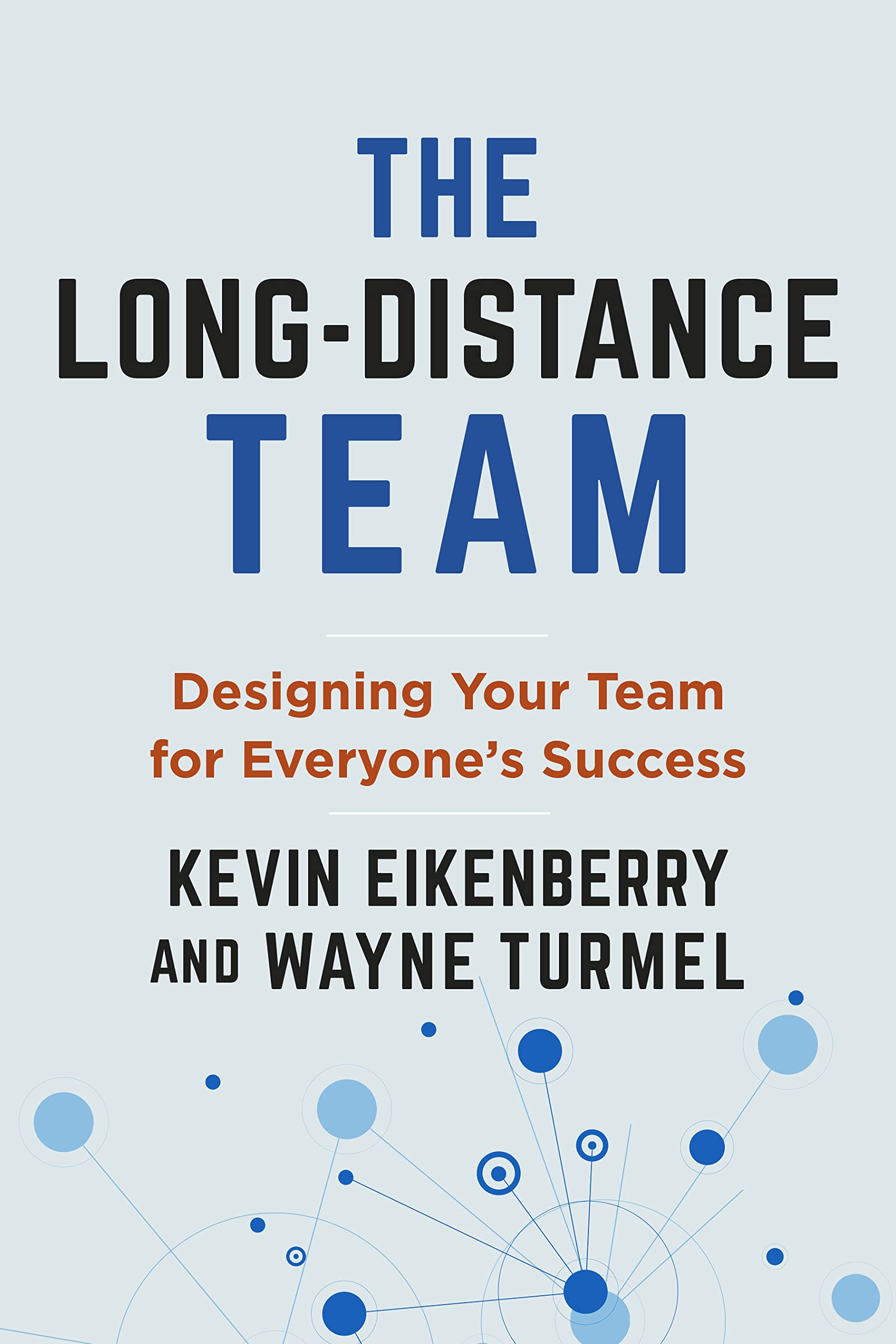
Order The Long-Distance Team

Remote leadership experts, Kevin Eikenberry and Wayne Turmel, help leaders navigate the new world of remote and hybrid teams to design the culture they desire for their teams and organizations in their new book!
Read More
Guests, Leadership, Working Remotely

Conquering Imposter Syndrome on Remote Teams with Rico Nasol

Wayne Turmel explores the challenging world of remote and hybrid work leadership, focusing on imposter syndrome and its impact on leaders. Joined by guest Rico Nasol, a seasoned consultant and coach, the discussion delves into how imposter syndrome manifests, particularly in remote work settings, and strategies for overcoming it. Nasol shares his personal experiences and insights from his time at Netflix, shedding light on leadership development, the importance of understanding team dynamics in a remote environment, and the significance of self-talk in shaping a leader's confidence and effectiveness.

Key Takeaways

1. Understanding Imposter Syndrome: Recognize that imposter syndrome is common, especially in remote settings. It involves feelings of self-doubt and a belief that one's achievements are just luck. Acknowledge these feelings when they arise and remember that they are a common psychological phenomenon.
2. Combatting Isolation in Remote Work: In remote work, the absence of real-time feedback can intensify feelings of imposter syndrome. Counteract this by establishing regular check-ins and feedback sessions with colleagues or mentors to validate your work and progress.
3. Positive Self-Talk is Key: Develop a habit of positive self-talk. Remind yourself of your accomplishments and skills. Remember, the way you talk to yourself significantly impacts your self-confidence and perception.
4. Leadership and Imposter Syndrome: New leaders often face imposter syndrome due to a lack of formal leadership training. Focus on developing leadership skills actively and seek mentorship or professional development opportunities.
5. Learning from Rico’s Netflix Experience: Understand that feeling like an imposter can occur in any environment, even in high-performance cultures like Netflix. Realize that everyone has unique strengths and that no one is inherently smarter than others.
6. Managing Remote Teams Effectively: For remote team leaders, balance personal and professional goal-setting for your team members. This approach fosters a well-rounded team dynamic and supports individual growth.
7. Hybrid Team Dynamics: In a hybrid work environment, don't underestimate the power of team building. Focus on collaborative, focused work during in-person sessions to maximize creativity and team cohesion.

View Full Transcript

00;00;08;19 - 00;00;38;18
Wayne Turmel
Hi, everybody. Welcome to the Long Distance Work Life podcast, the show where we are really determined to help you thrive, survive, get through, keep the weasels at bay in this crazy world of remote and hybrid work. My name is Wayne Turmel. I'm with Kevin Eikenberry Group. This is a Marisa-less episode. I don't want to say Marisa free because that's sounds like she's an undesirable thing and she's not.

00;00;38;20 - 00;01;03;08
Wayne Turmel
But when we don't have Marisa with us, that means that we have an interesting guest, which we do today. We are going to talk imposter syndrome and getting out of your own head and all that good stuff with Rico and Rico is in the Las Vegas area with me, which is kind of cool. And Rico, how are you, man?

00;01;03;10 - 00;01;07;13
Rico Nasol
I'm good. I'm good. Good to talk to you, Wayne. Thanks for having me.

00;01;07;15 - 00;01;33;22
Wayne Turmel
Thank you for being here. So you are a consultant and a coach, and we will have links to your organization and all that good stuff. But one of the things that you and I have talked about offline, and I think this is really important for especially newer leaders, is this concept of imposter syndrome and not believing that you are good enough.

00;01;33;25 - 00;01;39;11
Wayne Turmel
Can you give us that kind of working definition of imposter syndrome just to kind of kick us off?

00;01;39;14 - 00;02;05;01
Rico Nasol
Yeah. So imposter syndrome, how it showed up for me and I think how it shows up for a lot of people is you don't really believe that you have talent and that potentially you are lucky and that at some point in time someone is going to find out you're not as smart as they think you are because you yourself don't feel like you have the confidence or the intelligence or the smarts to have achieved the things that you have.

00;02;05;04 - 00;02;23;21
Rico Nasol
And the thing that drives that imposter syndrome are the stories that we tell ourselves, whether they're true or not true. It's just a running narrative that goes on in our heads. And what happened with the pandemic in remote life. It's exacerbated by the missing of real time feedback. Right.

00;02;23;21 - 00;02;33;28
Wayne Turmel
So, okay, so tell me what you mean by that. By real time feedback, because some of us have spent our entire lives coping with this nonsense.

00;02;34;00 - 00;03;04;03
Rico Nasol
Yeah, great question. And I had to get used to it because I was a mom before the pandemic, mostly in person leader except for my global teams which were distributed. But since the pandemic, when that camera turns off, you're kind of left alone with the thoughts that you have. So if you don't think you if you don't have the confidence, you will continue to reinforce that in your head as opposed to when I was in in person and I did a presentation right when that presentation was over and I walked out, I'd have a colleague, I would go, Hey, how was that?

00;03;04;03 - 00;03;25;18
Rico Nasol
Did that go okay? Was I did I sound too fast? Did I answer the question like you get real time feedback from people that were in there just naturally walking to your next meeting. And in this zoom environment or this remote environment, you don't get that benefit unless you explicitly and this is what I advise people to explicitly ask for it, whether it's through Slack or chat or some sort of mechanism after the fact.

00;03;25;18 - 00;03;51;02
Wayne Turmel
Yeah, that's really important because one of the blessings, of course, of remote work is that you don't have a million people around you, but then you are left with the voice in your head. And if the voice in your head is unkind and I'm really not being facetious about this, you know, I always said I would fire any manager who talked to an employee the way I talked to myself.

00;03;51;05 - 00;03;55;00
Wayne Turmel
Absolutely. Our self-talk is so, so critical.

00;03;55;00 - 00;04;14;26
Rico Nasol
Yeah. And that's one of the things that so I coach leaders and almost the problem solving and it'll parlay into this is I think we've all had here's the story we've all had those jobs, whether it's in high school or college, you kind of you don't think a lot of it, but you end up being good at it and then they promote you to like the shift lead or something.

00;04;14;28 - 00;04;37;29
Rico Nasol
For me, I worked at a theme park and I got promoted to the warehouse lead and nobody taught me how to be a leader. They taught me about labor laws, they taught me about harassment, but nobody ever taught me how to lead people. And unfortunately, what I what happened to me in high school and college, I see happen in the world today where people, leaders, whether they intentional or not, assume, hey, this person is really good at the tactician.

00;04;37;29 - 00;04;54;29
Rico Nasol
Part of the job, so they must be a good leader and they never develop them in the way that leaders need to be developed. So in that way, when you're trying to pretend to be something that maybe you were never trained to do, that's where I come in. And a lot of the folks that I work with are either new leaders or executives.

00;04;55;05 - 00;05;13;27
Rico Nasol
They didn't have proper training. They don't know what they don't know, and they just have this low confidence and this imposter syndrome that, like the people who promoted me, think I'm good at what I do. I don't think I'm not good at what I do, and I don't know when they're going to find me out. So I'm either going to fake it till I make it or I need to get help.

00;05;13;29 - 00;05;14;17
Rico Nasol
And that's where.

00;05;14;17 - 00;05;42;22
Wayne Turmel
You find Do you find that that is. Here's the dirty little secret about our business, right? Is that the people who seek out learning, the people who want to get better at the job and are proactive of about doing that, are probably not the ones who need it the most. Because if they care enough to want to be good at it, right, they probably got some chops because wanting to do the job is a big piece of the deal.

00;05;42;24 - 00;06;04;24
Rico Nasol
Yeah, unfortunately that that is true. But what I do see is I put myself out there is people start to see themselves in me. So there's somebody that I worked with the he I don't want to say he was reluctant, but it was took him a long time to want to work with me because he didn't see anyone around him that looked like him.

00;06;04;26 - 00;06;26;22
Rico Nasol
Right. And so what I'm trying to do here and I think what we try to do with the work that we do is expose people, that there's more people like us out there, there's more ways to be successful. And nobody goes out and says, I want to be a toxic leader. Right? Nobody does that intentionally. But what happens is they have somebody who was never trained to train them and then they train their leaders the same way, or lack of training.

00;06;26;25 - 00;06;42;19
Rico Nasol
Right. And so you're right where, you know, the people who want to be better at it, I think are the ones that go after it. But I think it also takes leaders looking inward and saying like, hey, maybe I do need to get better than I can get the skills to help these folks get better. So I think it's a little bit of both.

00;06;42;19 - 00;06;47;28
Rico Nasol
You get people that want to be better and hopefully they will want to help the people that report to them.

00;06;48;00 - 00;07;08;10
Wayne Turmel
Now, one of the things, the way we connected is you heard the interview you have with Janice Chalker. Yes. On being a introvert and a remote leader, and Marisa will link to that in our show notes. For those of you who are interested, you're an introvert. Tell me a little bit about your journey because you've worked at some big oil companies.

00;07;08;13 - 00;07;17;03
Rico Nasol
Yeah, I so for me, introversion is not like shyness because I'm not shy, right? So, you know, that's a really.

00;07;17;03 - 00;07;21;22
Wayne Turmel
Important distinction right there that we need to put a pin in.

00;07;21;25 - 00;07;38;05
Rico Nasol
Yeah, and I say that because in certain moments I can be shy, but, you know, like if I'm comfortable, you know, I can have a conversation and things like that. But where my introversion shows up is like, I'm not the loudest person in the room. It's not because I'm not shy, it's just not my nature, right? I'm analytical.

00;07;38;05 - 00;08;08;20
Rico Nasol
I need time to sit with things. And then after big presentations to like four or 500 people, I cherish the time to myself just to recharge, you know, just to get my batteries back. I know some people I worked with that Netflix and why this was I had so much imposter syndrome in the beginning because you have this tape type A personality there where they're the biggest voices in the room and after like a 500 person presentation, they're like excited, mingling everywhere and like talking to everybody in the room and answering every single question.

00;08;08;23 - 00;08;29;21
Wayne Turmel
So an organization like Netflix is really interesting, and maybe you can check my assumption here because Netflix is what I call show business adjacent. It's full of people who want to be in show business and want to be in the industry. And at its core, it's a data and and analysis company.

00;08;29;23 - 00;08;47;28
Rico Nasol
Yet it's interesting because I was there for almost nine years and when I first started we were just an aggregator. So we weren't much of an entertainment company. We used to call ourselves a tech company that happens to be an entertainment. And then towards the last maybe four years of my career is when we had more originals, more productions.

00;08;48;05 - 00;09;10;26
Rico Nasol
We were an entertainment company backed by tech, so I was there for that shift. And the culture I started in was very Silicon Valley, like everybody is a Type A, everybody's high performing all those things. And so when I started there, they recruited me. I felt so much like an imposter, like I'm not as smart as these people think they are.

00;09;11;01 - 00;09;31;23
Rico Nasol
And one thing that I have to coach out of people is nobody is smarter than anybody else. They just have more experience in certain things. But what I would tell myself is Netflix. When I first got there, everybody sitting across from me is the smartest person in their field, so why and why am I here? But nobody said that that was just my negative self-talk, right?

00;09;31;24 - 00;09;42;17
Rico Nasol
And it's my fear of being found out that made me speak to myself that way. And it's almost like you said, if I talk to anyone else the way that I talk to myself, it'd be terrible.

00;09;42;20 - 00;10;05;29
Wayne Turmel
I would be in a jar all day. Yeah, to tell you the truth. Now, something about Netflix that I read not too long ago, which is kind of fascinating, is there's kind of a famous PowerPoint presentation, if you can call it, if you can call any PowerPoint presentation, famous that the CEO of Netflix was trying to explain the culture.

00;10;06;07 - 00;10;13;27
Wayne Turmel
And he came up with something called the Keeper rule that you work kind of under that mindset, right?

00;10;13;29 - 00;10;35;19
Rico Nasol
Yeah, I did. And it's interesting because this is probably one of the biggest things I came across and had a debunk. And if you go to Glassdoor, you'll probably see all kinds of reviews about keeper test and culture of fear. But it's the idea that if you built this team again, would you keep this person right if you had to build a team over?

00;10;35;21 - 00;10;48;24
Rico Nasol
And so the way it reads, it seems like, you know, you're just constantly every week what I keep this person, I keep that person. And in actuality, that's not how it played out, at least how it played on my team, because that would be a very toxic environment.

00;10;49;01 - 00;11;10;23
Wayne Turmel
Yeah. What is it like? Because there are lots of it was like Jack Welch came up with, well, you always fire your bottom 10%, which is fine for a couple of years when you have people who are underperform forming. But once you have a performing team, it turns really toxic really fast because everybody's trying to make sure they're not in the bottom ten.

00;11;10;23 - 00;11;21;20
Wayne Turmel
Right. So all these good ideas very often get used for evil instead of good. So how did you apply it and how do you not make that toxic?

00;11;21;22 - 00;11;43;08
Rico Nasol
Yeah. So on that point, you had the lowest churn rate and I had 235 people organization and over my nine years had like a 3% churn and then kind of encountered voluntary set a really low churn rate for my team. But so how I thought about it was maybe during annual review time, maybe once or twice a year and it wasn't like every week or even month.

00;11;43;11 - 00;12;00;22
Rico Nasol
So I would think, okay, if I because tech moves fast. So Netflix, we are always changing and evolving, building new tools and new skill sets. So I would look at my team and say, Hey, if I had to build this team, knowing what I know now, would I keep the folks that I have? And for me, it wasn't an exercise in letting go.

00;12;00;24 - 00;12;19;18
Rico Nasol
People is more of an exercise if I have the right people in the right roles. So maybe at this point in time where somebody was a motion graphics designer, now they need to move into like a UX field where they can actually do animations on the product. So it wasn't a who can it who do I need to let go?

00;12;19;20 - 00;12;27;04
Rico Nasol
It doesn't fit anymore. It's how can I be a better leader and find better fits for an evolving company in an evolving organization.

00;12;27;06 - 00;12;50;03
Wayne Turmel
One more time for the people in the back because that's so important. And also I would imagine that a piece of that is, you know, this person was a functioning member of the team and and they've been good and the team has changed. How do we get them to that new role, Right? How do we develop them? How do we train them?

00;12;50;03 - 00;12;51;27
Wayne Turmel
What do they need?

00;12;52;00 - 00;13;16;16
Rico Nasol
Right. And I can give you a story, an example, perfect example where I essentially automated a team. I led out of a job. And so it was a new AI technology, a computer vision technology. We were like trying to pick images, right? And we first had humans doing it and then eventually got to the point where they were so good that we could have computer vision do it, and we needed just less people.

00;13;16;16 - 00;13;41;06
Rico Nasol
We needed people just to verify and select. And most people would say, okay, so this team's job is eliminated. Let's just get rid of that team. Well, we actually did is, hey, they have value because they know the workflows they know all these other things, and they were big enough to work towards eliminating their own roles. So that told us that they had so much more value because the way they might in their minds thought the way they were strategic.

00;13;41;14 - 00;13;57;03
Rico Nasol
And so we actually we found roles, new roles on new teams for all of them in ways that they could find more automations. So perfect example where most companies would reorganize and let go. We reorganized and found better fits for their future.

00;13;57;07 - 00;14;19;17
Wayne Turmel
So in the little bit of time that we have remaining Rico, you know, you have, as you said, you had international teams, you had give us a couple of your best practices and what you coach your clients to do, first of all, for totally remote teams and then for hybrid teams.

00;14;19;19 - 00;14;38;17
Rico Nasol
Yeah. So for we'll start with totally remote and I'll talk about things how I, how I developed my teams and my leaders and I'll talk about the things I do for myself, for my imposter syndrome. So some of the things I do with my teams and my leaders is it's not nothing new, but I have everyone come up with three personal and professional goals.

00;14;38;17 - 00;15;09;27
Rico Nasol
It needs to be balanced. So the personal goals is so we can check in on each other. On like if you want to travel more, if you want to get into more cooking, things like that, and we have something to anchor our one on ones into. And I also provide opportunities and for real time feedback. So like this story, I said, if I have a director of mine who's presenting immediately after all, like, Hey, you want to talk about how it went or, you know, like, here's some things that went really well or I'll send I'll just send feedback in to know, Hey, this, this part really went really well.

00;15;09;27 - 00;15;29;15
Rico Nasol
I loved how you did this. If there's anything to talk about, it'd be like this. So when they are in a vacuum with their own thoughts, they have my feedback and they have my thoughts and my reassurance that they did a good job, that whatever negative self-talk they have is not valid. So that's when.

00;15;29;22 - 00;15;51;10
Wayne Turmel
I also want to tell you something you said because you said you get them to give you three personal goals and three professional goals and a lot of managers do that. It's kind of rote. You do it at the beginning of the year and then they never pay any more or attention to those personal things, right? It's like, okay, I did that check, check, check.

00;15;51;12 - 00;15;54;02
Wayne Turmel
But our one on ones are going to be about work.

00;15;54;04 - 00;16;15;07
Rico Nasol
Yeah, I mean, it's really important. I can tell you right now, even though I'm not there anymore, most of my team is still there. I can go back to my team Annapolis Recruiter studio and tell you who their kids are, who they're seeing, who they're married to, like, what their goals are, all those things. Because that's the thing that's important with leaders is you make to make everyone around you better.

00;16;15;07 - 00;16;35;10
Rico Nasol
You have to know who they are, right? You can't just make everyone about everyone better. In general terms, you need to really get to know them as people because people some people are type A, some people are type B, some people show up differently than others. And especially in this remote world, if you don't understand how each person shows up best, you start to create exclusive environments.

00;16;35;13 - 00;16;55;09
Rico Nasol
I have folks on my team who show up best in my comments in a Google doc and are deathly afraid of speaking in public, but they show up really well in comments and in in documents. So if I just relied on, I need to hear you to see you, I'm going to exclude very high level contributors on my team.

00;16;55;09 - 00;17;02;24
Wayne Turmel
Wow. Real quick, hybrid teams, anything specifically to that environment?

00;17;02;26 - 00;17;29;17
Rico Nasol
Yeah. So hybrid teams don't don't underestimate the power of team building. I did a lot when we were in person and just getting in a room and whiteboarding. That's the thing I think is most important when you get to be in person is not just sitting in a room. I think it's getting together and actually working on something tangible together and really get the creative juices running and that's when you get the most creativity and engagement from your folks.

00;17;29;19 - 00;17;55;06
Wayne Turmel
Yeah, I think that's such a key point. And again, we're just this is me underlining verbally, but this notion that being together in the same room doesn't create camaraderie or teamwork or innovation. It's focused work. And if some of the people are in the room and some of them aren't, it's still that focused work that's going to do the job.

00;17;55;09 - 00;17;57;20
Rico Nasol
Exactly. Exactly.

00;17;57;23 - 00;18;27;24
Wayne Turmel
Rico, I am sorry to say that is the end of our times. So much good stuff. Rico is in Henderson, Nevada. He is. He has his own consulting company, Rico Nassau Coaching and Consulting. We will have links to that in our in our show notes. Marisa will do her usual terrific job of that. Niko, I'm going to say goodbye to you momentarily while I close up the show.

00;18;28;01 - 00;18;57;25
Wayne Turmel
That is the long distance work life for this week. If you enjoyed it, please, please, please, like subscribe. You know how podcasts work. We beg for your feedback, but we actually want your feedback. So if you have questions, comments, vicious personal attacks, if you have a pet peeve or a topic that you'd like Marisa and I to tackle or ideas for a guest, please reach out to us on LinkedIn or our names.

00;18;57;25 - 00;19;27;22
Wayne Turmel
Wayne at Kevin Eikenberry dot com Marisa Kevin Eikenberry dot com. If you are trying to reorganize your team, thinking about what your new work should look like, we urge you to check out our new book, The Long-Distance Team Designing Your Team for Everyone's Success. That's it. I hope you're enjoying the show. We really love bringing you a mix of kind of thoughtful trends stuff and tactical practical work.

00;19;27;24 - 00;19;45;04
Wayne Turmel
Very, very smart people like RICO. We're sure that you enjoy it. Check out all our past episodes. You can do that at long distance work life dot com as well. And for now, next week we'll be back with Marisa, my name is Wayne Trammell. Don't let the weasels get you down. We'll see you next episode.


Featured Guest

Rico Nasol

Name: Rico Nasol

Bio: Rico Nasol is an accomplished executive and leadership coach with over twenty years of global experience, including key roles at Zappos and spearheading the Netflix Creative Studio. Known for his expertise in executive coaching, content optimization, and innovative technology, including machine learning and computer vision, Rico is dedicated to redefining leadership and fostering environments where balance and engagement thrive, empowering individuals to unlock their full potential. His career is marked by a strong focus on team building, strategic planning, and driving engagement across various domains, from creative direction to product management and user experience.


Timestamps

00:00 Introduction
01:07 Exploring the Concept and Personal Experience of Imposter Syndrome
02:05 Impact of Remote Work on Imposter Syndrome and the Role of Feedback
03:51 Importance of Self-Talk in Leadership
04:55 Challenges Faced by New Leaders and Transition to Management Roles
07:08 Rico Nasol's Personal Journey and Experience with Introversion at Netflix
14:19 Best Practices for Managing Remote Teams
17:02 Approaches to Leading Hybrid Teams and Team Building Importance
18:27 Closing

Related Episodes

Additional Resources

Order The Long-Distance Team

Remote leadership experts, Kevin Eikenberry and Wayne Turmel, help leaders navigate the new world of remote and hybrid teams to design the culture they desire for their teams and organizations in their new book!

Read More
Navigating Office Returns: Harmony or Hostage Negotiation? Long-Distance Worklife Podcast
Ask Wayne Anything, Hybrid Work, Leadership

Navigating Office Returns: Harmony or Hostage Negotiation?

Marisa Eikenberry and Wayne Turmel navigate the evolving 'Return to Office' landscape. They discuss the challenges and realities of shifting from remote to hybrid work, focusing on employer-employee negotiations and the impact on productivity and employee engagement. Wayne sheds light on the varied experiences of returning to the office, touching on the concept of 'malicious compliance' and forecasting the future of hybrid work environments.

Key Takeaways

1. Adapt to Varied Office Experiences: Be flexible and adaptable in response to the diverse return-to-office experiences. Adjust your work routine to suit the new environment.
2. Negotiate Work Arrangements: Take an active role in negotiating your work arrangements. Discuss with your employer to find a balance between remote and in-office work that aligns with your productivity needs.
3. Evaluate Productivity and Engagement: Regularly assess how the shift in work environment affects your productivity and engagement. If necessary, seek adjustments to maintain your effectiveness.
4. Respond Thoughtfully to Remote Work Policies: If faced with restrictive remote work policies, consider how to respond constructively. Avoid malicious compliance by communicating your concerns and suggesting feasible solutions.
5. Prepare for the Evolution of Hybrid Work: Stay informed about the shifting landscape of hybrid work. Plan and strategize for the changes this might bring to your role and career.

View Full Transcript

00;00;07;28 - 00;00;18;15
Marisa Eikenberry
Welcome back to the Long-Distance Work Life. We help you lead, work and thrive in remote and hybrid teams. I'm Marissa Eikenberry, a fellow remote worker. And joining me is my co-host and remote work expert Wayne Turmel. Hi.

00;00;18;18 - 00;00;20;26
Wayne Turmel
Hello. That would be me. Hi.

00;00;20;28 - 00;00;41;07
Marisa Eikenberry
So as we're recording this, it's actually early January. This is, you know, our first full week back to work. And something that we're hearing a lot of right now is about return to office. And it's popping back up on the scene and lots of different people are having lots of different conversations around this. And unfortunately, it's not going for the better.

00;00;41;09 - 00;00;44;25
Marisa Eikenberry
So, Wayne, overall, how is return to office going right now?

00;00;44;27 - 00;01;19;25
Wayne Turmel
I'm trying to think of the correct word and it's it's on a spectrum. It's not a dumpster fire. It's not quite a car wreck unless you consider a minor fender bender. A car wreck. It's somewhere on that spectrum. We're actually going to have an interview or two about this over the next few weeks. But I think that return to office is going okay and could and should be going a lot better, frankly.

00;01;19;28 - 00;01;42;06
Marisa Eikenberry
Right. I was going to say, I think we can both be in agreement on that. I know one of the things that I keep seeing as I flip around on TikTok or I'm on Instagram or, you know, wherever it is like hangout, that companies are actually starting to increase the number of days per week in the office and up to and including having no remote work days at all, or it's four days a week, which makes some people go, okay, why bother?

00;01;42;08 - 00;01;47;07
Marisa Eikenberry
And so do you think we're starting to see remote work going to the levels that it was pre 2020?

00;01;47;09 - 00;02;03;22
Wayne Turmel
It's not quite at those levels. The latest numbers that I've seen is in the industries where remote work is possible, Right. It's about 33% remote work, whereas before the pandemic it was under 25.

00;02;03;24 - 00;02;04;23
Marisa Eikenberry
Okay.

00;02;04;26 - 00;02;26;26
Wayne Turmel
So it has at least what we are seeing. And I am desperately trying to rein in my cynicism and also the desire to say, I told you so. What we are seeing is that the return to office was not a plan so much as a hostage negotiation.

00;02;26;28 - 00;02;29;04
Marisa Eikenberry
Right. You had to be like there was no choice.

00;02;29;05 - 00;02;54;24
Wayne Turmel
Right? They were like the employers were saying, we want you back in. And the employees were saying, you know, if you push too hard, I will quit. And so they kind of negotiated this uneven Stockholm Syndrome thing where it wasn't so much a plan as it was. We can get them in the office so much that they don't quit.

00;02;54;24 - 00;02;56;19
Wayne Turmel
And that's kind of where it settled.

00;02;56;21 - 00;02;57;04
Marisa Eikenberry
Right.

00;02;57;09 - 00;03;19;11
Wayne Turmel
Which which made no side really happy. And time has gone on. And this is the cynical part of me. Not surprisingly, organizations have kind of clawed back the time in the office, you know, until you're down to, well, you can stay home Fridays if you want.

00;03;19;14 - 00;03;20;12
Marisa Eikenberry
Right.

00;03;20;14 - 00;03;21;16
Wayne Turmel
Which is not.

00;03;21;19 - 00;03;22;15
Marisa Eikenberry
Not a.

00;03;22;17 - 00;03;31;15
Wayne Turmel
Truly effective hybrid work. It's you know, the the the negotiations are going better for one side.

00;03;31;18 - 00;03;41;12
Marisa Eikenberry
So what do you think is causing this shift to more and more days? I mean, is it just managers being like, I want people in the office and we have a building we're paying for and that's just how it's going to be?

00;03;41;14 - 00;04;04;24
Wayne Turmel
Yeah, I mean, some of it is. And this is senior leader. It's interesting. It's senior leaders more than it is individual leaders. If you look at the people who want more flexibility, people who are managers in the middle levels were ones to get the benefits of remote work and they saw it and liked it a bunch.

00;04;04;28 - 00;04;05;11
Marisa Eikenberry
Right.

00;04;05;11 - 00;04;24;23
Wayne Turmel
And so your middle managers are not exactly leading the charge to come back. As a matter of fact, one of the problems is that the organization and the senior leadership have said, thou shall get your butt back here. And the middle managers are kind of tasked with making that happen, but they're not putting their full back into it.

00;04;24;26 - 00;04;25;20
Marisa Eikenberry
Right.

00;04;25;23 - 00;04;48;00
Wayne Turmel
Because they haven't really bought into. Just fascinating to me. So, yeah, I mean, some of this is a desperate desire, partly through just sheer exhaustion and partly because of and the inbred belief that that's the way it is to get things back to as close to the before times as possible.

00;04;48;05 - 00;05;03;14
Marisa Eikenberry
On this show, we've talked about productivity with remote work a lot, and there are some people that feel like they're way more productive at home and some people that feel like they're more productive in the office. And there's been lots of data and lots of studies that show lots of different things. And you can make the data say whatever you want, but.

00;05;03;16 - 00;05;04;12
Wayne Turmel
And they do.

00;05;04;14 - 00;05;21;26
Marisa Eikenberry
And they do. We and we've seen it we've talked about it on the show. But have you have you seen noticeable changes in productivity or employee engagement with this shift back to remote work? I mean, I would think employee engagement might kind of be on the down low if people are mad about it.

00;05;21;29 - 00;05;52;27
Wayne Turmel
Yeah, it's interesting about that. And, you know, again, where do you get your numbers? Right? So the the best guess is you're looking at the Gartner's, the McKinsey's, the people who are kind of studying this. And you know, McKinsey stuff tends to support the people who are hiring them, which are the managers. But even still, what that is showing is that employee engagement hasn't really shifted.

00;05;52;27 - 00;06;02;21
Wayne Turmel
And that's because the people who are ticked off about going back to the office are more ticked off. And so they're showing up as less satisfied and less engaged.

00;06;02;22 - 00;06;04;07
Marisa Eikenberry
Right.

00;06;04;09 - 00;06;28;06
Wayne Turmel
Percentage of people, it's interesting when they talk about people going back to the office, it's always like, well, they're going to be more productive. What they are is happier because they are extroverts who like having other people around and they're comfortable in that environment. And there's a bunch of people and, you know, the remote work zealots will tell you that they're dinosaurs and will soon be gone.

00;06;28;06 - 00;07;05;15
Wayne Turmel
And that ain't true. There are people who enjoy working in an office environment and they like work peers, and there is some value to that. Anybody who says there isn't is kind of whistling past the graveyard. There is some benefits to being together. It tends not to be on the productivity side. Right. Unless your work relies on brainstorming and quick problem solving and people coming together, if it's task completion tasks get done and people are left alone to get their tasks done.

00;07;05;16 - 00;07;24;05
Wayne Turmel
I mean, that evidence was showing up pre-pandemic and it's becoming more and more clear that if you're going to be in an office environment, you still need quiet time protected from, Hey, it's Marissa's birthday, there's cake in the breakroom. We need a break from that.

00;07;24;07 - 00;07;25;13
Marisa Eikenberry
Yes.

00;07;25;15 - 00;07;34;26
Wayne Turmel
And that has people and this is a whole other show for a whole other day is, you know, if we are going to asses, what should they look like?

00;07;34;28 - 00;07;36;19
Marisa Eikenberry


00;07;36;21 - 00;07;41;16
Wayne Turmel
And the cube farm and it as near as we can tell.

00;07;41;19 - 00;07;59;10
Marisa Eikenberry
Right. Well, something else that I've seen, too, is that with some of these companies that are shifting back to, you know, return to office and they might even be doing away with remote work entirely. I know that there was a viral story on Reddit and somebody else does a tech talk about it. And so it's making its rounds again.

00;07;59;12 - 00;08;21;13
Marisa Eikenberry
But basically their employer had said, you you cannot work from home at all, period. Not the end. And so they were like, okay, well, if I can't work from home, I'm removing teams from my phone and I'm not checking my email or whatever. And then their boss tried to get a hold of them after hours and it was like, Sorry, you told me I wasn't allowed to work from home.

00;08;21;16 - 00;08;25;27
Marisa Eikenberry
So do you have any thoughts on that? Because I've seen some of this or.

00;08;26;00 - 00;08;34;24
Wayne Turmel
This gets to something we talked about in the very early days of this podcast, which is this idea of malicious compliance.

00;08;34;27 - 00;08;36;03
Marisa Eikenberry


00;08;36;05 - 00;08;43;21
Wayne Turmel
Right. And any time you put a hard and fast rule in especially one that is viewed as punitive.

00;08;43;24 - 00;08;45;05
Marisa Eikenberry


00;08;45;08 - 00;08;54;25
Wayne Turmel
Right. And let's keep in mind, we have people who were hired during the pandemic, so they were hired to be remote, and now they're being forced to come in.

00;08;54;27 - 00;08;56;04
Marisa Eikenberry
Or move.

00;08;56;06 - 00;09;22;19
Wayne Turmel
Or actually, you know, change their location or whatever. But this idea of if the return to office is seen as a punitive measure, you weren't getting your work done. You were slacking off. You were going to target when you should have been on that conference call. Therefore, we're bringing you in here. You are going to get a negative reaction to that if court move is deemed as punitive.

00;09;22;26 - 00;09;30;03
Wayne Turmel
The natural response short of actually quitting and, you know, the people that could easily quit and move on have.

00;09;30;07 - 00;09;31;01
Marisa Eikenberry
Yeah, I was gonna say we.

00;09;31;01 - 00;09;55;17
Wayne Turmel
Can target that initial wave of resignations has has passed and where you are now is people who are complying but darn unhappy about it and therefore will do the bare minimum in order to keep their jobs, which is not what you want. Right. Right. And that wasn't the intent. The idea of return to office is we're going to work together better and we're going to do all this stuff.

00;09;55;21 - 00;10;09;14
Wayne Turmel
But if the rule is you need to come to the are paying you to be in the office, by definition, you are not paying me to answer calls at my kids soccer game. And so you get what you pay for.

00;10;09;16 - 00;10;11;08
Marisa Eikenberry
Right. Right.

00;10;11;10 - 00;10;36;20
Wayne Turmel
Now, the other thing that's happening, and this is not a surprise to any rational human being, is that before the pandemic, we had a lot of what I used to call stealth remote. Officially, we were all in the office. But, you know, Lisa's kid is sick, so she's going to take that call from home. I'm working on a project.

00;10;36;20 - 00;10;46;11
Wayne Turmel
I need to focus. So I'm not going in on Friday. I'm going to stay home and work. And it was never official and it was never blessed. But we know what happened.

00;10;46;13 - 00;10;53;08
Marisa Eikenberry
Yeah, we got like and now going to see a client or whatever, like, yeah. And, you know, even acceptable once we're still.

00;10;53;09 - 00;11;10;27
Wayne Turmel
Yeah. And now the term that is being and I hate it but nobody invited me to the meeting is what they call backdoor remote. okay. Which is the office has its rules, but if one wants to go work from home, I'm not going to rat on him.

00;11;11;00 - 00;11;17;19
Marisa Eikenberry
Gotcha. It seems like with middle managers, like they're the ones aren't for employees.

00;11;17;21 - 00;11;36;29
Wayne Turmel
Yeah, absolutely. And this goes back to the fact that middle managers with a straight face can't look at their employees and say, You have to come into the office because we don't trust you to get your work done when they know that's nonsense. And as a matter of fact, they want to be working from home more often.

00;11;37;01 - 00;11;38;16
Marisa Eikenberry
Right. Yeah, they want. Right.

00;11;38;23 - 00;12;05;05
Wayne Turmel
And they just can't with a straight face and a clear conscience, enforce these rules. And any time you get unwritten rules, you essentially have no rules. And it's chaos. And dogs and cats sleep there. And, you know, the end is nigh. And this is something that we predicted not. And it doesn't make me Nostradamus. It makes me a cynical studier of human nature.

00;12;05;07 - 00;12;09;28
Wayne Turmel
There is an obvious overreaction to everything.

00;12;10;00 - 00;12;10;12
Marisa Eikenberry
Right.

00;12;10;18 - 00;12;41;24
Wayne Turmel
Right. The overreaction was we have to be in the office. No, I can work from home. I'm not going to office at all. And then there's you have to come into the office and, boy, this feels kind of familiar, and I like it. And it make get my boss off my back. So we're going to have you come back in until they you know, and management doesn't think we notice that that they're doing this and they're wrong.

00;12;41;27 - 00;13;04;02
Wayne Turmel
So there's a and what we have said all along is that hot work is not simply a compromise. And that's what the next wave is. You have to look at we were not in the office for a long time and now we're back in and some things are better and some things are worse. You know, tasks aren't getting done.

00;13;04;08 - 00;13;36;21
Wayne Turmel
It's a lot harder to get your focused work done. We have to only hire people who live within 40 minutes of the office, which reduces our talent pool. So as long as we look at return to office as this uneasy compromise and we're just trying to find what's the balance between keeping senior leadership happy and having people not start to quit, it's not going to progress to the next level, which is hybrid work is a different thing.

00;13;36;21 - 00;14;04;12
Wayne Turmel
And it's not just where people are. It's not just where people work, but when they work. And you have to build in the freedom to have flexibility in your schedule and work when it's most appropriate. And maybe we don't constantly need meetings where people always have to be, Yeah, you can work from home and you can have flexibility over your schedule, but we have four meetings today and you'd better be on them.

00;14;04;12 - 00;14;08;06
Marisa Eikenberry
All right. And we've talked about asynchronous work before and I'll.

00;14;08;07 - 00;14;44;14
Wayne Turmel
Be well again. I know we've got interviews coming up to make that, you know, to have that discussion in more depth. So the answer to your question, how's your return to office going is it's going right. I think some organizations are happy with the balance and got all of them. Other organizations understand that we Stacy's, but nobody's really happy and it's probably not the ideal answer.

00;14;44;14 - 00;15;12;04
Wayne Turmel
And so I'm hopeful that people who are listening to this podcast and and, you know, taking a look at the issue really continuously, continuously and seriously look at how to improve it rather than just going, okay, the bleeding is stopped. And, you know, we like this kind of and think beyond that because that's going to be the next wave.

00;15;12;04 - 00;15;22;21
Wayne Turmel
And the companies that are successful are the ones who are going to go above and beyond compromise to really thoughtful, intentional hybrid work.

00;15;22;24 - 00;15;34;25
Marisa Eikenberry
Yes, that makes a lot of sense. I know that we're getting close to wrapping up our time and wait. I know that we talked before this, that we wanted to talk about our Long Distance Leadership series. So would you like to take that away before I get into the outro?

00;15;34;27 - 00;16;04;00
Wayne Turmel
A lot of people think that, you know, we've done remote or we're going back to the office, so we don't need it. But the fact of the matter is that leadership in the age of hybrid work and remote work is mostly the same as it is. Good leaders will find a way to lead, but there are nuances and we have a public enrollment six part workshop that looks at those nuances of remote work.

00;16;04;02 - 00;16;37;00
Wayne Turmel
I think it's a great idea for individual leaders who want to take the bull by the horns and understand that better as organizations are thinking about how are we going to help prepare our leaders, maybe send somebody from your organization to that to take a look and see if it's appropriate for your team? And I think that it's important and solved built on the cons and the long distance leader, long distance teammate, long distance team that a lot of people on this pod who listen to this show are familiar with.

00;16;37;04 - 00;16;54;25
Marisa Eikenberry
Thank you so much for sharing that. And listeners, thank you so much for listening to the long distance work life for shownotes transcripts and other resources, Make sure to visit long distance work life Bcom. If you haven't yet, subscribe to the show wherever you're listening so you won't miss any future episodes. And while you're there, be sure to like and review.

00;16;55;01 - 00;17;15;29
Marisa Eikenberry
This helps us know what you love about our show. Feel free to contact us via email or LinkedIn with the links in our shownotes. And let us know you listen to this episode or even suggest a topic for Wayne and I to tackle in a future episode. We'd love to hear from you. Thanks for listening. As Wayne likes to say, the weasels gets down to.


Timestamps

00:00 Introduction
01:19 Increasing Office Days: Impact on Remote Work
01:47 Shifts in Remote Work Prevalence
05:04 Productivity and Employee Engagement Trends
08:56 Malicious Compliance and Remote Work Policies
15:12 The Future of Hybrid Work

Related Episodes

Additional Resources

Long-Distance Leadership Series

Unlock the potential of remote leadership with the Long-Distance Leadership series – your essential guide to mastering the art of leading teams, no matter where they are.

Read More