Guests, Leadership

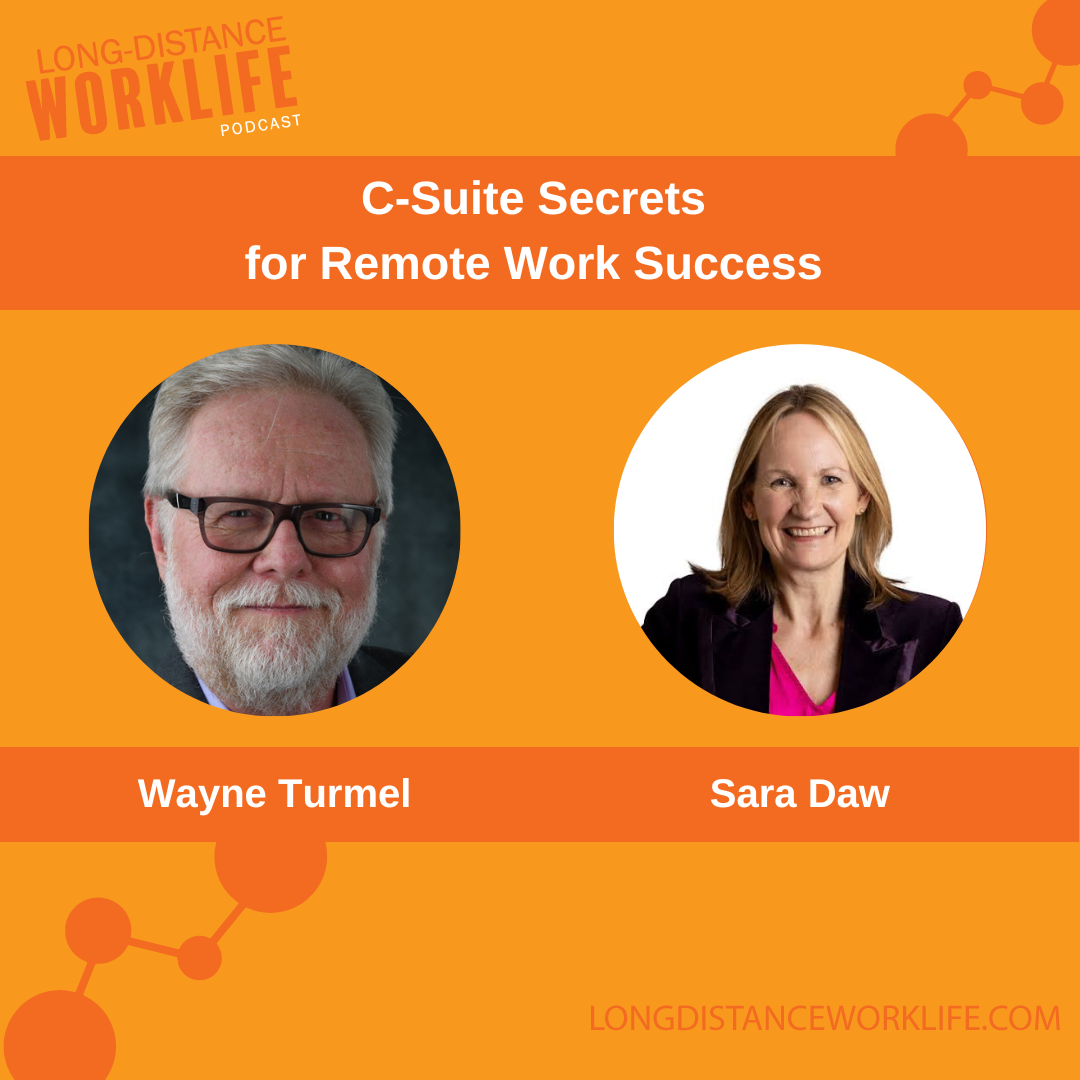
C-Suite Secrets for Remote Work Success with Sara Daw

Wayne Turmel sits down with Sara Daw, of The CFO Centre, to explore the nuances of remote and hybrid work from a C-Suite perspective. As a leader of a fully remote global company operating across 17 countries, Sara shares invaluable insights into overcoming challenges, fostering psychological ownership, and building meaningful relationships in distributed teams.

Sara also shares her experience leading a remote-first organization and her thoughts on how trust and flexibility can transform the workplace. Don't miss her practical advice on designing team dynamics and crafting jobs that employees love.

Key Takeaways

1. Navigate Financial Resistance to Remote Work: Learn how to address common concerns from funders and stakeholders about hybrid and remote work models, with actionable tips on demonstrating ROI and productivity.
2. Empower Teams with Job Crafting: Discover how giving employees the freedom to design aspects of their roles can boost engagement, flexibility, and accountability within remote teams.
3. Redefine Hybrid Work: Understand why a “one-size-fits-all” approach to hybrid work doesn’t work, and how to tailor policies to meet team and individual needs effectively.
4. Build Intentional Relationships in Remote Teams: Get practical advice on creating meaningful team connections, from scheduling regular in-person meetups to designing engaging virtual activities.
5. Foster Psychological Ownership: Explore how co-creation, clear communication, and shared goals can increase employee loyalty and investment in their roles—even in a fully remote environment.
6. Set Clear Boundaries for Availability: Master the art of balancing responsiveness with structured availability to maintain productivity and team trust in remote settings.

View Full Transcript

00;00;08;03 - 00;00;36;04
Wayne Turmel
Hi, everybody. Welcome to the Long Distance Worklife, the podcast designed to help you thrive, survive and generally find your way in the crazy world of remote and hybrid work. I am Wayne Turmel. We arm wrestle us today, but that means that we have a really excellent interview to share with you. And I'm excited to talk to Sara Daw from the CFO Centre.

00;00;36;07 - 00;00;53;18
Wayne Turmel
And we are going to look at some factors of remote work that maybe we haven't before. And, so I'm looking forward to that. Let me introduce Sara Daw, who's joining us from the UK today. Hi, Sara. Who are you and why do we care?

00;00;53;21 - 00;01;16;20
Sara Daw
Hi there. Thanks for having me, Wayne. So my name is Sara Daw. I am the group CEO of, a business called the CFO Centre. And that's a business that provides fractional CFOs to growing entrepreneurial businesses. For those that don't need, don't want full time, version and can't afford a full time version, but recognize they need the skill set.

00;01;16;27 - 00;01;29;25
Sara Daw
It's a global business in 17 countries. I've also written a book about the business model that sits underneath that called Strategy and Leadership. And so that's how the access economy meets the C-suite. That's me.

00;01;29;25 - 00;01;32;26
Wayne Turmel
Look at you with the subtitle and everything in there nicely.

00;01;32;27 - 00;01;34;27
Sara Daw
Yeah.

00;01;34;29 - 00;02;04;15
Wayne Turmel
Sarah, I was excited to talk to you for a couple of reasons. First of all, your company is fully remote and has been for a long time, so you've got a lot of experience there. But one of the things and we'll get there, we'll talk about that for sure. But one of the things that we haven't done on this show very much and it's not intentional, it just hasn't happened, is we haven't spent a lot of time talking about the C-suite and in particular, the CFO.

00;02;04;17 - 00;02;37;29
Wayne Turmel
And I know that for a lot of organizations, the push back on remote work or going hybrid or whatever, a lot of that pushback comes from the shell we lovingly call them the bean counters. The people in charge of the money. Why? From a financial standpoint, what are some of the objections or concerns that get raised when people talk about wanting to do more remote work?

00;02;38;01 - 00;03;07;22
Sara Daw
I think I think that's really interesting because I actually haven't, come across that so much around it, coming particularly from the CFOs, that, that are measuring the return in terms of the fact that they want people to go, in the office and not be and not be hybrid or remote, but I, I would have thought that, obviously it's going to be, around productivity.

00;03;07;25 - 00;03;37;20
Sara Daw
I would have thought from the CFO perspective, they're the people that are going to be measuring output and, they're going to be fully, on board with all of those concepts and making sure that, the business is moving forward. I mean, I've actually found, the most pushback that we've come across in terms of, not being full time and present has actually been from the funders.

00;03;37;22 - 00;04;02;03
Sara Daw
So the backers of businesses, the private equity, businesses they really wanted, someone sat in an office measuring, and looking after that financial investment full time and on site. So I think that's where we've seen most of the pushback is had me I think quite frankly, it all comes down to the relationship. It's all about relationships.

00;04;02;03 - 00;04;08;13
Sara Daw
And if you can get the relationship right, it for me, I think you can prove that it does matter where you're sitting.

00;04;08;16 - 00;04;22;01
Wayne Turmel
One last question on this, because I hear what you're saying and I don't disagree with you, but how much does some cost? The notion, we've got an office and nobody is in it, and that makes leaders crazy.

00;04;22;03 - 00;04;22;20
Sara Daw
Yeah.

00;04;22;23 - 00;04;25;02
Wayne Turmel
Yeah. Like, oh, absolutely.

00;04;25;05 - 00;04;44;23
Sara Daw
And actually we were one of those businesses because we've always been remote. And literally just before Covid, we took on an office space, for central team members, so that we could have them in the office. And that was sort of a few weeks before Covid. And then it was empty for ages. So I totally understand that.

00;04;44;23 - 00;05;11;15
Sara Daw
I mean, if we invest, if our businesses invested in space, then they are going to want to fill it. I think now, post-Covid, many businesses are realize that actually, yes, it's a sunk cost, but it's also not necessarily the cost that they need to bear anymore, at least not to the extent that before Covid and actually they can have much smaller space, and use the space more wisely for hybrid.

00;05;11;18 - 00;05;31;15
Sara Daw
Obviously that means that only that only happens if, you know, the management and the executive are supportive of remote and hybrid working, which some are and some aren't. But we can get onto that in a moment. But but you know, I agree. I think we've moved away enough from Covid now that the leases have, you know, changed.

00;05;31;15 - 00;05;37;20
Sara Daw
And we've had a few years where it's it is possible to be more flexible about what what's an office space we've got.

00;05;37;25 - 00;05;58;06
Wayne Turmel
Yeah. So let's talk about that flexibility in your mind. We've been talking a lot on the show about how hybrid work isn't just some people are in the office and some people not. I mean, there's more to it than that. In your mind, what is hybrid work at its best?

00;05;58;08 - 00;06;31;08
Sara Daw
Yes. I mean, I think, it's around flexibility. I mean, the one thing that I hear just time and again from every single set of, workers, the knowledge workers I'm talking about that can, work remotely, every single time that I hear from surveys, from anecdotes, from conversations, it's flexibility people want. So I wanted to have that shakes down is is sort of okay.

00;06;31;08 - 00;06;58;22
Sara Daw
And I think it's different for different individuals, for different roles. So different parts of the hierarchy. And so the the big issue that I see with hybrid is that it's quite a complex problem. It's a wicked problem. Yet we're trying to solve it with a very simplistic and blunt instrument by saying it's two days in and three days out, or vice versa, and it just isn't that simple.

00;06;58;25 - 00;07;21;07
Sara Daw
And it depends on the person. Is that the role, etc. and actually, I think a much better way. I mean, I'm much more in favor of letting the, workers work it out for themselves. So I'm in the camp of going down the, self-managed teams approach to this and saying, okay, we've got to get this output done, not this.

00;07;21;07 - 00;07;42;10
Sara Daw
You know, let's forget the inputs. Let's get the output done. How are we going to organize ourselves as a team to do that? What are we going to do together? What do we need to be. And where do we need to be to do that? Do we need to be online? Do we need to be, physically present and will cover for each other, when we need to, and people need more flexibility?

00;07;42;12 - 00;08;04;20
Sara Daw
And I think the big benefit of that is where trusting our teams to work it out, they have the best information at their fingertips to be able to do that, and then they move into job crafting, and that gives them real purpose of meaning over their work. And, and that element of control around it being flexible.

00;08;04;20 - 00;08;08;11
Sara Daw
And then I think you see engagement go up.

00;08;08;14 - 00;08;20;12
Wayne Turmel
You just use the term which I have not heard before, and I think I know what it means, but you know, in very small words and slowly explain to me job crafting.

00;08;20;14 - 00;09;00;28
Sara Daw
Yeah. So this is where individuals can design their jobs or elements of their job. So I'm a I'm a big fan of setting out the tramlines and the guardrails. In you know, with, with your functional leader. So the functional leader setting out the parameters, the direction of travel. But then so essentially the what, of the job, but then leaving it up to the individuals to figure out the, how, letting them tell the management or their leaders how they're going to do it and what resources and support they need to do it.

00;09;01;00 - 00;09;19;25
Sara Daw
So they are crafting their job to fit the requirements of the outputs, and it's sort of up to them how they do it. When they do it, where they do it. And they're all prompt to sometimes you have to be together as team, sometimes you have to be available on a phone, to talk to customers, whatever it might be.

00;09;19;27 - 00;09;45;14
Sara Daw
But we're very much then you're giving the agents, you're you're giving your workers agency. You're giving them control. And those are in my opinion, and for my research, those are the elements of, being at work that enable us to get real joy and flow and meaning and purpose, which means we really enjoy our work. And the thing is, you get quite a lot of that from going freelance.

00;09;45;19 - 00;10;11;28
Sara Daw
And I'm saying we can learn from the freelance world and there's, you know, I don't see why we can't put some of those parameters into the employed world. We've got an employment contract to support it. But the way we work, we can do it. You know, we can do it in this way, too. And that's how I've run my teams, even when they've been employed in, in, in, in the business, I've let them get on with it and decide how to get it done in the best way.

00;10;12;00 - 00;10;36;19
Wayne Turmel
Well, let's talk about that because you have been, you know, with one ill fated exception, remote since the get go, since you started your company and for you as the leader, what has been the biggest challenge? Let's start with the challenges and then we'll get to the fun stuff.

00;10;36;22 - 00;11;01;17
Sara Daw
So there are challenges, there's no doubt about it. And I think because we set up as remote. And so we had, you know, in our business we would have individual C-suite professionals, CFOs, in working, they would go work, fractionally. So part time. And that would mean they were hybrid sole businesses. So they would go one day a week, two days a month.

00;11;01;19 - 00;11;26;22
Sara Daw
The internal team that we have to support that we call that our central team. We never had offices to start with because we saw it as an extra cost and overheads that we just didn't really think we needed. So we were always remote as a team, and we all work from home from the start. And there are challenges because I don't forget, we didn't have so much technology back then either.

00;11;26;24 - 00;11;54;13
Sara Daw
So yeah, so what we what we used to do was be very deliberate about what we were going to do and what were the reasons. So why we would need to come together. But we made sure that we did, meet physically, regularly. And when I say regularly, it might be once a month. And we would get the whole business together twice a year.

00;11;54;15 - 00;12;27;29
Sara Daw
So in teams locally once a month. And we made sure that we did, things during that time that were very much around relationship building. So we didn't, do mundane things. We didn't come together and then just do our work together. We've absolutely built relationship and we were very, very focused on that. So we would define activities, work activities, and we would design, very deliberately our time together because it was so precious.

00;12;28;01 - 00;12;49;02
Sara Daw
And that meant that we when we were apart, we were in our flow doing our work. And we would communicate by, you know, text or email in those days and phone now it's it's so much easier because we've got, all the video conferencing, which we didn't have back then. We used Skype a lot, in the, in the early days that was available.

00;12;49;08 - 00;13;19;24
Sara Daw
So that was that was the plan. And it was about making sure that, we brought in the elements of psychological ownership, into the relationships that we built. So my research shows that, you know, we can feel ownership towards our jobs and towards our organizations that we work with by there being a value exchange. So firstly, you know, it has to work.

00;13;19;24 - 00;13;45;05
Sara Daw
You know, we need to be able to earn money and, and have a living. And our business needs to get value out of what we do. So it needs to be a good value exchange. There needs to be it needs to add to our identity. So we need to feel good about being a member of X organization and it needs to say help build us up in some way, in terms of adding to our status.

00;13;45;08 - 00;14;13;21
Sara Daw
And then we need to have, a home, which means we need to be with like minded people. And if you can build those things into the relationship at work, then you start to get feelings of ownership towards the role in the job, which can, you know, which can make where you're sitting and who you're sitting with less relevant.

00;14;13;23 - 00;14;24;12
Sara Daw
Because you've got those, other aspects that sort of a scaffolding to hold you in your role. And there are certain things that you can do to build that ownership.

00;14;24;15 - 00;14;56;09
Wayne Turmel
Wow. And we'll talk about that in a second. You said something, you kind of glossed it over, like everybody understands this, and I don't think they do. But this notion that if the team is working remotely, there is still a if not a need, certainly a desire to physically get together. And that means, you know, you might not have an office, but you're going to have to rent a conference room or you're going to have to pay for some travel.

00;14;56;09 - 00;14;59;18
Wayne Turmel
And you're I mean, you just have to do that.

00;14;59;20 - 00;15;01;03
Sara Daw
Yes, as we did.

00;15;01;03 - 00;15;18;10
Wayne Turmel
And a lot of organizations think, well, everybody works remote, you know, that annual meeting might be enough. And I think depending on the organization, it might not be.

00;15;18;13 - 00;15;48;09
Sara Daw
So I deliberately but to the, to all company conferences into the schedule per year, I didn't think one was enough. And it took a while to catch all. And I have to say, because don't forget, we were working, our team were freelancers. So, you know, I couldn't force these people to come. But actually, over time, everyone really started to see the value of it being twice a year.

00;15;48;09 - 00;16;16;14
Sara Daw
And that was and and some people have to travel for that and others for that. But then the monthly get togethers in the local teams, I think were hugely important because you then get some intimacy into the relationships with coworkers and team leaders. And that's part of, building the psychological ownership. So and you need to be able to hang out to do that, and you need to be able to do something.

00;16;16;14 - 00;16;38;26
Sara Daw
So often it works in an informal setting. So we might get together and, you know, discuss the business during the day or part of the day. But then we you, we do something very much fun and different and social, which is where you can hang out together and allow the relationships to flourish, just through more casual conversations.

00;16;38;26 - 00;16;43;10
Sara Daw
And that's really needed, I think really needed.

00;16;43;13 - 00;16;53;00
Wayne Turmel
As we reached the end of our time, you mentioned that there were some specific things that you could do. Will you? Let's share a couple of those with our folks so they can play.

00;16;53;00 - 00;17;20;13
Sara Daw
Yes. So a big one is making sure that that the parties involved feel that they can, be have access to each other. So you're accessible, approachable and available. That's really important in, remote circumstances to build this psychological ownership. Because if you feel you can get hold of each other quickly and you're going to be responsive to each other, and it goes both ways.

00;17;20;13 - 00;17;27;20
Sara Daw
If you want other people to be responsive to you, you need to be responsive to that. And that helps build relationships and not.

00;17;27;20 - 00;17;36;04
Wayne Turmel
Just for not for nothing. But in order for that to happen, there needs to be some discussions and ground rules about when are you available and.

00;17;36;04 - 00;17;37;11
Sara Daw
How do you absolutely people.

00;17;37;11 - 00;17;40;14
Wayne Turmel
And that doesn't happen just out of good intentions.

00;17;40;21 - 00;18;07;16
Sara Daw
No. You have to be very good at planning ahead. I'm very good at communicating when you are available, when you aren't available and what are the parameters. So that's that's a really good point. Also, another big one is co-creation. So doing things together, even if it's done remotely. Actually in the same way, investing ourselves in activities with others.

00;18;07;19 - 00;18;46;17
Sara Daw
And so the very nature is you have to communicate each other to do it, but then there's an investment in what you've created for the organization, which again, bonds, the individuals to the organization and their coworkers. So that's that's another big one. And intimacy. So it's about allowing time, whether that's online or offline, but allowing time just to get to know each other and have those, those times where you share, you know, deliberately have sessions where you talk about, you know, things that about yourselves that you wouldn't normally talk about in a work situation.

00;18;46;17 - 00;19;13;29
Sara Daw
So allow those, those informal sessions to happen. And I think that's where coming together physically does really help with those. So those are the sorts of things that help bond individuals to organizations and their coworkers, even if they're not, you know, physically working together in an office all day. And I have to add, by the way, that often, I think this is really important.

00;19;14;03 - 00;19;35;27
Sara Daw
Often we go into an office, and I'm sure you've heard this before many times you go to an office and you don't really talk to anyone anyway. You just get on your screen and, do do your job. I mean, that can happen in office environments. So being very deliberate about the times when you're actually going to build relationships, be with others, I think you can do that even if you're remote.

00;19;35;29 - 00;20;00;24
Wayne Turmel
Sarah, thank you so much. So much good stuff in this conversation, folks. If you want to learn more about Sarah, we will have all kinds of links and information and the CFO center and her book Strategy and Leadership as a service on our home page. Sarah, thank you so much for being with us. I really appreciate your time today.

00;20;00;27 - 00;20;03;22
Sara Daw
Thanks for having me. I really enjoyed it.

00;20;03;25 - 00;20;39;24
Wayne Turmel
And folks, if you are interested, in visit long distance leader.com, like and subscribe to the show. You know how podcasts work. It's embarrassing to have to keep begging, but we appreciate your support. If you are interested in our new book, The Long Distance Leader Revised Rules for Remarkable Remote and Hybrid Leadership, now in its second edition after six years and seven languages.

00;20;39;26 - 00;21;14;02
Wayne Turmel
Stop by and long distance workplace.com/ldl or Kevin Eikenberry dot coms LDL and learn more. If you have comments, suggestions, guest ideas, vicious personal attacks stopped by, you can connect with Marissa and or myself on LinkedIn. Long distance work life has a page on LinkedIn. Or you can just email us at the email. Addresses listed and that's it.

00;21;14;04 - 00;21;34;15
Wayne Turmel
Thank you so much for joining us. We hope that, this podcast gives you some ideas. Some spark gets you thinking in new ways about the way that we work today. We will be back next week with a Marissa episode. And that's it. I'm Wayne Trammell. Don't let the weasels get you down.


Timestamps

00:00 Introduction
02:04 Challenges and Misconceptions of Remote Work in the C-Suite
05:37 The Importance of Flexibility in Hybrid Work
08:20 Concept of Job Crafting
10:36 Challenges of Leading a Remote Team
14:24 The Need for Physical Gatherings
17:20 Building Psychological Ownership in Remote Teams
19:35 Conclusion and Key Takeaways

Related Episodes

Additional Resources

Order The Long-Distance Leader

Perfect your remote leadership skills with the updated edition of "The Long-Distance Leader" by Kevin Eikenberry and Wayne Turmel, featuring new principles and proven strategies for today's hybrid work environments.
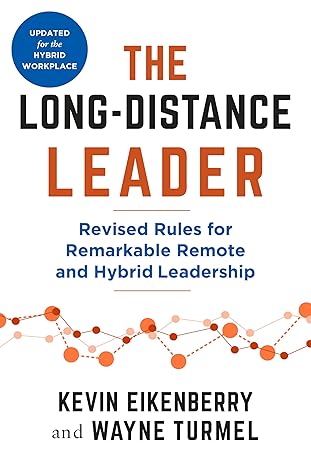
The Long-Distance Leader
Read More
Guests, Leadership, Surviving Remote Work, Working Remotely

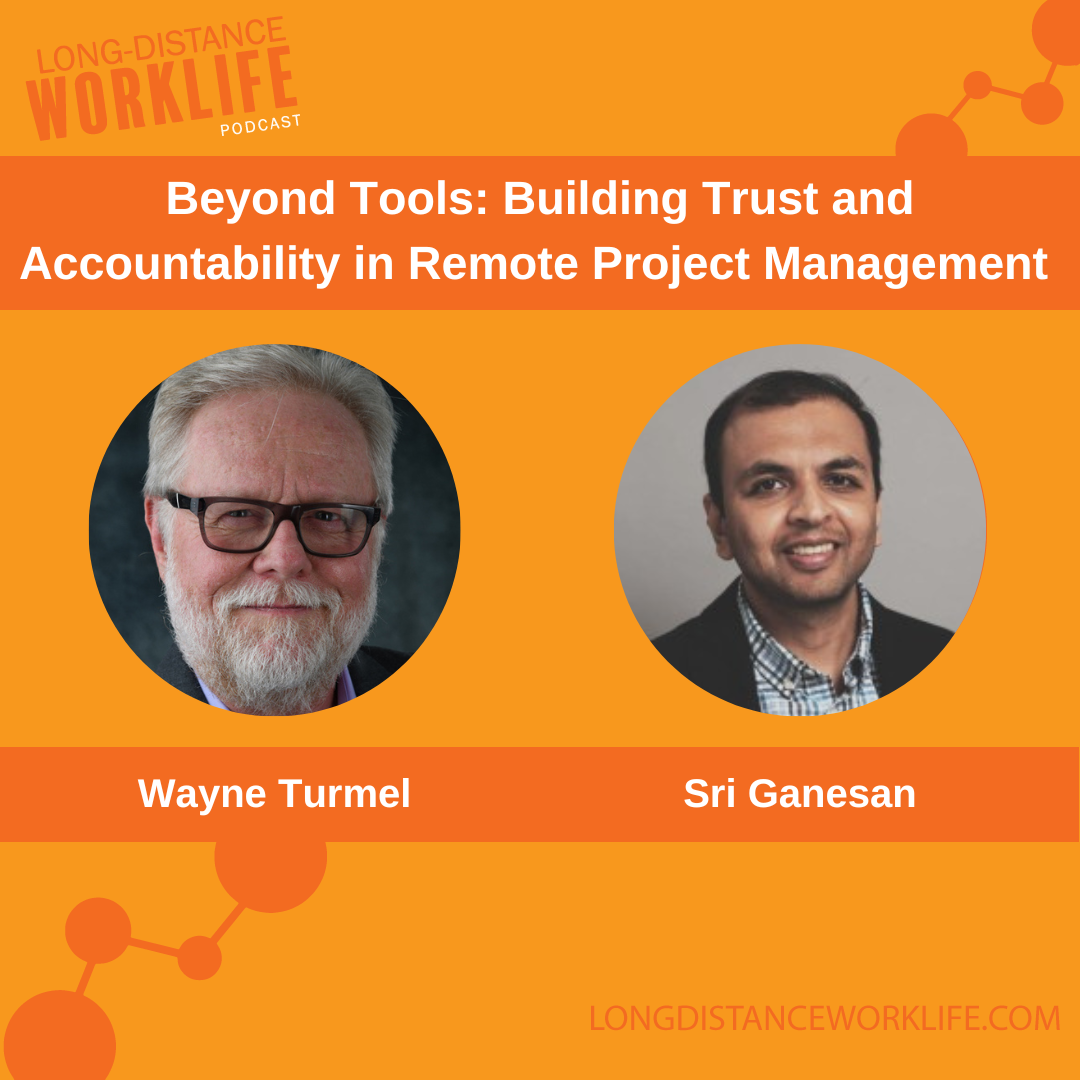
Beyond Tools: Building Trust and Accountability in Remote Project Management with Sri Ganesan

Wayne Turmel welcomes Sri Ganesan, co-founder and CEO of Rocketlane, for a deep dive into the challenges and innovations in remote project management. They discuss the complexities of client-facing projects, why traditional tools often fail remote teams, and how Rocketlane aims to centralize and streamline project delivery to create transparency and trust. Sri shares insights on the importance of proactive systems over "hero" managers, the evolving role of project management without dedicated PMs, and how AI is shaping the future of project oversight. Tune in for practical tips on building client trust, setting expectations, and fostering effective collaboration in a dispersed environment.

Key Takeaways

1. Solving the Silo Problem: Remote project teams often suffer from information silos due to multiple tools. Rocketlane addresses this by providing a centralized platform for project and customer collaboration.
2. Transparency Builds Trust: Sri highlights the importance of transparency in client-facing projects, noting how regular status updates and customer-facing insights can reduce anxiety and foster trust.
3. From Hero to System: Great project management shouldn’t rely on heroic efforts. Instead, robust systems should proactively surface potential risks and keep projects on track without constant manual oversight.
4. Adapting Project Management: Many remote projects lack dedicated PMs, making it crucial for tools to fill this gap by guiding governance and best practices.
5. AI in Project Management: Sri encourages teams to start experimenting with AI to identify project risks early and improve efficiency in team workflows.

View Full Transcript

00;00;08;05 - 00;00;36;17
Wayne Turmel
Hello everybody, and welcome to the Long-Distance Worklife Podcast where we are determined to help you thrive. Survive generally make sense of the crazy, ever changing world of remote and hybrid work. My name is Wayne Turmel. This is a Marisa-less episode, because as we do every other week, we have a really excellent conversation planned for you.

00;00;36;19 - 00;00;57;00
Wayne Turmel
So I'm going to introduce today's guest, Sri Ganesan. Is the boss of all things at Rocketlane. We're going to talk about project management, managing projects, setting up teams in a remote environment. Tre, how are you today?

00;00;57;02 - 00;01;03;10
Sri Ganesan
I mean, thank you so much for having me on your show today. I'm doing well. Things are good.

00;01;03;12 - 00;01;15;22
Wayne Turmel
I am delighted to hear that. We will try not to, mess that up. So real quickly, tell us, who are you? Why do we care? And what is Rocketlane?

00;01;15;24 - 00;01;43;24
Sri Ganesan
Sure. So, you know, as you introduced, I'm one of the founders and the CEO here at Rocket Lab, and this is my second SAS venture, built one from 2012 to 2015. And then, you know, that company got acquired, went through a seven and eight year journey overall in the previous business. And had a lot of learnings from that venture, which pushed us, me and my co-founders, the same co-founders of the last time, towards building something new.

00;01;43;27 - 00;02;09;13
Sri Ganesan
And we started Rocket Land four and a half years ago. We found that client facing project delivery felt very broken. We found a category called PSC Professional Services Automation, which had a bunch of legacy tools, and we thought, hey, what if we make this customer centric, modern PSC as a category that we can champion, we can create, and that's what we are on to at Rocket Lab.

00;02;09;13 - 00;02;32;00
Sri Ganesan
So we are a professional services automation tool which has a customer facing angle to it and helps both in the back end of operations for project delivery teams, like resource management, time tracking, etc. but also on the front end of it helps you with the actual project delivery, the governance around it, and so on.

00;02;32;03 - 00;02;40;21
Wayne Turmel
What was actually broken in the client facing piece of this? What was the problem you were solving for?

00;02;40;24 - 00;03;08;22
Sri Ganesan
So it's say two things. One is there's a deluge of tools that people were using. So you use one tool for the actual project management. You use something else to collaborate on documents. You use a conversation tool like a slack or a teams. You also use a PSA tool for same time tracking, budget tracking, you know, invoicing, etc. so information gets siloed across all of these and email as well.

00;03;08;22 - 00;03;30;05
Sri Ganesan
You can imagine. And everyone does also stuff an email. And then also the work gets siloed, which means, you know, there's there's tasks, small things that you need to do emerging from something you documented on email saying, hey, here's the action items from a meeting. There's something else that's in the project management tool. There's a comment on a document that needs to still be resolved.

00;03;30;07 - 00;04;00;14
Sri Ganesan
So work becomes too siloed. It's spread across too thin in different places. It's hard for anyone to be on top of it. And along this journey, the internal team and the customer are on a different page, right? Like you have a version of everything internally, you have a version that you've exposed to the customer. Everyone feels it's a little bit of a black box as to what's really happening, what's happening in the customer's mind the customer is anxious about, hey, are you really going to deliver on time?

00;04;00;16 - 00;04;19;22
Sri Ganesan
Because all they see is like a status update or a weekly status report you publish each week. So a lot of anxiety, mistrust along the way that builds up. People are not on the same page, and things do get dropped as well because of how siloed information and what this.

00;04;19;25 - 00;04;58;29
Wayne Turmel
Now, project management is one of the first areas that really embraced and figured out remote work. And when I say figure it out at least enough to make it happen, right? You remember working on remote projects back in the 90s and what? What has gotten easier over the years with remote project teams and what still remains a bear that we just haven't done as well as we might.

00;04;59;02 - 00;05;33;04
Sri Ganesan
I think what's gotten easier to just meeting more often, I think people have just gotten used to the fact that, hey, there's going to be zoom meetings every other day that we need to jump on and keep each other updated. I think the practice of project management has evolved so much that those who are in the know around those practices do a great job of surfacing risk earlier, being transparent about where things stand, calling out you know, things that need to be resolved, across teams, etc. but it's not necessarily something that everyone still does.

00;05;33;05 - 00;05;49;14
Sri Ganesan
Right? I think those who are who have embraced project management over a period of time as a practice have evolved to a state where they're able to do a great job of all of this. But you wouldn't find this to be universally true. What else has become one of the.

00;05;49;17 - 00;06;11;14
Wayne Turmel
One of the things that and I'm throwing you this curveball. So if the answer is you don't know, that's an acceptable answer. But I know that, Project Management Institute and the PIM Borg had instituted a lot of knowledge about what project management is. And I know that plays a role in the fact that people are getting better at it all the time.

00;06;11;16 - 00;06;20;23
Wayne Turmel
Has the Pim Bork adjusted to remote work as well as it might, or what's it missing?

00;06;20;26 - 00;06;43;13
Sri Ganesan
I would say the principles are, you know, universal in the sense that it doesn't matter if it's a team doing things remotely versus a doing team getting together in person, but it's more about, I would say not everyone is going to be a PMP, the new.

00;06;43;14 - 00;07;04;00
Wayne Turmel
Project management professional. And my apologies for throwing Pim back out there. Like everybody knows what it is. That is the project manager Book of Knowledge, the One Ring to rule them all. Project management is industry looks at. So my apologies to the to the listeners who just went Yeah.

00;07;04;00 - 00;07;11;13
Sri Ganesan
So like likewise, my apologies to throwing PMP as a term, but you would see if someone is a PMP you would see it on their LinkedIn. Right? Like the.

00;07;11;13 - 00;07;16;00
Wayne Turmel
Name. Oh, they are not shy about telling you if they're.

00;07;16;02 - 00;07;44;17
Sri Ganesan
My what what I've seen is we are increasingly moving to a world where people are not specialists in project management. Not every project, a big project has an engagement manager, a project manager assigned. But very often people are expected to play that dual role of, hey, I'm, I'm working on the things that need to get done, but I'm also managing the project, in which case, I think, you know, the expertise in project management is not going to be there.

00;07;44;20 - 00;08;32;19
Sri Ganesan
But you expect that with tools that are available, you get the job done. You you know, there's enough, that that you have to, tool systems, emails, etc., that you still should manage to get the project delivered successfully without a full time expert project manager. And that's that's where I think things actually break down. It's true that not every project deserves a full time project manager, but the systems need to adapt and and help bridge the gap in a better way around best practices around governance for projects, etc. because the people you know, and then they're running their first few projects or even later are not necessarily well attuned to.

00;08;32;21 - 00;08;46;02
Sri Ganesan
If you go to any SAS company, for example, the implementation teams there typically are not PMP certified. So you need to deal with that reality in how you deliver on your projects successfully. Even without that kind of expertise.

00;08;46;05 - 00;09;14;15
Wayne Turmel
Well, what you just said is really important because yes, you know, there are project managers and there are official projects, but every leader on the planet deals with projects and, you know, ranging from organizing Alice's birthday party in the break room to huge, you know, system changes. I guess there are two sides to this. One is that my experience?

00;09;14;15 - 00;09;44;09
Wayne Turmel
Is that project teams, project managers are not necessarily the manager of the people on the team. Right. So there is a little bit of you're my project manager, but I answer to Bob. And so there are these, conflicting priorities. Sometimes miscommunication. Can technology help us address that?

00;09;44;11 - 00;10;07;07
Sri Ganesan
Absolutely. I think there's a few. I mean, you made a very good point around you're responsible to get things done on time, but you're not the boss of most of the people on the project. As a project manager and think about customer facing projects where you also need inputs from customers, approvals from customers, things to happen on time, from the customer side.

00;10;07;09 - 00;10;30;26
Sri Ganesan
And you're definitely not the boss of your customer. So how do you handle that? Right? The way I've seen things. Then when you don't have the right technology, the team member is always worrying about, like the project manager or the person assuming that role for the project is worried about, hey, I just asked the customer about this yesterday.

00;10;31;04 - 00;10;49;06
Sri Ganesan
Is it okay for me to ask about it again today, or should I give it a couple of days? Even for an internal team member, I. Hey, the last time I asked about it, they said they'll get back in a week. Should I follow up midweek? About. Hey, are we on track still or is it going to get too annoying if I keep doing this?

00;10;49;09 - 00;11;18;27
Sri Ganesan
So there are these soft software aspects, right? And, you know, there's a gentleman, one of my customers once asked me, how does the project get delayed? And the answer to that was, you know, I came up with various reasons, like, why does the project get delayed? Here are like ten reasons why a project gets delayed. And he said, hey, you know, the question was, how does a project get delayed?

00;11;18;27 - 00;11;59;26
Sri Ganesan
And the answer is one day at a time. So his input was that every day matters, right? And you need to get really tight on your execution for you to actually deliver on time. You're not going to manage to keep a project on track if you don't have that tight governance around how things are happening. And I think the right tool can actually help you with that governance and automation around the governance so that it's not down to, hey, I have this hero project manager here who does a great job every single time and is on top of things and knows when to follow up, but it's more system driven.

00;12;00;03 - 00;12;18;12
Sri Ganesan
So can we move from hero driven to system driven? I think that's the responsibility of a great client. Facing project delivery to a great PSA will throw risks at using hey, this project has a schedule risk, a scope risk, a budget risk, etc. so that you get ahead of the problems.

00;12;18;15 - 00;12;52;04
Wayne Turmel
I think that is such an important point, and I think on remote teams, because you can't just poke your head over somebody's cube when there's a problem. I think that it's really important to remember that systems are replicable and heroes seldom are. It's way easier to build a good system that people can plug into than it is to try to create a whole bunch of great project managers.

00;12;52;06 - 00;13;15;29
Sri Ganesan
Absolutely. And I think, you know, it's not just for internal when you're working with the customer. It's also about, do you have a sense of what's what's going on in the customer's mind in a remote world? You see them on zoom for like one hour every alternate day maybe, and you don't necessarily. You're paying attention to what you're presenting and how someone reacted to that.

00;13;16;01 - 00;13;38;21
Sri Ganesan
You're not necessarily gauging what else is running on their mind, and very often, you know, you think things are going great. And then there is an escalation from the customer. And by the time that escalation comes in, it's too late to recover from that. There's there's so much that has built up in the customer's mind around what's working, what's not working, why this partnership is good or not good anymore.

00;13;38;24 - 00;14;07;15
Sri Ganesan
And that's led to that escalation. Whereas if you have a great system, the system should capture along the journey. What's the sentiment of the customer as well and help you get ahead of a problem the first time you have a three star rating for like a workshop or a training or something else you did with the customer, is a great opportunity for your leader to connect with them, saying, hey, what could have made this a five star experience?

00;14;07;18 - 00;14;19;26
Sri Ganesan
And, you know, turn things around if you have if you don't know about like if it's a one star experience, you hear about it because there's someone shouting at you already. Yeah, but if it's multiple three star.

00;14;19;26 - 00;14;50;13
Wayne Turmel
About it very quickly and then actually, I think is a point whether you're using project management software or not on remote teams, I think it's really critical that there are the big check ins, right? The the meetings, the conversations. But there's also this constant feedback loop of the ability to check in, the ability to just check a number rather than call a meeting.

00;14;50;13 - 00;15;20;06
Wayne Turmel
The, you know, that information needs to be flowing both ways all the time. And that's just true of remote work, right? If you wait until there's a big challenge, it's very often too late or it's created way more drama than it needs to. Let me ask you this. We're going to switch gears just a bit as the guy running the company, right, has the CEO.

00;15;20;08 - 00;15;44;05
Wayne Turmel
And I know that just because people make a certain software or have a certain expertise, doesn't mean they always execute perfectly. So what are the things that you wish your team did better? And how do you handle it? Because you're sitting in Lehigh Utah, and they're not. Yeah.

00;15;44;08 - 00;16;13;20
Sri Ganesan
So we actually have, team members globally now, of course, as you would expect. And I think the way we've thought about this is we look at it from the customer's perspective. What is the journey that a customer is going through with us when you are executing on a project? So our projects, for example, are we are delivering like we are implementing our own software as a project and it is project management software.

00;16;13;20 - 00;16;36;08
Sri Ganesan
Of course, that's it's sort of a I think question over there. But but we are implementing using our own software. So we need to come across as the experts. We need to be one of the best customers of our own. Software is not the best. And we learn from our customers all the time. But we sort of engineered a lot of things to get this right.

00;16;36;08 - 00;17;13;06
Sri Ganesan
I would say it starts at making a great first impression and setting expectations right very early. So that kickoff meeting, even right from kickoff and kickoff, I think there's a lot of effort that's gone into perfecting what needs to happen over there. How do we help customers see us as experts early on? How do we help create a few teaching moments, even from the kickoff meeting where the customer walks away from that meeting thinking, hey, I learned something today from the Rocket Lab team that I can put in use in my projects with my customers.

00;17;13;08 - 00;17;43;23
Sri Ganesan
It's also about, you know, getting their permission for, hey, we're going to be intense in this project. That's our style. Are you okay with that? So one of the questions we ask in the kickoff meeting is what should we do if your team is not reacting or responding to what we need on time and with the exec sponsor on the other side, usually they're going to say, hey, if there's a day of delay on your site, suffice it to me, I'm happy to figure out like how to solve this and move things forward.

00;17;43;25 - 00;18;10;12
Sri Ganesan
But I want to hear early because the exec wants to hear early and we are thinking about, hey, Will, will we be throwing someone under the bus, should we escalate or not, etc. but now you have the permission from the leader saying, hey, here's the way you're going to operate, here's what's going to happen every week. So that's those are some things that we've done early in the journey and then throughout the journey, if it's a large project, as you said, there's like a steering committee meeting that happens.

00;18;10;14 - 00;18;23;28
Sri Ganesan
But for smaller projects, we have a set that goes out automatically for every deliverable along the way. So you catch sentiment problems early. You also catch like a critical milestone, slipping early.

00;18;24;00 - 00;18;49;15
Wayne Turmel
Yeah. I want those of you who are listening who are not necessarily project managers. I don't want what Sri just said to slide by because it's something not enough people ask, which is you're talking to your customer, you're talking to your stakeholder, and you want to say, hey, everything's going to be great. And here's what we're going to do.

00;18;49;17 - 00;19;22;17
Wayne Turmel
But pointing out if there is a problem, how do you want to handle it as quickly as you can? And getting agreement on what that is prevents so much drama. And and Shree, thank you, because I haven't heard anybody actually put that into the process. And I think that's really important. We are running out of time. Sri, what is the one thing that you want to leave with the folks who are listening?

00;19;22;25 - 00;19;41;06
Wayne Turmel
We will have links to Rocketlane. We will have links to the demo. We will have links to Sri in our show notes, but, Sri, what's one piece of brilliance that you want to leave our listeners with?

00;19;41;08 - 00;19;48;15
Sri Ganesan
I'll say two things, if that's fine. One is. Oh, fine. I would say just remember that.

00;19;48;17 - 00;20;09;00
Sri Ganesan
I would say one thing for any project team to remember is if you're working with the customer on a project, the ball is always in your court. You may believe that it's in the customer's code, but you still need to internalize that it's still on you to hold them accountable and make things happen because you don't want finger pointing later.

00;20;09;03 - 00;20;47;12
Sri Ganesan
The exact on the customer side, you know, trusted you to deliver as a team, and that includes making their team do work on time. So that's one second I would say is pay attention to what's happening in the last year and a half around AI, because it's going to change a lot in this space. You need to, if you're like in your budgeting season budget for I need to do some AI experiments to to figure out how to make my team more efficient, to get more, you know, high quality, work, focus on our team versus like the mundane tasks that people are doing, etc..

00;20;47;12 - 00;21;03;03
Sri Ganesan
Right. So I think very important for us to actively be experimenting with new AI tools in this space and to ensure that we are getting ahead of the game and equipping ourselves and our teams to to embrace what's coming our way.

00;21;03;05 - 00;21;16;25
Wayne Turmel
Without going down the rabbit hole. Because, boy, that's a big rabbit hole. What is one thing that you think AI is going to change about the way rocket land works?

00;21;16;28 - 00;21;41;23
Sri Ganesan
We already have a bunch of things that have come in that use AI to make our teams, the teams that use rocket, land more productive, but I feel the biggest thing is, again, the system identifying opportunities, risks, you know, things to surface for at a county level, not just one project, but you're running multiple projects with customers across a project.

00;21;41;23 - 00;22;06;06
Sri Ganesan
You're playing on different calls and emails and so on. How do we identify risks? Early problems early surfaced not letting it to be something that someone needs to raise their hand and say, I need help, but instead the system saying, hey, pay attention. This project. Someone needs to look at what's happening over here so that a leader can help resolve things before something goes south.

00;22;06;06 - 00;22;08;20
Sri Ganesan
So catch it while it goes sideways, not after.

00;22;08;27 - 00;22;41;14
Wayne Turmel
Yeah. So it's surfacing things proactively. Yeah, that's very cool. Thank you I appreciate that. I am going to excuse me for just a moment while I tell you that, you know, leadership is an important part, whether it's project leadership or traditional leadership. Kevin Eikenberry in my new book, The Long Distance Leader Revised Rules for Remarkable Remote and Hybrid Leadership, that is the second edition updated for 2024.

00;22;41;20 - 00;23;24;09
Wayne Turmel
You can find out more about that at long distance. Kevin eikenberry.com/ldl or long distance work life.com/ldl. And the book is now available on audible. If you enjoyed the show, please like subscribe, listen to past episodes. If you have an idea for, topics for guests, if you have comments, questions, vicious personal attacks, you can contact us directly Wayne at Kevin eikenberry.com Marissa at Kevin I can barrie.com or through LinkedIn for either of us or the long distance work life page.

00;23;24;11 - 00;23;48;17
Wayne Turmel
You know what? The world is changing so fast, and that's why we're here. As I said, we will have links to Straight to Rocketlane. You can learn more about the software, on our show notes. Long distance work life.com. That's it for another week. I'll be back with Marissa. Marissa. Next week we will be having a really fun conversation.

00;23;48;17 - 00;23;55;01
Wayne Turmel
You want to check that out? And in the meantime, my name is Wayne Turmel. Don't let the weasels get you down.

00;23;55;04 - 00;23;59;07


00;23;59;09 - 00;24;04;09


00;24;04;11 - 00;24;08;14


00;24;08;17 - 00;24;08;28


Timestamps

00:00 Welcome to Long-Distance Worklife
00:36 Introduction to Rocketlane
02:09 The Problems with Current Project Tools
04:00 Challenges in Remote Project Management
06:11 Adapting PM Standards for Remote Work
08:32 Dual Roles in Project Management
10:07 Building Trust with Client Projects
12:18 Moving from Heroic to System-Driven PM
13:16 Gauging Client Sentiment Remotely
15:20 Managing Global Teams and Expectations
18:10 Proactive Project Management Techniques
20:47 The Role of AI in Project Management
22:41 Final Thoughts and Resources
23:48 Closing Remarks

Related Episodes

Additional Resources

Order The Long-Distance Leader

Perfect your remote leadership skills with the updated edition of "The Long-Distance Leader" by Kevin Eikenberry and Wayne Turmel, featuring new principles and proven strategies for today's hybrid work environments.
The Long-Distance Leader
Read More
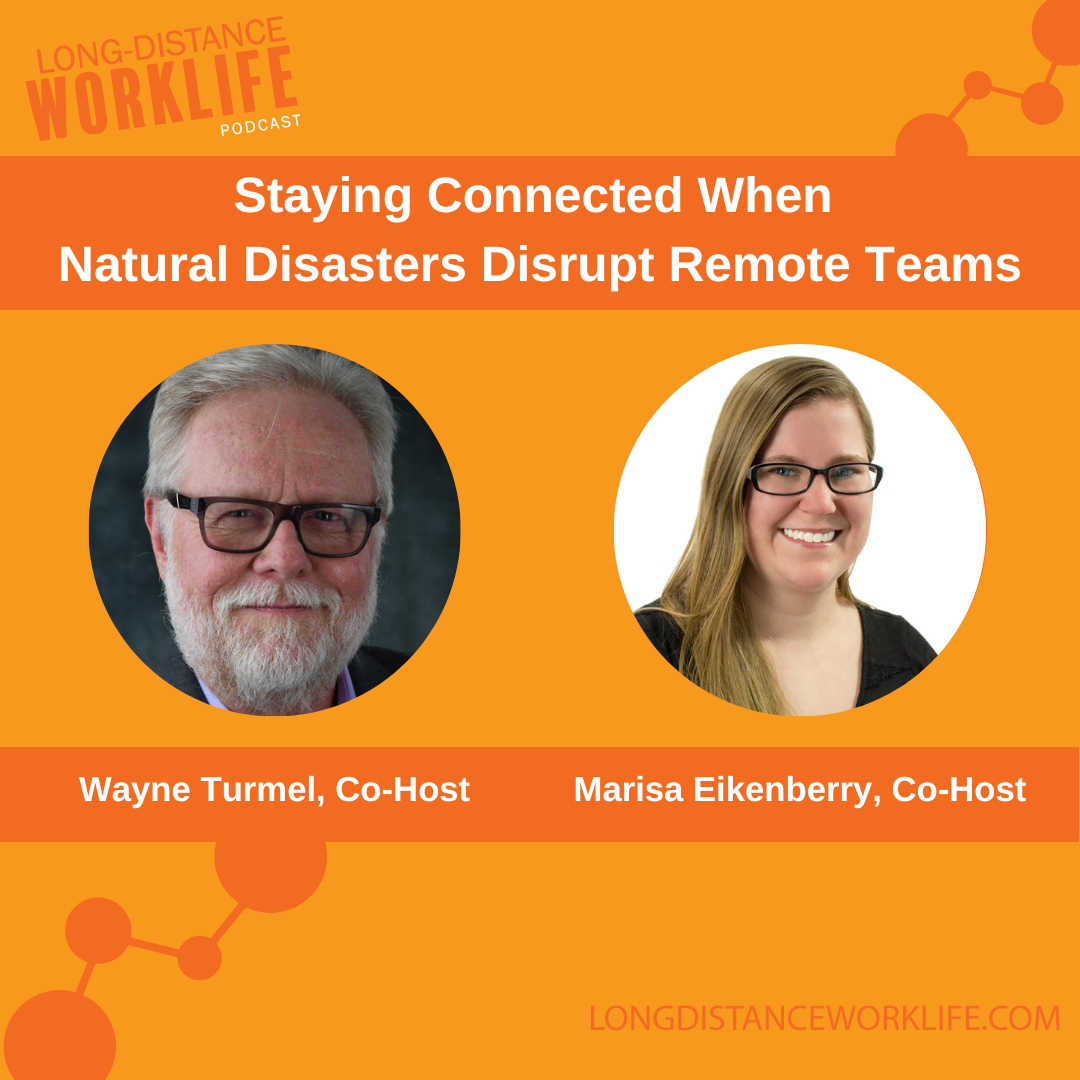
Staying Connected When Natural Disasters Disrupt Remote Teams
Ask Wayne Anything, Leadership, Surviving Remote Work, Technology, Working Remotely

Staying Connected When Natural Disasters Disrupt Remote Teams

Wayne Turmel and Marisa Eikenberry dive into a topic often overlooked—natural disasters and how they impact remote and hybrid work environments. As hurricanes, blizzards, and wildfires increase, so does the need for effective business continuity plans. Wayne and Marisa discuss real-world stories and provide insights on how companies can balance employee safety with the need for operational continuity. They cover essential strategies like communication protocols, cloud-based backups, risk assessment, and creating an emergency contact directory, offering practical advice to help remote teams stay connected and productive during crises.

Key Takeaways

1. The Importance of Preparedness: Why every organization needs a disaster preparedness plan, especially in areas prone to natural calamities.
2. Real-World Consequences: Wayne shares a cautionary story about a company that delayed evacuation, resulting in tragic consequences.
3. Remote Work’s Role in Crisis Management: How remote and hybrid work setups can offer flexibility and continuity when disaster strikes.
4. Communication Protocols and Access Plans: Ensuring that every team member has access to essential data and knows how to communicate their availability during outages.
5. Human-Centric Leadership: The significance of showing grace and understanding toward employees facing personal crises during natural disasters.

View Full Transcript

00;00;00;01 - 00;00;14;12
Marisa Eikenberry
When disaster strikes, what happens to your work, whether it's hurricanes, floods or blizzards? These events can disrupt our lives and our jobs in an instant. As your workplace prepared.

00;00;14;14 - 00;00;28;23
Marisa Eikenberry
You. Welcome back to the long distance work life. We help you live, work, and thrive in remote and hybrid teams. I'm Mercer, I can marry a fellow remote worker. And joining me is my co-host and remote work expert, Wayne Trimble. Hi, Wayne.

00;00;28;25 - 00;00;46;24
Wayne Turmel
Hello there. Marissa. Hello, listeners. Greetings from Las Vegas, where we have set a record for days over 100 degrees, and people are melting on the sidewalk. And so does rasters. And nature and stuff is very much on people's minds.

00;00;46;27 - 00;01;17;26
Marisa Eikenberry
Right? And so, listeners, as we are recording this, Hurricane Helen just came through, multiple states in the past weekend. And so we thought that this would be a really interesting episode while we dive into a very critical topic, which is how workplace workplaces handle natural disasters and ensure that business continues while keeping employees safe. So, Wayne, I just want to start off by saying, like, you know, all of these different things happen blizzards, wildfires, we've heard different stuff.

00;01;17;28 - 00;01;31;12
Marisa Eikenberry
Oh, definitely. Over the past couple of years. And how can organizations ensure that business continuity while prioritizing employees safety during these natural disasters? Because, like business can always stop? Yeah.

00;01;31;13 - 00;02;01;10
Wayne Turmel
Therein lies the problem. What I am going to say is based merely on multiple news reports. I'm not taking it from a single source, and I don't know the veracity of it, but we know of at least one company in Tennessee. People wanted to evacuate the workplace. The employer said no until it was too late, and there were 10 or 11 fatalities as a result.

00;02;01;12 - 00;02;30;15
Wayne Turmel
This is thankfully not common, but it ain't unheard of either, right? So this is a very real thing, and you can be cynical and say this ties to the whole work in the office presenteeism kind of thing. But it's also companies are trying to make a living, and they're trying to get as much work done as they can before the storm or the fire or whatever it is happens.

00;02;30;15 - 00;02;34;06
Wayne Turmel
And, you know, we we guess wrong, right?

00;02;34;12 - 00;02;36;17
Marisa Eikenberry
Yeah. Weather can be unpredictable in that way.

00;02;36;20 - 00;03;03;25
Wayne Turmel
Yeah. So I am not casting blame other than to say that it happens. Right. But that does raise the issue of with sufficient warning. What are the company's plans. How much of a company's work can in fact be done off site. And this is where to say we are going to abandon remote work and everybody get back to the office.

00;03;03;27 - 00;03;34;28
Wayne Turmel
This is exactly the kind of thing that one faces. Before Covid, companies were starting to put call them business continuity plans. Call them what you want in place. And some of this is helped by the fact that so much is now on the cloud, or that the servers are somewhere other than the office. I mean, 1520 years ago your office had a huge server farm in it, and if your office went down, so did everything you own then?

00;03;34;28 - 00;04;07;01
Wayne Turmel
No. Right. That's that's less and less the case now for most organizations. So you know, what is the plan? First of all, for the data, your business has to survive. Your company has to survive. And then how do you ensure that people can get at it? And if you are in a cloud environment, if you are in a paid server environment where the servers are somewhere other than where you are, and if you're experiencing the disaster, hopefully your servers are not.

00;04;07;03 - 00;04;33;20
Wayne Turmel
But ready. What is the plan? And I think that organizations need to have a plan that says even people who don't normally work outside of the office need to know how to access the data. They need to know how to if they're on a VPN, they need to know how to do that. There needs to be there.

00;04;33;21 - 00;04;42;25
Wayne Turmel
And ironically, you know, if you put it in a manual, in the manuals in the office and the office is no longer there, that's a point.

00;04;42;27 - 00;04;43;06
Marisa Eikenberry
Right.

00;04;43;06 - 00;05;01;19
Wayne Turmel
And I, you know, I say that I'm not making light of the situation clearly. So the first thing is think about it from an organization standpoint. If something happens, I mean, we talk in the office all the time about what if Kevin gets hit by a bus?

00;05;01;22 - 00;05;08;23
Marisa Eikenberry
Yep. We've said that about many, many people on our team just because of how integral they are.

00;05;08;26 - 00;05;22;08
Wayne Turmel
Right. We don't want that to happen. We clearly keep you know, we keep him wrapped in bubble wrap when he's not in the office. But you have to have those conversations, and it's irresponsible not to.

00;05;22;10 - 00;05;22;28
Marisa Eikenberry
Right.

00;05;23;00 - 00;05;45;05
Wayne Turmel
If you live in a place that is prone to hurricanes, if you live in a place that is prone to winter blizzards, if you are, you know, whatever it is that needs to be addressed. How do people, the as many people as possible, continue to keep the business afloat? And if you haven't had that conversation, you'd better have.

00;05;45;05 - 00;06;16;14
Wayne Turmel
And if people don't have access codes and they don't have, I mean, I I've heard of people who, when they return to the office after Covid, lost their access to the VPN. Is that really what you want? Mr.. Mrs.. Business owner. So you need to think about that. You also need to and this is best done I think on a team by team basis is does everybody know where everybody is.

00;06;16;16 - 00;06;44;14
Wayne Turmel
Do they? I'll never forget I had an instructor in one of the buildings at the World Trade Center. Wow. The day that 911 and I spent 14 really bad hours waiting to hear from that person. She was safe. She was fine. She got out at the first sign of danger of building all of that good stuff. But for 14 hours, we didn't know where she was, let.

00;06;44;14 - 00;06;45;19
Marisa Eikenberry
Alone.

00;06;45;21 - 00;06;54;18
Wayne Turmel
What she was doing with the business. Whether what was going on with the client. None of that. We didn't physically know if she was still with us. Right.

00;06;54;21 - 00;06;56;21
Marisa Eikenberry
That's terrifying.

00;06;56;22 - 00;07;23;25
Wayne Turmel
So do people know when there is a disaster? Is there a plan for letting your peers and your boss know you're okay? Letting your peers and your boss know I have internet access and I am available, right? Because some people, if you have internet access, there are things that I could do in your absence, but only if I know that you don't have the internet access.

00;07;23;27 - 00;07;41;10
Marisa Eikenberry
Well, I was going to say with that example, we have a person on our team, Guy Harris, who, he's in South Carolina. So while his home is safe and his family is safe, he was hit by a lot of the storm and, like, didn't have power and didn't have internet and thankfully had a generator. But it can only do so much.

00;07;41;10 - 00;08;00;27
Marisa Eikenberry
And he called me very early on to be like, hey, like, I need you to take care of all the disk or disk, support tickets, because I can't help you unless you know, we need to have a phone call about something. But, like, he physically could not get into the back end to help me with anything. And so he made sure to let me know.

00;08;00;29 - 00;08;16;02
Wayne Turmel
So, is there a plan? Right. Do you have the home phone? Numbers are no longer a thing. But do you have the cell, the personal cell number of all your employees? And do they have each other right?

00;08;16;02 - 00;08;19;05
Marisa Eikenberry
Yeah. Or directory somewhere that they can access.

00;08;19;07 - 00;08;33;06
Wayne Turmel
Is there a directory that exists? I know teams that put each other in their contact list, because having an online resource doesn't help if you can't get online, right.

00;08;33;08 - 00;08;34;08
Marisa Eikenberry
That's fair.

00;08;34;11 - 00;08;46;06
Wayne Turmel
That's a decision, right? You can decide do people want to be that connected to each other? You assume that everybody's going to be a grown up and behave responsibly right now.

00;08;46;06 - 00;08;48;20
Marisa Eikenberry
Drug text Susan at two in the morning.

00;08;48;22 - 00;09;26;20
Wayne Turmel
Yeah, but that's a that's a very concrete thing, right, that you can do to help make sure that that happens. So you need to think about what's going to happen before it happens. Now, I am firmly of the belief that every time one of these disaster have disasters and somebody gets convinced that maybe remote work is not the worst thing that could happen, because even if everybody is physically safe, even if everybody's homes are physically safe, if the office is damaged, if the roads are impassable.

00;09;26;22 - 00;09;33;05
Wayne Turmel
If any of that is going on, could we rarely meet somewhere else and still function well?

00;09;33;05 - 00;09;34;10
Marisa Eikenberry
And on that same.

00;09;34;10 - 00;09;35;03
Wayne Turmel
That line.

00;09;35;04 - 00;09;56;19
Marisa Eikenberry
Is. Yeah. Well, I was going to say on that same line, you know, for people who have teams that are working from home and stuff like that, I mean, there's still thunderstorms, snow, you know, lots of rain might cause flooding or whatever. Like, you know, we've all been in situations of, hey, we got a really bad storm here.

00;09;56;20 - 00;10;18;28
Marisa Eikenberry
I don't have internet or I don't have power. Right now, but it doesn't make sense to go into the office or in your case, your states away from the office. It doesn't make sense to do that. Like what level of flexibility should companies be offering employees for dealing with things like power outages and internet disruptions or personal crises, even during a disaster or just severe weather?

00;10;18;29 - 00;10;46;13
Wayne Turmel
Yeah, I think that this there's several levels to this, right? On the most basic level, you need to sit and think about what risk analysis is, what are the odds of something happen. And what are the results of it. Did that's risk analysis in a nutshell, right? So have you done a risk analysis on your business. Right. What business absolutely has to be done out of the office.

00;10;46;15 - 00;11;08;26
Wayne Turmel
What can be duplicated conducted elsewhere, whatever. And then what are the plans for that on an H.R level, it's yes, the company is fine, but Maurice's house just got washed away, right? First of all, odds are she's not coming into work a few days.

00;11;08;29 - 00;11;11;06
Marisa Eikenberry
Yeah, I got other priorities right.

00;11;11;09 - 00;11;37;02
Wayne Turmel
And do we have an ability to absorb that or are we going to stick to the. Well, that's personal time. And you've got five days to get your insurance together because after that we ain't paying you. And these conversations happen and they happen all the time. We are very blessed. I mean, we have had some interesting things in this organization in the last year.

00;11;37;05 - 00;11;59;27
Wayne Turmel
I'm about to go out for my second knee replacement in a year, and we've kind of worked around that in terms of time off and all of that. And it's all very civilized. Guy is stuck in a hurricane zone at the moment, you know, as an organization, we have decided we want to take care of each other.

00;12;00;02 - 00;12;17;29
Wayne Turmel
Right. And there is a mechanism in place for that. Right? First of all, there's a lot of grace. There's a lot of people pitching in and helping each other. That's really the kind of thing that it can happen on the spur of the moment. But boy, it's easier if you've planned it.

00;12;18;01 - 00;12;36;10
Marisa Eikenberry
Yeah. Well, I was going to say like, you know, I, I know that there's also been situations too, where it's like, this thing is not important right now. You know, speaking of spur of the moment, like, you know, my stepdad died last year and I was out for a week because it was just I just can't right now.

00;12;36;10 - 00;12;56;11
Marisa Eikenberry
And so it was like, podcast didn't get edited like this show didn't happen for a week or two. Like, and I don't want to say like everybody was okay with that. But it was grace was given. Right. You figure out what's the what's the biggest priority here. And frankly, it's not that well.

00;12;56;14 - 00;13;19;28
Wayne Turmel
And there are organizations that will tell you that that is the priority. And get your butt back here. We've seen we've seen it time and time again. Again. This is where the possibility of remote work, the idea of even if it's not all the time, can you access the data that you need? Can you reach your customers? Can you reach your teammates?

00;13;20;01 - 00;13;24;01
Wayne Turmel
Do we know if we can't reach the boss who does what?

00;13;24;03 - 00;13;24;14
Marisa Eikenberry
Right?

00;13;24;20 - 00;13;53;22
Wayne Turmel
Those conversations are uncomfortable and they're weird, but you have to have them. And teams that have had those conversations and they know if something happens to Guy, Marissa handles that. If something happens to somebody else, you know, I know the intricate workings of a couple of people here in job, right? If I have to step in, at least short term, I can do that.

00;13;53;24 - 00;13;56;22
Marisa Eikenberry
Yeah. Basically, make sure you have a backup person.

00;13;56;24 - 00;14;27;28
Wayne Turmel
We've talked about it and we've planned for it a lot of companies. And this is where bad managers get in trouble, because if you weren't used to delegating, if you are used to doing everything yourself, if you don't share the passwords and the information and the workflows and the relationships with other people in the company. If you haven't included your team on that and built into that because you are so important, God forbid something happened to you.

00;14;28;00 - 00;14;28;21
Marisa Eikenberry
Right?

00;14;28;23 - 00;14;46;13
Wayne Turmel
And you know, this gets back to ripen. Wrapping Kevin in bubble wrap. Clearly it's a founder led company. That's a very serious thing. Right. But we can hold the fort for a bit.

00;14;46;16 - 00;14;58;19
Marisa Eikenberry
Yeah. I was going to say and and to your point, like there are plans in place if something should happen, like he's got stuff written down in places and knows who to contact and like we know what to do.

00;14;58;22 - 00;15;25;25
Wayne Turmel
But this all boils down to a couple of things. First of all, you have to trust your employees. You have to trust. And Covid proved this almost beyond a reasonable doubt. You know, if we send people to work from home, they're going to slack off. They're nothing. It's not true. When there is a crisis and Covid was a crisis, when there is something that happens, people naturally pull together.

00;15;25;25 - 00;15;47;14
Wayne Turmel
I know Americans like to think they're the only ones that do it, but no, people do that right. They help each other, they come together, they do what they do. So your employees want the company to exist. Your employees want each other to be successful. They want to stay employed. If you want to, you know? Yeah.

00;15;47;17 - 00;15;49;07
Marisa Eikenberry
Hiring like a paycheck.

00;15;49;10 - 00;16;14;01
Wayne Turmel
That's, you know, for the short term, people will move heaven and earth and they will make it happen. But you have to help them achieve it. So have the conversations have not just a central location. I mean, it's great to have everything in a filing cabinet, but if there is a raging wildfire between me and the filing cabinet, that's not going to help.

00;16;14;03 - 00;16;17;06
Marisa Eikenberry
Right? Right. I do have one last question for you.

00;16;17;07 - 00;16;34;26
Wayne Turmel
It just hasn't been being and I'm not being facetious other than my normal smart Alec self. This is serious stuff that needs to be done. But they're uncomfortable and they're weird, and there's always something more important that we have to do until there is right.

00;16;34;28 - 00;16;53;05
Marisa Eikenberry
And we've talked a lot about business continuity and things like that. But one of the things that, one of my last questions for you is like, how can organizations provide meaningful support both during or after a disaster, to employees who are being affected by this and, you know, like home damage, family safety, that kind of stuff?

00;16;53;05 - 00;16;58;28
Marisa Eikenberry
I mean, we've already talked about like checking in and, you know, okay, what can I take from you? But like, what about the person itself?

00;16;59;03 - 00;17;04;22
Wayne Turmel
Yeah, a lot of that is just human grace and kindness.

00;17;04;25 - 00;17;06;16
Marisa Eikenberry
A strange concept, right?

00;17;06;19 - 00;17;37;28
Wayne Turmel
Well, it is, and when everybody is affected, it's very difficult to if there's a team member that I don't normally work with or that I'm not really close to, it might feel uncomfortable and weird. Right? For me to to reach out to them or to offer them something. But generally, most teams have somebody speaking very generically, politically and incorrectly.

00;17;38;00 - 00;18;05;10
Wayne Turmel
Eight times out of ten, it's a woman. That's where is the connector, who knows what's going on and will organize getting food to somebody or making sure that somebody has a roof if they need one or whatever that is. And we need to encourage those types of relationships, and we need to encourage those kinds of people on our teams.

00;18;05;12 - 00;18;09;14
Marisa Eikenberry
I would also encourage having a back that is one of those two.

00;18;09;16 - 00;18;11;03
Wayne Turmel
Yeah. And the backup, one.

00;18;11;03 - 00;18;21;00
Marisa Eikenberry
Of those, I mean, legitimately, because we had that happen where our connector had an issue and we all had a moment of, oh crap, who is it now? We figured it out, but still.

00;18;21;03 - 00;18;38;25
Wayne Turmel
And figured it out pretty quickly because we wanted to we cared. We care about our teammates. We care about all the people that we work with, and employers are shocked at how much we care about them. Right? They really are. How?

00;18;38;27 - 00;19;02;00
Marisa Eikenberry
Well, Wayne, thank you so much for this. And listeners, if any of you or family members, relatives, friends are affected by the most recent hurricane, our thoughts and prayers are with you. But before we go, I do want to let you know that the second edition of The Long Distance Leader is now available. This updated guide is perfect for navigating today's remote and hybrid work environments with new principles and proven strategies.

00;19;02;04 - 00;19;27;08
Marisa Eikenberry
Kevin, I can Mary Wayne Trammell show you how to lead effectively no matter where your team is located. Don't miss out on the latest insights and exercises designed to boost productivity and morale. Order your copy now! At Long Day's Work life.com/ldl and strengthen your leadership skills today. Thank you for listening to the Long Distance Worklife. For Shownotes transcripts and other resources, make sure to visit Longest Work life.com.

00;19;27;10 - 00;19;47;17
Marisa Eikenberry
And if you haven't yet, subscribe to the show so you don't miss any future episodes. And if you're on Apple or Spotify, please give us a rating or review. This helps us know what you love about our show and reach more listeners just like you. Feel free to contact us via email or LinkedIn with the links in our show notes, and let us know you listen to this episode, or even suggest a topic for Wayne and I to tackle in a future episode.

00;19;47;22 - 00;19;53;14
Marisa Eikenberry
We would love to hear from you. Thank you for joining us. And as Wayne likes to say, don't let the weeds get you down. Hey.


Timestamps

00:00 Introduction: Why Disaster Preparedness Matters
02:01 The High Cost of Delayed Evacuation
04:07 Ensuring Data Accessibility for Remote Teams
08:33 Building a Team Directory and Backup Contacts
12:00 Offering Employees Grace During Crises
15:00 Trust in Remote Employees During Disasters
19:02 Wrap-Up: The Importance of Proactive Disaster Planning

Related Episodes

Additional Resources

Read More