Guests, Leadership, Working Remotely

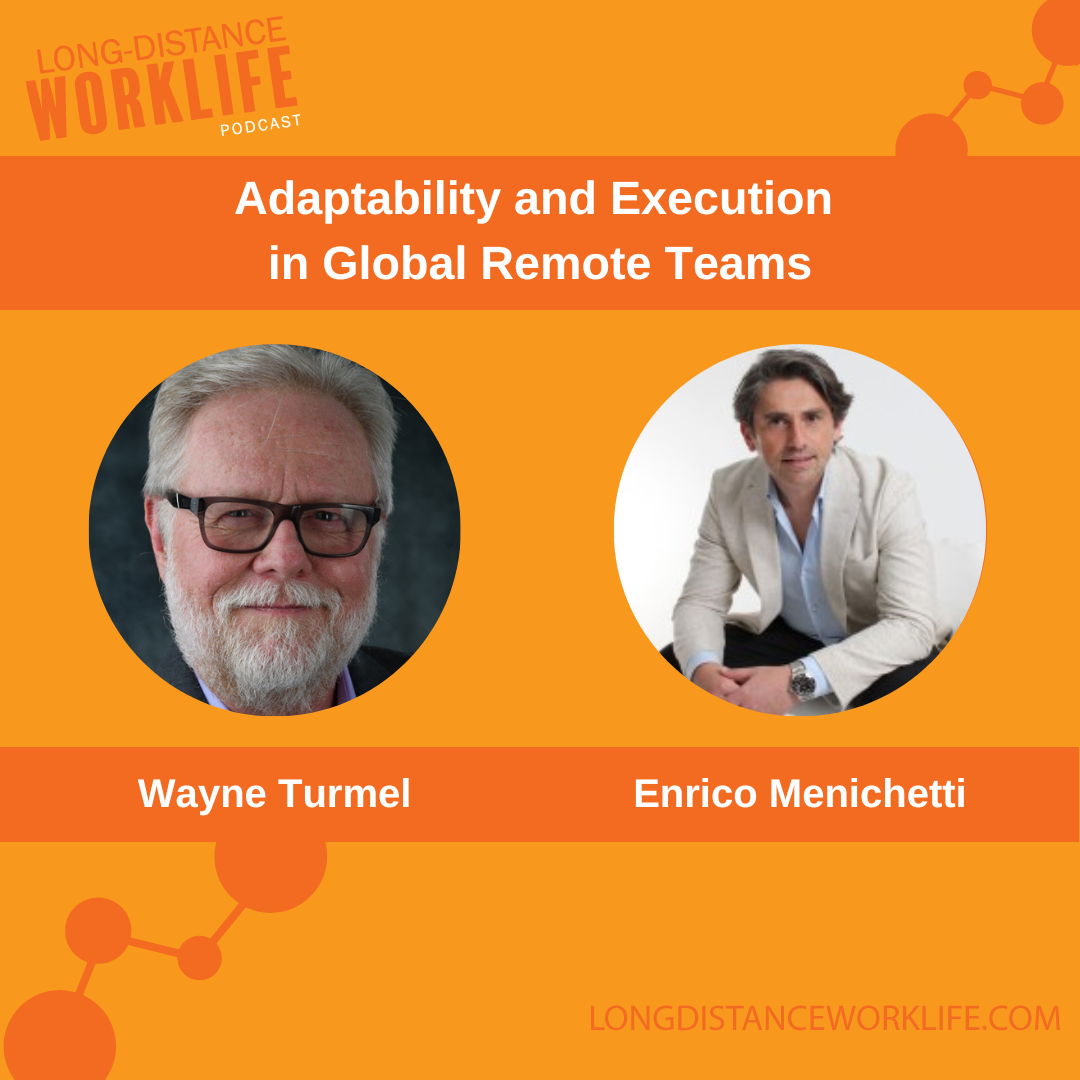
Adaptability and Execution in Global Remote Teams with Enrico Menichetti

Wayne Turmel interviews Enrico Menichetti, head of Latin America and the Caribbean at VFS Global. They explore the intricacies of leading international remote teams and the cultural nuances of remote work in Latin America. Enrico shares his insights on self-awareness, cultural adaptability, and building trust across borders.

Key Takeaways

  1. Embrace Cultural Immersion: To lead effectively across cultures, immerse yourself in the local culture and show genuine curiosity about your team's environment and experiences.
  2. Prioritize Self-Awareness: Understanding your own strengths, biases, and leadership style is the foundation for connecting with and managing diverse teams.
  3. Adapt Leadership Styles: Avoid a one-size-fits-all approach; tailor your leadership to the cultural norms and communication preferences of your team members.
  4. Build Trust Before Efficiency: Focus on creating genuine connections and trust within your team before jumping into quick, transactional communication.
  5. Set the Stage for Collaboration: Start meetings with cameras on and create space for all team members to share their perspectives, respecting cultural differences in communication styles.
  6. Focus on Execution: Foster a culture of getting things done by encouraging accountability and aligning team goals with individual contributions.
  7. Lean into Discomfort: Take calculated risks and embrace challenges to grow as a leader, especially in unfamiliar or cross-cultural settings.
  8. Address Conflict Thoughtfully: Recognize that conflict resolution varies across cultures; find a balance that respects individual approaches while maintaining harmony.

View Full Transcript

00;00;07;29 - 00;00;10;09
Wayne Turmel
Hello, everybody. Welcome back to.

00;00;10;11 - 00;00;40;07
Enrico Menichetti
Walking Distance later. Well, I guess if you've never been here before, you can't be back. But welcome to the long distance later. This is the podcast designed to help people thrive, survive, generally make sense of the world of remote and hybrid work and the changing 21st century workplace. My name is Wayne Turmel. I am the remote work and evolving workplace subject matter expert for the Kevin Eikenberry Group.

00;00;40;14 - 00;01;13;00
Enrico Menichetti
If you're new to the podcast, you don't know that about half of the shows I co-host with my friend and colleague Marisa, she is not here today. What that means is we have a really cool interview with a very smart person. And today, that person is Enrico mana. Katie. And we are going to talk about, leading international remote teams, but also remote work in Latin America and all kinds of interesting topics.

00;01;13;07 - 00;01;22;10
Enrico Menichetti
And it would be far more interesting if he was talking about it instead of me. So, Enrico, welcome to the long distance work life.

00;01;22;11 - 00;01;25;22
Wayne Turmel
Oh my brain, thank you so much for having me.

00;01;25;25 - 00;01;41;00
Enrico Menichetti
Well, thank you for being had you. We have a true North American show because I am a Canadian living in Las Vegas, and you are in Mexico City. So we pretty much have North America covered us.

00;01;41;03 - 00;01;42;03
Wayne Turmel
Yeah.

00;01;42;06 - 00;01;52;01
Enrico Menichetti
But most of your work isn't in North America. Tell us a little bit about VFS global and then what you do and we'll start drilling down into the good stuff.

00;01;52;06 - 00;02;21;23
Wayne Turmel
Sure, sure. Yeah. For having me as excited for me to talk about this topic. So yeah, DFS global we serve as government. We serve as governments, mainly, embassies or missions that, across the globe. And, we do that and we are placing most of the, countries in the world where we kind of like, service them to a sort of outsourced model, all the non value work, let's say, of the missions.

00;02;21;25 - 00;02;45;17
Wayne Turmel
We will take that on to ensure that the mission itself can focus on the most important task. And that's getting the approvals, for example, of the visas or, or the passports to their own diaspora. So that's, that's VFS focus areas. Currently I am the head of Latin America and the Caribbean, where, I'm in charge of the business itself.

00;02;45;17 - 00;02;50;07
Wayne Turmel
Both, both the development, but also the delivery of the operations.

00;02;50;09 - 00;03;23;27
Enrico Menichetti
Excellent. So let's start with big picture. And, you know, we focus a lot on remote work and unintentionally, but not surprisingly, we have mostly focused on either Canada, the U.S or Western Europe. There is a big world out there. So can you kind of give me a very quick state of the state of the world? In Latin America is remote work, accepted?

00;03;23;27 - 00;03;29;15
Enrico Menichetti
Is it growing? Is it suspected? What's what? What do you see?

00;03;29;18 - 00;03;54;14
Wayne Turmel
So, the rethinking it back times. When I started working, there wasn't really, where where I had the privilege to be. You very quickly become an expert and working in Eastern Europe. And then I moved my way all the way to Asia, in the Philippines, coming back to Dubai and now ending up in Latin America. I think what I've seen is the trend of working remotely for sure is increasing.

00;03;54;16 - 00;04;23;15
Wayne Turmel
I think it's that flexibility that people are looking for, very much and, specifically in Latin America, I would say very similar, very similar to the other regions. The challenges that I have seen, that also create opportunities are very much into the cultural nuances and the differences that you find. Often people, don't realize how big this continent really is, where you have a Brazil, and in Latin America it is a continent on itself.

00;04;23;20 - 00;04;44;29
Wayne Turmel
It's not a country, right? It has states that are bigger than most of the countries that we know of. So, so a lot of the challenges, I think often we think about timezone differences or we think about, maybe the language barriers. But I would say the biggest challenge is always the cultural, the cultural, and how to bridge that gap.

00;04;44;29 - 00;05;14;02
Wayne Turmel
I would say in Latin America as well, dealing with 35 different countries, including the Caribbean, I think is very important in my view, that, leaders that are wanting to create high performing teams in a region like this are not just knowing the culture, but they are really immersed into the culture. Right? It's important that people feel that the, the leaders that are directing them are really understanding them, right?

00;05;14;02 - 00;05;37;02
Wayne Turmel
That there's this real curiosity as a leader. So, so that that that I would say it's an interesting aspect, how to maneuver through that. One way I can say that is also a very constant is how does the leader create a lot of self-awareness? In a, in a, in a, in a region like this with so many different cultures, the language is different.

00;05;37;02 - 00;05;40;12
Wayne Turmel
Spanish and Portuguese mainly, very little English.

00;05;40;12 - 00;05;51;28
Enrico Menichetti
And I as, as somebody who is married to a woman who is half, Puerto Rican and half Mexican, even speaking Spanish is no guarantee that you speak the same language.

00;05;52;04 - 00;06;14;06
Wayne Turmel
Exactly, exactly that I wasn't Dominican Republic just yesterday. And, although my Spanish is not too bad, but I had to do an effort to follow the speed of that Spanish, so it wasn't it wasn't very easy. But I think self-awareness is something that I very early on in my career, I started investing a lot of time, a lot of efforts, because it's a constant work, it's a constant development.

00;06;14;06 - 00;06;40;01
Wayne Turmel
And why is that? Is because if we really want to lead people in any culture, in any language, in any place in the world, the best way you can do that is to understand yourself first. Very well. And if you understand yourself building on those blocks and trying to then to, create curiosity, understand and the other cultures, I think that creates a very good base for a leader to, to develop.

00;06;40;04 - 00;07;13;16
Enrico Menichetti
You said something that really resonated with me, and it's not something we hear a lot here in the places that think we run the world. One of the things you said is that it's important that the leader adapt to the culture of where they're working. And I think a lot of us, particularly North Americans, spend a lot of time trying to get everybody to get with the program and adapt to us.

00;07;13;18 - 00;07;15;00
Enrico Menichetti
Tell me a little bit about that.

00;07;15;05 - 00;07;43;08
Wayne Turmel
Yes, exactly. And I feel if we I mean, managing people is always about people, no matter if you can virtually remotely face to face. Right. So the, the, the student aspect that will always come back, for example, the how to how to show empathy, how to show genuine interest in people creating genuine connections. So for that, very early on, making mistakes myself, I realized that there's no one fit for.

00;07;43;08 - 00;08;05;20
Wayne Turmel
All right. You need to adapt. And often in the Western world, even in Europe, where I grew up, we we take that for granted. We think that the whole world operates in a certain way. The way of thinking is the same. And I have a very specific example when I move to Romania. Plus, in Europe, in Eastern Europe, I arrived there as a very young guy.

00;08;05;20 - 00;08;22;09
Wayne Turmel
I was 24 or 25, in charge of the scheme, and I had this person that I hired. The manager came to my office one day, sat down in front of me and looked at me and said, I don't think I can trust you, says the person. And I was taken back by that. And I said, can you tell me more?

00;08;22;09 - 00;08;42;18
Wayne Turmel
Right. What what was driving that? Or because in the time you came here, you've been understanding, you've been helping us. When issues arise, you're working on it together, as a person. And I don't think that can be real. That's not the real you. Right. So that that and the person basically left my office by me saying, look, time will tell.

00;08;42;21 - 00;09;12;27
Wayne Turmel
There's not much I can say right now, but let's see in a couple of months. And the person came back eventually and said to me, look, I was wrong, right? It's possible to do it differently as well. But that directed being so direct, I wasn't really familiar with that. Right. That culture of like just saying what they think versus then moving to the Philippines where it was the opposite, where people are so great, graceful, very, very, very friendly, and they will never tell you what, what's really wrong?

00;09;12;27 - 00;09;36;05
Wayne Turmel
Because they, they work very much in an environment of, collaboration and, and being nice to each other. And that was another aspect that I have to learn as well, so that that differentiation, I think it's a learning curve. But yeah, it's an important aspect of a leader. Again, to, to embrace and to understand that it can be done differently.

00;09;36;07 - 00;09;36;24
Wayne Turmel
Yeah.

00;09;36;26 - 00;10;04;21
Enrico Menichetti
Yeah. In that little bit of international work that I've done, it seems like how we address conflict is such a powerful thing, because there are cultures that have no problem going head on and you don't do it that way. You are weak, or you don't know what you're doing or you don't have confidence. Versus harmony is important, and that is the most important thing.

00;10;04;21 - 00;10;08;04
Enrico Menichetti
And neither is 100% constructive.

00;10;08;07 - 00;10;27;16
Wayne Turmel
And that's that's the key a very, very good point because how you bring that all together, because often when you are managing international news, you have all these different cultures on one call at the same time, right? How do you manage that? And and that really goes back to the point of trying to create is genuine connects. Right.

00;10;27;18 - 00;10;46;22
Wayne Turmel
Often, I think the example of the bad, bad habits that we sometimes create of like calling somebody off or being in a call and saying, oh, just a quick one. Just a quick one. And I will be very quick. But actually what that does, it takes away the connection. It takes away the trust. It's just like, I need something from you very quick.

00;10;46;22 - 00;11;15;09
Wayne Turmel
Give it to me now. And I think working if you know the person face to face every day, you can get away with that. But if you have an international team that you don't see often or seldom, it's they're very dangerous things to do where instead of connecting, first create a connect, have a proper intro, create curiosity with the person you're talking with a team you're talking, and then you create as harmony again of, of, of different, differences that are, as a culture and a call.

00;11;15;12 - 00;11;44;26
Enrico Menichetti
You're saying so many things that are resonating with me. And that sound kind of counterintuitive. And one of the things you just said is this notion of shorthand, this notion of quick communication. It can work very effectively if the relationship is there, if the trust is there, if there's history. But you need to start long and taking time and work to short and you can't start there.

00;11;44;28 - 00;12;14;07
Wayne Turmel
Because if you create like connection, you create that a genuine a genuine connection with your people. That also, again, is the base also build your own culture. And as a leader, we all have different cultures of of how we develop a high performing team or a high performing group. Right. And I'm going to that goes back to the aspect of as a leader, then you can really having your self-awareness start investing and understanding the person.

00;12;14;12 - 00;12;37;01
Wayne Turmel
What what drives them. What how can I get the best out of this individual? And so you basically go beyond that, that barrier of different culture and language now. And I'll certainly understand the person because I have created a bridge already and, and and then and then you're building a culture in my, my, my culture, as people know me, is very much driven by getting things done right.

00;12;37;02 - 00;12;59;07
Wayne Turmel
Execution. So I'm going to embrace that as a culture. There's this book of, of of of, Larry. Larry who? I forgot the last name right now, but who is the art of execution? And it's a book that I have been giving to a lot of my leaders all the time because they're like, we can do a lot of talks, we can have great ideas.

00;12;59;07 - 00;13;19;29
Wayne Turmel
We can, but our culture should be that we get stuff done. Right. And and I think that's also core to people that are living from in different places, or a team that is spread across the globe is how you build that culture, that getting things done, because it doesn't matter which time zone I am or what needs to happen, my mindset is I want to get this task done.

00;13;19;29 - 00;13;32;10
Wayne Turmel
So I will make sure that it gets done. I'm not going to wait until my 5 to 8 happens in my time zone. I will work with the group to really, deliver the project, to deliver and execute.

00;13;32;12 - 00;13;51;24
Enrico Menichetti
Can you give us a couple of very concrete day one kind of things that you do when bringing a team, especially a disparate, international team together to help jumpstart those connections?

00;13;51;26 - 00;14;19;05
Wayne Turmel
I would say in a, in a virtual world, the first and foremost thing, excuse me, is cameras on, have your cameras on, see each other. It would be very basic, but I think often that's being, overlooked. People are connecting quickly again over zoom or over and over the different tools that we have. But the least we can do as we are not in person is let's look at each other and let's, let's just have a have a face to face.

00;14;19;08 - 00;14;42;27
Wayne Turmel
I'll say that's the first thing. The second thing is also we need to create again that culture of let's, let's give everybody an opportunity to speak up as well. And, you know, we are we all have different cultures. We all have different, approaches to the issues. Some people, some cultures are more respectful and they will wait until somebody finished talking.

00;14;43;00 - 00;15;07;19
Wayne Turmel
Other ones actually is almost like more respectful to start talking while somebody is almost finishing, because then I agree with his points. And so and all of that needs to be understood and not changed with how do we adapt to that space, how do we adapt so and slowly setting the tone right, I will I go back to the fact of the self-awareness and also the order of execution.

00;15;07;22 - 00;15;24;17
Wayne Turmel
That's another aspect as well. So these are the, I would say, the four things I would list as, things that that a team really or a leader needs to focus on to, to start building, let's say a unified team globally.

00;15;24;20 - 00;15;38;19
Enrico Menichetti
I'm really interested in your experience because at I mean, I left the country and came to another country, but that was baby steps, right? Canada to the US is not exactly a world. World.

00;15;38;21 - 00;15;40;25
Wayne Turmel
No, it's not still a change.

00;15;41;01 - 00;16;10;00
Enrico Menichetti
It is a change. And it's not Italy to Romania. It's not, you know, the Dominican Republic to the Philippines. How do you what is what goes on in your mind when you find yourself in a new environment and you're not breaking bread and you're not sitting right next to the person, that how do you get yourself in that mindset?

00;16;10;02 - 00;16;37;04
Wayne Turmel
So what privilege I had is that I was raised by an immigrant family, Italian family, and I was raised in Belgium in a group where, our community was any kind of nationality except Belgians or most. So growing up way, I must be very honest. I created a little bit identity crisis for myself because I never fit anywhere else.

00;16;37;09 - 00;16;59;09
Wayne Turmel
I'm not Italian because I wasn't born in Italy, but at home we are Italian. But I was not Belgian. And when I travel, people always ask me where I'm from. I could never place myself. It's only later on that I realized that that that experience that I did, being that, having it like I thought it was like normal for me to be in between different cultures.

00;16;59;12 - 00;17;30;03
Wayne Turmel
Different mentalities, different languages. I think that was really the basis of, of me kind of like that able to adapt quicker and faster. So what I would say is that with that, for most people, often we see our, some of the aspects of our upbringing or development or our challenges as a issues as problems. But I will always try to see the golden nugget in those things that I have learned later on as well.

00;17;30;05 - 00;17;52;08
Wayne Turmel
And I think that's that's really if I now have to go to the Dominican Republic or the Philippines or I'm sitting in, in Eastern Europe, somewhere in Romania, for example, I don't, I don't really think anymore about how how I want, how I want to be treated. It's about how do I adapt to the local customs there.

00;17;52;11 - 00;18;17;20
Wayne Turmel
I think that's that's a very important. I have seen a lot of expats or friends, colleagues very successful as well. But I had a little bit of a challenge, like even even moving to Dubai wasn't very comfortable for them because getting out of the routines. So jumping into the unknown, sometimes is, is a good thing. Not everything has to be laid out because only when we jump in unknown unknowns, sometimes we can find what's was beyond that.

00;18;17;20 - 00;18;27;02
Wayne Turmel
Right? What? What else can I do? How far can I go? So getting a little out of the comfort zone, I would say it's important. Accepting that fact.

00;18;27;05 - 00;18;37;24
Enrico Menichetti
And, you know, being humble without feeling inferior is an interesting balance. But but love, humility does.

00;18;37;27 - 00;18;54;04
Wayne Turmel
Something as a leader that needs to, gain the respect of their team as well. It's a very fair point, right? They get humbleness adapting. But also, yes, having a assertiveness in terms of how you want to lead. Yeah.

00;18;54;07 - 00;19;14;19
Enrico Menichetti
Enrico, this has been terrific. And as we knew what happened, the time has flown. Is there one thing that as a leader in your experience, is unique? I mean, not everybody has has lived your life, to be sure. Is there one thing that you want to leave our audience with?

00;19;14;22 - 00;19;41;13
Wayne Turmel
I think one, do a lot of things, as you can see, I can speak about. But the one thing, if it's now if you're aspiring to become a leader within your country, where you are or abroad, no matter what your aspirations are, I always take the quote of Richard Branson very close to my heart. And that's like when somebody asks you to do something, say yes and then figure it out afterwards.

00;19;41;16 - 00;20;07;10
Wayne Turmel
Right? And it is not about being always a yes man, but this is about accepting challenges, right? My life, if it brought me to where I am today, is because sometimes I take also, calculated risks, knowing in the back of my mind that that's where the challenge sits. That's where I want to, find development for myself and learn new things and and eventually be successful.

00;20;07;13 - 00;20;33;12
Enrico Menichetti
Well, rather than that's how a lot of us got here. So. Yeah, I take that motto to heart myself. Enrico, thank you so much for being with us. I am going to remove you from the video for a moment. This means nothing to the people listening on audio. If you want to know more about Enrico, we will have links to him on LinkedIn, then to VFS and to his work.

00;20;33;15 - 00;21;04;09
Enrico Menichetti
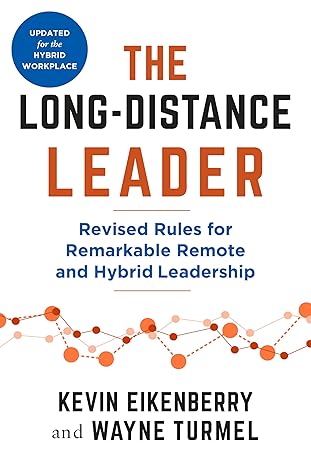
On our homepage, which is long distance work life.com. If you are interested in our new book, which is really our old book, The Long Distance Leader Revised Rules for Remarkable Remote and Hybrid Leadership. The second edition. It is out now. We are very excited about that. You can learn how to buy multiple copies, how to get all kinds of free offers at Kevin eikenberry.com/ldl.

00;21;04;11 - 00;21;36;24
Enrico Menichetti
As podcast listeners, you know how this works. We rely on word of mouth and you telling others. So please, please, please, like and subscribe. We have over 120, episodes now for you to take advantage of conversations with really, really cool people like Enrico. The other half are really cool conversations, too, but they are, with Marisa and I, darn it.

00;21;36;24 - 00;22;02;29
Enrico Menichetti
And Marisa and I are interested in your questions, your thoughts, your comments. If you have an idea for a guest, if you have a topic that you'd like us to cover, please, please, please let us know. We are both on LinkedIn. Wayne Turmel, Marisa Eikenberry or Wayne at Kevin eikenberry.com or Marisa at Kevin eikenberry.com. And darn it, that's it for another week.

00;22;02;29 - 00;22;16;00
Enrico Menichetti
Thank you so much. Thank you to Enrico for being with us. We really enjoyed bringing the show to you. My name is Wayne Turmel. And don't let the weasels get you down.


Timestamps

0:00 Introduction
1:13 Meet Enrico Menichetti and VFS Global
2:52 Remote Work Trends in Latin America
5:14 Importance of Cultural Immersion in Leadership
8:36 Navigating Conflict in Multicultural Teams
11:15 Building Genuine Connections in Remote Teams
13:32 Leadership Challenges in New Environments
16:37 Advice for Aspiring Leaders

Related Episodes

Additional Resources

Order The Long-Distance Leader

Perfect your remote leadership skills with the updated edition of "The Long-Distance Leader" by Kevin Eikenberry and Wayne Turmel, featuring new principles and proven strategies for today's hybrid work environments.
The Long-Distance Leader
Read More
Use Your PTO! The Holiday Guide for Remote Workers
Ask Wayne Anything, Surviving Remote Work, Working Remotely

Use Your PTO! The Holiday Guide for Remote Workers

The holiday season is here, but are you really taking time off? In this episode of The Long-Distance Worklife, Wayne and Marisa dive into the importance of using your PTO, setting boundaries with work, and creating intentional plans to recharge during the holidays. Learn strategies for resisting the urge to check work emails, protecting your time, and collaborating with your team to ensure everyone gets the break they deserve. Plus, discover why unplugging is vital for your mental health and productivity.

Whether you're struggling with holiday guilt, a recovering workaholic, or simply unsure how to navigate PTO as a remote worker, this episode has actionable advice to help you thrive.

Key Takeaways

1. Plan Your PTO Today: If you have unused PTO, schedule it now. Use it to rest, recharge, and reflect on your accomplishments.
2. Set Boundaries: Silence notifications, turn off work alerts, and resist the urge to check your inbox during time off.
3. Be Intentional: Create small plans that bring you joy, whether it’s reading a book, enjoying coffee dates, or scheduling social activities.
4. Communicate with Your Team: Plan ahead with colleagues to ensure adequate coverage during holiday breaks. Use tools like Slack or email scheduling to respect others' time off.
5. Unplug Guilt-Free: Remember, taking PTO isn’t just a perk—it’s essential for maintaining work-life balance and long-term productivity.

View Full Transcript

00;00;00;00 - 00;00;22;02
Marisa Eikenberry
The holiday season is supposed to be a time for joy and connection, but for many remote workers, it feels more like juggling act of work, emails and holiday plans. Sound familiar? If taking time off without sneaking a peek at your inbox feels like an impossible dream, you're in the right place.

00;00;22;05 - 00;00;34;22
Marisa Eikenberry
Welcome back to Long Distance Worklife, where we help you lead, work and thrive in remote and hybrid teams. I'm Marisa Eikenberry, a fellow remote worker. And joining me as always, is co-host and remote work expert Wayne Travel. Hi, Wayne.

00;00;34;24 - 00;00;36;26
Wayne Turmel
Hey, Marissa. How are you?

00;00;36;29 - 00;00;59;29
Marisa Eikenberry
I'm great. It's the holiday season and lights are up and things are happening. And you know, it's it's just great. But obviously we have to also start thinking about taking time off. And so there's I mean, we got to talk about setting boundaries and disconnecting and actually enjoying our holiday season. What a concept.

00;01;00;03 - 00;01;11;15
Wayne Turmel
Yeah it's it is an interesting thing. And if you have trouble setting boundaries this is the time of year when it becomes an Olympic sport.

00;01;11;17 - 00;01;14;03
Marisa Eikenberry
Oh, great.

00;01;14;06 - 00;01;44;17
Wayne Turmel
If you have no trouble setting boundaries. God love you. Enjoy the turkey and party down. But it is tough. And we're not even talking about all the family stuff that goes on it. Actually, this speaks to. And I'm speaking to my since I am now a citizen, my American brothers and sisters. Who are notorious for not taking their time off.

00;01;44;19 - 00;02;16;28
Wayne Turmel
The average American lives 10 to 14 hours of personal time in there. Use it or lose it at count. And that means they lose it every year. We are awful about that. Europeans are like, these people are morons. I can't help. But it is important that, you know, I more than once have been taken aside and said, I don't care what you have planned.

00;02;17;03 - 00;02;26;05
Wayne Turmel
You need to take this time off. And so there you go. And a lot of people are in that position.

00;02;26;08 - 00;02;27;19
Marisa Eikenberry


00;02;27;22 - 00;02;49;14
Wayne Turmel
I find it's easier for me to take days throughout the years so that there is less of a chunk of unstructured time because Wayne basically loses his mind. You know, if I don't plan to go anywhere and I it's just my wife and I. So I am left to my own devices. Right. You know.

00;02;49;16 - 00;02;50;10
Marisa Eikenberry
Yeah.

00;02;50;12 - 00;02;54;04
Wayne Turmel
You know, let's see I transcribed back.

00;02;54;06 - 00;03;15;19
Marisa Eikenberry
You know what. It'll probably actually do pretty well. But it's, it's interesting too that you're talking about this because like I actually got a newsletter this morning that was talking about, you know, taking PTO and, and why you should. And here's the things you can do. But they had this line and I wanted to remember it for this episode, but it says, remember that paid time off is more than just a perk of your job.

00;03;15;24 - 00;03;20;17
Marisa Eikenberry
It's a vital part of maintaining your work life balance.

00;03;20;20 - 00;03;26;15
Wayne Turmel
And oh, by the way, it's the law. They have to give it to you. So stop feeling guilty.

00;03;26;18 - 00;03;29;02
Marisa Eikenberry
Well, that do.

00;03;29;04 - 00;03;48;20
Wayne Turmel
Seriously, I don't care about your perfect attendance record. You know, it is your time. You are being paid for it. Take advantage of it. And to Marissa's point. It does allow us to recharge our batteries, and we need to do that.

00;03;48;22 - 00;03;49;24
Marisa Eikenberry
Right? So.

00;03;49;26 - 00;03;58;06
Wayne Turmel
You know, it's funny this time of year. This time of year. I I'm just going to get personal for a moment.

00;03;58;08 - 00;03;58;25
Marisa Eikenberry
That's fine.

00;03;58;28 - 00;04;21;24
Wayne Turmel
The end of the year is really hard for me. I tend not to celebrate the end of the year. I tend to go in a fetal position and obsess about all the ways that screwed up. Oh, no. I mean, basically, I hate New Year's Eve. I love New Year's Day. Okay, here's day. I've got a start. I've got a fresh start.

00;04;21;27 - 00;04;32;26
Wayne Turmel
New year's Eve is just a giant convention of all my neuroses hanging out inside my head. And, oh, by the way, let's fuel that with alcohol.

00;04;32;28 - 00;04;34;01
Marisa Eikenberry
You know.

00;04;34;03 - 00;05;07;06
Wayne Turmel
Sure. So. Woo hoo! So I have learned. And that's why I'm sharing this with you. I have learned that while staying busy over the holidays keeps me somewhat sane, I tend to balance it out so I will with discussion with my manager. I will work part days. I will work a couple of days and then take each day off during this time.

00;05;07;07 - 00;05;15;26
Wayne Turmel
It's also a really good chance for me to be a good teammate and cover for people who are, you know, stressed for time.

00;05;15;29 - 00;05;33;04
Marisa Eikenberry
Right? Well, and it's interesting too, that you talk about, you know, you prefer to take days over the year and all that. I, I am somebody my very first year here. And for those of you that have been listening for a while, this will surprise no one. I didn't take a single day off the first year that I worked for getting.

00;05;33;07 - 00;05;39;13
Marisa Eikenberry
That was just me as a person. I just, while I'm here, I got to take the day, you know? So unless you're hoping for a.

00;05;39;13 - 00;05;40;20
Wayne Turmel
Certificate on the wall.

00;05;40;20 - 00;06;05;05
Marisa Eikenberry
Because the thing is, I. What I wasn't, it was just in my head. I'm like, well, I'm supposed to go to work, so I'm going to go. Or, like, I didn't have any reason not to go. And yeah. And like, Kevin pulled me aside and was like, hey, so take your day. And, you know, because I, I don't really travel at this current time in my life and I don't really do a lot of extra stuff.

00;06;05;05 - 00;06;32;25
Marisa Eikenberry
So for the most part, I don't really have a reason to just take a random Thursday off because, you know, to your point, like I just sit at home, I go, well, I could have been working, but the last couple of years I do take a chunk of time at the end of the year. Because, you know, I host Christmas Eve and I'm trying to bake cookies with my mom and so there's all this stuff that happens at the very end of the year anyway, and it's just like all of that stuff comes together and it's like, you know what?

00;06;32;25 - 00;06;50;23
Marisa Eikenberry
Okay. And so the last I think two year, 2 or 3 years now, I've just taken the last two weeks of the year off and it's just been that's it. I'm I'm out of the office and it's weirdly been the best thing for me to do to get myself reset for January. Yeah.

00;06;51;00 - 00;06;53;18
Wayne Turmel
Not everybody can go.

00;06;53;20 - 00;06;54;13
Marisa Eikenberry
100%.

00;06;54;13 - 00;07;17;14
Wayne Turmel
Without a break. And so, you know, if you want to grow up and be like, Marissa, God love you. Not everybody functions that way. And so it's really important. What if you struggle with that? If you struggle that what am I going to do except obsess about work? Make a plan for that day.

00;07;17;17 - 00;07;18;02
Marisa Eikenberry
Yeah.

00;07;18;04 - 00;07;40;11
Wayne Turmel
Even if it is. I mean, I have said I am stepping out. I live in Las Vegas, so I can do this. I am going to spend a couple hours on the deck with a book, me and the hummingbirds and maybe a cigar. I actually plan for that and I leave and it's it a I got to check something off my list.

00;07;40;11 - 00;07;44;07
Wayne Turmel
I sat right back and I watched the hummingbird and I had a cigar. And it's all good.

00;07;44;10 - 00;07;45;19
Marisa Eikenberry
Check check check check.

00;07;45;21 - 00;07;52;14
Wayne Turmel
But plan little. What makes you happy? What is a treat for yourself?

00;07;52;16 - 00;07;53;20
Marisa Eikenberry


00;07;53;22 - 00;08;16;14
Wayne Turmel
And it doesn't have to be huge. It really doesn't. But little things that make you happy. Is there a book you've been wanting to read? Is there a movie you've been wanting to see? Is there you know, my wife and I have coffee dates and we get out of the house, which is the function, because Wayne is in the house all week.

00;08;16;20 - 00;08;18;04
Marisa Eikenberry
Right?

00;08;18;06 - 00;08;46;09
Wayne Turmel
We get out of the house, we have a cup of coffee. We chat about stuff. But we make it an event. And I think that's the thing is. Well, what am I going to do with this time anyway? Get used to being good to yourself, and it doesn't have to be big, and it doesn't have to be expensive, and it doesn't have to be anything that any body else cares about.

00;08;46;11 - 00;09;05;29
Marisa Eikenberry
100%. I mean, I'm not going to lie. Parker and I have. So Parker's my husband. For those of you listeners that haven't heard me mention that name before, but like there has been once or twice, but we took a day off of work. Why? Because again, we were really excited about came out and we were going to play it together.

00;09;06;01 - 00;09;23;02
Wayne Turmel
Absolutely. Little things make us happy. And if you are alone at this time, plan for things that get you involved with other humans.

00;09;23;05 - 00;09;26;03
Marisa Eikenberry
Yeah, the social part is so important.

00;09;26;05 - 00;09;47;01
Wayne Turmel
It is. It's really easy for this to be hard for people. My daughter is in Chicago. She's alone. She struggles with seasonal stuff. Anyway. She has to. Yesterday she went to the, sing along with it at.

00;09;47;05 - 00;09;48;04
Marisa Eikenberry
Okay.

00;09;48;06 - 00;10;00;16
Wayne Turmel
By herself, her and half of Chicago, from the sounds of it. Just singing popular at the top of her lungs for two hours, and it made her happy.

00;10;00;18 - 00;10;09;12
Marisa Eikenberry
Thank you. You know, I definitely want to see that movie, but I'm waiting for the no singalong version for a bit, because I've actually never seen it.

00;10;09;15 - 00;10;14;00
Wayne Turmel
But that's what she has seen the stage play nine times.

00;10;14;02 - 00;10;15;16
Marisa Eikenberry
Well, there you go.

00;10;15;18 - 00;10;47;01
Wayne Turmel
So she is a little of right, but this but this is the thing is that we need to guard our time. If you are working during this season. Don't begrudge the people who are taking their time. Plan with them what's available, what's really do. What can you do to help them? What can they do before they disappear to help you so that you are not left stranded?

00;10;47;04 - 00;11;23;28
Wayne Turmel
Right. And these conversations take place kind of organically when we're all in the office together. But when we work remotely and I. If there's a drinking game for this show, the words we. So and intentional are probably the ones that will put you over the line. But intentionality is so important. It's funny, we're talking about taking time off and recharging your batteries, but you need to be intentional about that.

00;11;24;01 - 00;11;32;25
Wayne Turmel
You can't just assume that it's going to happen or assume that everybody understands or does that the same way that you did.

00;11;32;28 - 00;11;57;15
Marisa Eikenberry
Switching gears a little bit. Talking about intentionality and, and you know, when we are taking that time, but like how do we also intentionally protect that time by, you know, resisting the urge to check work messages and slack messages and emails and all that? I know I struggled with that for a very long time. I have some tips I'll get into in a minute, but do you have some tips on that?

00;11;57;18 - 00;12;20;13
Wayne Turmel
Yeah, for me it's really simple. It's just kill the alert. It's a simple. Yep. Setting. I mean, for me, it's enough that I kill the auditory work because I'm like Pavlov's dog. I hear a ping. I need to check it. Right? Right. I can pick up my phone and see there are eight messages in outlook. Well, I ain't working right now, so.

00;12;20;16 - 00;12;38;22
Wayne Turmel
But I also have 60 years of practice that allowed me to get there. But kill the alerts. Silence the notifications. It's easy to do, and you'd be amazed at what a difference it makes.

00;12;38;24 - 00;12;44;13
Marisa Eikenberry
I've had my email this off for years and it's so helpful.

00;12;44;15 - 00;13;11;15
Wayne Turmel
And if you are obsessive, just pick a time. I mean, okay. I'm an early morning riser. My wife is asleep. I'm supposed to be on vacation. I'm supposed to be whatever. I will sneak a peek of my emails just to see if there's a burning fire. But once it's done, I'm done. I can relax. I have hit the little valve on my brain that vents that stuff.

00;13;11;17 - 00;13;35;13
Wayne Turmel
And I can now relax because I know there's nothing there that requires my immediate attention. For a lot of us. It's the anticipation of, oh, my God, there's something in my inbox. I know there is. So, you know, hitting the little vent and letting the steam escape is actually better than just trying to ignore it. Stick your finger in here and go la la la la la I'm not listening.

00;13;35;14 - 00;13;36;10
Wayne Turmel
You.

00;13;36;13 - 00;14;07;06
Marisa Eikenberry
Well funny enough that is what I do is that I, I have all the do not disturb, but I know me. I know that for me, I am a recovering workaholic. And if I first of all, I get a bunch of emails just telling me that the websites have updated constantly. And so those happen anyway. But I know that if I go in to look at stuff and if I see something that's a task my brain isn't going to be, oh, that can wait until Monday.

00;14;07;06 - 00;14;29;08
Marisa Eikenberry
It's, well, I can do that right now. I'm already home. Like, I'll just go do it. I know me and so I won't look at it at all. So if if you are like me, like, that's okay too. Whatever you need to do to protect yourself and your time. I know that one of our coworkers used to frequently tell me we are not surgeons.

00;14;29;09 - 00;14;33;11
Marisa Eikenberry
These are not life and death situations. And if it is, they will pick up the phone.

00;14;33;14 - 00;15;01;00
Wayne Turmel
Yeah, it's. We've been doing this show a long time. We have given you lots of advice. Readers, listeners. I still I'm an analog guy. Dear listener, we have given you a bunch of stuff. Some of it is going to ring true. Some of it is going to seem weird. Probably we should have offered this disclaimer when we began doing this show, which is your mileage may vary, right?

00;15;01;01 - 00;15;32;26
Wayne Turmel
We are all human beings with our own individual styles. For me, quick bursts of venting and then being allowed to possibly go about my day works for other people. It doesn't. As long as it doesn't go down the rabbit hole, as long as you it doesn't interfere with your pleasure, with your relaxation. I know that being worried about stuff is counterintuitive to time off.

00;15;32;28 - 00;16;13;24
Wayne Turmel
Yeah. Defeats the purpose. Get used to it is my advice. Small doses gradually building up resistance. And that is the answer. But we all do stuff differently, and there are generalities. We need time off. We need to recharge our batteries. We need to set boundaries with the people we work with and for so that our life, work life does not overrun our personal life and steal our joy.

00;16;13;26 - 00;16;20;26
Wayne Turmel
And yes, this is grumpy old white guy talking about joy. You are allowed to have it.

00;16;20;28 - 00;16;30;08
Marisa Eikenberry
Let the record state at 1127 at 2 p.m., Wayne said. Let there be joy.

00;16;30;11 - 00;16;34;23
Wayne Turmel
And it were. And let there be joy. Darn it, it's the holidays.

00;16;34;25 - 00;16;54;02
Marisa Eikenberry
Well, and to your point about, you know, respecting each other's boundaries and things like that. So, you know, if I know that Wayne is out for a week and I might still be working and I have something that I need to talk to him about or whatever, maybe I don't send that email right now. We have slack schedulers.

00;16;54;03 - 00;17;14;24
Marisa Eikenberry
I'm sure Microsoft Teams has some sort of scheduling thing. I know outlook does. You know, if you need to get the email out of your head. So that way you don't forget. Great. Do it. Schedule it for when they come back because it's it's just not important right now. And if it is pick up the phone.

00;17;14;27 - 00;17;20;19
Wayne Turmel
And your desire to get it off your plate does not mean you get to mess with somebody else.

00;17;20;21 - 00;17;24;05
Marisa Eikenberry
Absolutely. And while it will.

00;17;24;06 - 00;17;33;20
Wayne Turmel
Things scheduling emails, you know, these little behavioral niceties.

00;17;33;22 - 00;17;35;09
Marisa Eikenberry


00;17;35;12 - 00;17;51;28
Wayne Turmel
Build up. You know we've talked before about the trust bank account and how every time you have a good interaction with somebody it builds positive will and positive will so that when inevitably something unhappy happens you don't drain that account.

00;17;52;00 - 00;17;53;01
Marisa Eikenberry
Right.

00;17;53;03 - 00;18;11;29
Wayne Turmel
And these little things make all the difference. You know, you've heard me say before. My favorite quote from Napoleon. If you want to avoid war, you avoid the thousand little pinpricks that lead to war. Little things like this matter.

00;18;12;02 - 00;18;34;05
Marisa Eikenberry
So one of the last things I want to cover before we end this episode is, you know, what are some strategies that teams can implement to, like, ensure adequate coverage when team members are taking time off, especially like, you know, we're going into the holiday season, lots and lots of people are taking time off. And in some cases you're working with skeleton crews and things like that.

00;18;34;05 - 00;18;40;28
Marisa Eikenberry
So what can teams kind of plan for ahead of time to accommodate?

00;18;41;00 - 00;18;49;21
Wayne Turmel
I can't remember the last time anybody listening to this heard me say, have a meeting, but this would be one.

00;18;49;24 - 00;18;51;07
Marisa Eikenberry
Yes.

00;18;51;09 - 00;19;22;22
Wayne Turmel
Right. Prior to probably mid-November, as a team, look at what is remaining that needs to be done for the rest of the year. That is time sensitive, right? That isn't just more of the same, but what are the unique demands of the end of the year? There are reports that need to be done. There are all kinds of end of the year activities that get added on to, oh yeah, we're trying to run a business and sell some stuff.

00;19;22;25 - 00;19;23;26
Marisa Eikenberry
Crazy.

00;19;23;28 - 00;19;48;15
Wayne Turmel
So as a team, identify what those are and then talk about who's going to be a way during that time. You know, people have use it or lose it time. You know, so-and-so can't shut up about their upcoming trip to Hawaii. We know they're not going to be here, but somebody else has a bunch of use it or lose it time, and there's no real occasion.

00;19;48;15 - 00;19;51;00
Wayne Turmel
So we didn't know that they're going to be gone.

00;19;51;03 - 00;19;53;26
Marisa Eikenberry


00;19;53;29 - 00;20;19;19
Wayne Turmel
Have these conversations and maybe have a slack channel or something like that. That's just for holiday coverage. Hey I'm around. Hey I'm going to be around but I'm going to be out for two days. Something came up. I'm not in the rest of the day. Right. Keep each other apprized so that there are fewer uncomfortable. Recognitions.

00;20;19;21 - 00;20;21;20
Wayne Turmel
Yeah. Sudden recognitions.

00;20;21;22 - 00;20;38;21
Marisa Eikenberry
Right? Well, and in your out of office emails, too. You can also say, you know, hey, if you have questions about this talk to this. I know every time I do an out of office, especially if I'm the only one taking time off. Like it depends on what it is. You know, if they're talking about long distance work life, I tell them to go to you.

00;20;38;21 - 00;20;46;16
Marisa Eikenberry
If they're talking about Remarkable Leadership podcast, they go to Lisa like, I have a list. Here's all the people that you need to talk to because I'm not here.

00;20;46;19 - 00;21;13;25
Wayne Turmel
Here's the other thing with a couple of very obvious exceptions, because you are the tech guru that the rest of us aren't. Stuff gets done. The company is still standing when you come back on January, whatever the heck it is. Yeah, the building will still be there. You will still have a job. Your boss is still going to expect you to get back to work.

00;21;13;27 - 00;21;16;15
Wayne Turmel
And the world has not come to a halt.

00;21;16;18 - 00;21;18;07
Marisa Eikenberry
Right.

00;21;18;09 - 00;21;28;27
Wayne Turmel
If you are that vital to the preservation and maintenance of the business, you are underpaid and your boss is doing it wrong.

00;21;28;29 - 00;21;36;14
Marisa Eikenberry
And probably have no idea anything about delegation either. Depending on where you're at in the hierarchy.

00;21;36;17 - 00;21;49;07
Wayne Turmel
But that's something that we need to get used to, to this notion that if I take my holidays, the bill, you know, the company will fail. No it won't. Yeah.

00;21;49;10 - 00;21;54;05
Marisa Eikenberry
Well, it's like we said earlier, that man, that's a life or death situation.

00;21;54;07 - 00;21;59;18
Wayne Turmel
Yeah. It's like, take your time. It's right across.

00;21;59;21 - 00;22;19;11
Marisa Eikenberry
Do it. So I guess the lesson for this episode, listeners is that if you aren't taking your PTO, please take it. If you know that you have days that you haven't spent this year, and especially if it's a use it or lose it. Figure out when you're going to take off. Like right now. Like stop the show. Go do it.

00;22;19;13 - 00;22;38;08
Marisa Eikenberry
We will forgive you for not listening to the rest of this episode. But, Wayne, I want to thank you so much for this last live episode of the year. This last one that we're going to be recording. So for those of you that are listening, you'll hear about two weeks of replays before we get new shows up in January.

00;22;38;11 - 00;23;05;03
Marisa Eikenberry
But before we go, we're excited to share that the second edition of The Long Distance Leader is now available. This updated guide is packed with actionable strategies to help you lead effectively in today's remote and hybrid environments. Don't wait. Order your copy at long distance work life.com/ldl. Take your leadership skills to the next level in 2025. And because the holidays are in full swing, we do want to wish you a joyful and restful season.

00;23;05;06 - 00;23;26;12
Marisa Eikenberry
Take these moments to recharge. Use your PTO. Connect with your loved ones and reflect on the wins that you've had this year because you've earned it. And thank you so much for listening to The Longest Worklife for Shownotes transcripts and other resources. Make sure to visit Long Distance worklife.com. And if you enjoyed this episode, don't forget to subscribe so you never miss a future one.

00;23;26;14 - 00;23;43;11
Marisa Eikenberry
And while you're at it, leave us a rating or review on Apple or Spotify. It's quick, and it helps us reach even more listeners like you. And we'd also love to hear from you. So reach out to us via email or LinkedIn with the links in our show notes and let us know that you listen to this episode, or suggest a topic for Wayne and I to tackle in the New Year.

00;23;43;13 - 00;23;50;11
Marisa Eikenberry
Thank you so much for being part of our community. We hope you have a wonderful holiday season. And as Wayne likes to say, don't let the weakness get you down.


Timestamps

00:00 Introduction
01:00 Why Americans struggle with taking PTO
03:15 The benefits of PTO for work-life balance
05:00 Personal stories of managing time off and holiday stress
08:00 Small joys: Planning activities for your time off
12:00 Tips for disconnecting from work during PTO
14:30 The power of scheduling and protecting boundaries
18:12 Strategies for ensuring adequate team coverage during holidays
22:00 Final thoughts: Why you need to take your PTO now!

Related Episodes

Additional Resources

Order The Long-Distance Leader

Perfect your remote leadership skills with the updated edition of "The Long-Distance Leader" by Kevin Eikenberry and Wayne Turmel, featuring new principles and proven strategies for today's hybrid work environments.

The Long-Distance Leader
Read More