Leading Through Conflict: Communicating Unpopular Policies
Ask Wayne Anything, Hybrid Work, Leadership

Leading Through Conflict: Communicating Unpopular Policies

Marisa Eikenberry and Wayne Turmel dive into the complexities of leadership when confronted with disagreeable or unpopular policies. Learn effective strategies for communicating these policies to your remote or hybrid team, ensuring clarity, empathy, and maintaining morale. Wayne shares his extensive experience on how to handle the challenges of remote leadership, from understanding the reasons behind decisions to managing team pushback. Whether you're a seasoned manager or new to leadership, this episode offers valuable insights for navigating conflict and leading with confidence, no matter where your team is located.

Key Takeaways

1. Communication is a two-way process; it's crucial to listen as well as deliver the message.
2. Use rich communication mediums, like video calls, for delivering significant news.
3. Be transparent about what you know and don’t know, and ensure ongoing dialogue.
4. Schedule follow-ups and one-on-ones to address individual concerns and questions.
5. Understand the technical, organizational, and personal implications of policy changes.

View Full Transcript

00;00;07;28 - 00;00;19;04
Marisa Eikenberry
Welcome back to long distance worklife where we help you lead, work and thrive in remote and hybrid teams. I'm Marisa Eikenberry, a fellow remote worker. And joining me is my co-host and remote work expert, Wayne Turmel. Hi, Wayne.

00;00;19;07 - 00;00;21;05
Wayne Turmel
Hello, Marisa. How the heck are you?

00;00;21;06 - 00;00;22;24
Marisa Eikenberry
I'm great. How are you?

00;00;22;26 - 00;00;25;13
Wayne Turmel
I am, I am well today.

00;00;25;16 - 00;00;36;19
Marisa Eikenberry
Good deal. Because today, we're going to be talking about leadership and conflict and how we can handle disagreeable policies or unpopular policies.

00;00;36;22 - 00;00;46;17
Wayne Turmel
Yeah, it's part of being the manager, right? Nobody is when everything's going great. Being the boss is fabulous. when.

00;00;46;17 - 00;00;47;08
Marisa Eikenberry
Trade.

00;00;47;10 - 00;01;12;14
Wayne Turmel
Policies come down and you, as the manager, are expected to inform the team about them, and even worse, enforce them, it can be super, super unpleasant. And when you are not in the same place as the people that you're working with, it can be unpleasant and stressful. So more stressful to be specific.

00;01;12;21 - 00;01;34;00
Marisa Eikenberry
Right. So given you know that we have remote and hybrid teams now. And so it's way different than, you know, walking into the office in the conference room and being like, hey guys, like here's this decision that's been made from on high. So what are some effective communication strategies that managers can use with their remote and hybrid teams when explaining some unpopular policies to their team?

00;01;34;03 - 00;01;47;18
Wayne Turmel
Well, let's take a step back when everybody's in the office, right. There's like this immediate conversation and kerfuffle. And then there's cubicle conversations. And, you know.

00;01;47;20 - 00;01;48;23
Marisa Eikenberry
Slack messages and.

00;01;48;25 - 00;02;17;19
Wayne Turmel
Whining and people going out for beverages later. And, you know, like that when you are not physically co-located with your coworkers and with your team. That same stuff happens, but you don't know what's going on. You aren't privy to the chat conversations and the texts and the whining and complaining. There is so much, as always, with long distance leadership.

00;02;17;25 - 00;02;44;11
Wayne Turmel
There is so much white space that you don't really know what's going on. And so the number one communication thing is to do it. and communication is in fact a two way process. It's delivering the message, but it's also listening. And it's listening to what people say and what they don't say.

00;02;44;13 - 00;02;44;23
Marisa Eikenberry
Right.

00;02;44;24 - 00;02;49;28
Wayne Turmel
If you are met with dead silence, there's stuff you need to learn.

00;02;50;01 - 00;03;07;12
Marisa Eikenberry
Well, and you mentioning dead silence, I mean, that also is a good point to like how we're delivering this message. We've talked about mediums of communication before, but it sounds like, you know, if you're going to deliver something that might be unpopular, probably needs to be on a video call. Yes.

00;03;07;15 - 00;03;21;06
Wayne Turmel
Well, certainly you want it to be as rich as circumstances demanded. a video call is a great way to break the news if it's possible to do it that way.

00;03;21;08 - 00;03;22;20
Marisa Eikenberry
Right.

00;03;22;23 - 00;03;35;10
Wayne Turmel
and you need something they can refer back to a written document that it says this is what is and isn't covered.

00;03;35;13 - 00;03;36;25
Marisa Eikenberry
Okay.

00;03;36;27 - 00;04;03;12
Wayne Turmel
because when you make an announcement, particularly one that is unpopular or has emotional tripwires attached to it, there's no guarantee they're going to get it the first time to really understand what's going on. So the communication strategy as such, there are a few steps that you have to take. The first is you better make sure you understand the change.

00;04;03;14 - 00;04;03;28
Marisa Eikenberry
Right.

00;04;03;28 - 00;04;41;18
Wayne Turmel
And that's not just whether or not you agree with it. You may or may not, but you darn well better understand it. And there are several levels to this. You need to understand technically what is changing or not, what is going to be the difference. You need to understand as best you can. Why is this happening right? The moment I became a real grown up adult worker was the day I realized that every decision, no matter how idiot shtick, was made for a reason.

00;04;41;20 - 00;04;43;10
Marisa Eikenberry
Yeah.

00;04;43;12 - 00;05;18;24
Wayne Turmel
Somebody had a reason for doing what they did. Now, whether this is the right response. There's all that. But if you understand what the reason is, the it tempers some of the, the pain. So you need to understand what is actually changing. You need to understand why it's happening. And you need to understand the repercussions. If we know if you're making notes to yourself for how to break this news, it starts with when this happens, this will be the result.

00;05;18;26 - 00;05;20;18
Marisa Eikenberry
Right?

00;05;20;20 - 00;05;38;11
Wayne Turmel
Good, bad or indifferent. And there's what's the result on an organizational level. There's what's the result on a personal level. And the challenge for leaders is that the information comes down always with the priority on the organizational level.

00;05;38;13 - 00;05;39;08
Marisa Eikenberry
Of course.

00;05;39;10 - 00;06;00;29
Wayne Turmel
This is what it means to the organization when you break it to your people. That's the secondary consideration. They want to know what does it mean for me? And you'd best have as good an answer as you can have. Now that all makes sense. The problem is we don't always have all the information.

00;06;01;01 - 00;06;01;29
Marisa Eikenberry
Right.

00;06;02;02 - 00;06;14;04
Wayne Turmel
And one of the mistakes that leaders make is if they don't have certain information they either withhold it completely.

00;06;14;07 - 00;06;15;13
Marisa Eikenberry


00;06;15;16 - 00;06;35;08
Wayne Turmel
Or they act as if they have the information. And this is going to happen. And what happens as policies get implemented is things don't always happen the way that we think they're going to. And then if it doesn't match what you've told your people they say you lied to us, you weasel.

00;06;35;11 - 00;06;37;01
Marisa Eikenberry
Right. Well, and.

00;06;37;01 - 00;06;55;04
Wayne Turmel
You may not have intentionally you may have tried to spare their feelings. You may have tried not to make a situation worse by saying this could also happen, but you also are perceived as not having told them the truth.

00;06;55;06 - 00;06;56;21
Marisa Eikenberry


00;06;56;24 - 00;07;03;05
Wayne Turmel
And you did it for all the right reasons and you did it to be a good person. And it's still going to blow up in your face.

00;07;03;07 - 00;07;06;08
Marisa Eikenberry
I think this is part of course for being a leader to be honest.

00;07;06;08 - 00;07;39;04
Wayne Turmel
Well but that's you know, how often have we said on this show time after time, leadership first, location second, like, yes, this is breaking bad news. Leadership 101 and when people aren't there, they can't look at each other and go, what the hell? They can write the text messages and the chats are going crazy and there's all kinds of stuff going on, and you can't physically see everybody's eyes, right?

00;07;39;05 - 00;07;51;25
Wayne Turmel
Right. If you call everybody into the bullpen, into the cube farm and you make an announcement, you can see so-and-so looks stunned, so-and-so is ticked off. So-and-so just looks confused.

00;07;51;27 - 00;07;52;20
Marisa Eikenberry
Yeah.

00;07;52;22 - 00;08;07;18
Wayne Turmel
And you can respond accordingly. You don't have that benefit unless it's a very small team and you're on camera, and even then, you're so busy delivering the message that you may not see everything that's going on.

00;08;07;20 - 00;08;19;00
Marisa Eikenberry
Well, that's what I was getting ready to say, too. I mean, even if you do have a small team, maybe everybody's on camera. Okay, I might look fine here, but you don't know. My foot shaking under my desk. You know. Right?

00;08;19;03 - 00;08;46;15
Wayne Turmel
Right. Absolutely. Which means that delivering the message is only part of it. I mean, one of the things that we've taught at the cabin, I can very group for a billion years, and they've been teaching in the world for much longer than we have walked the earth is communication is missed. Message send, message received, message understood, and action taken.

00;08;46;22 - 00;08;47;21
Marisa Eikenberry
Right.

00;08;47;23 - 00;08;56;05
Wayne Turmel
Right. A commute, a successful communication sends the message. And whatever you want to have happen, happens, right?

00;08;56;06 - 00;08;57;10
Marisa Eikenberry
Right.

00;08;57;12 - 00;09;13;04
Wayne Turmel
The problem when you are instituting a an emotional or a complex message, is that message send is the only thing you know is going to happen.

00;09;13;06 - 00;09;15;07
Marisa Eikenberry
Absolutely.

00;09;15;09 - 00;09;27;01
Wayne Turmel
Right. You can say I sent the message. I held that call. I did that announcement. I sent that email. Yep. You sure did. And it's only a quarter of the process.

00;09;27;03 - 00;09;32;28
Marisa Eikenberry
Yeah. The email went to spam. They didn't watch the video. They didn't attend the call anyway.

00;09;33;05 - 00;09;43;05
Wayne Turmel
Exactly right. I mean, there's a lot of stuff, so sending the message is only part of it. The second thing is, did they actually hear it?

00;09;43;12 - 00;09;44;25
Marisa Eikenberry
Right.

00;09;44;27 - 00;10;05;29
Wayne Turmel
Well, you know, the richer the form of communication, the more likely that they are going to physically it is going to physically hit their ears. Yeah. Right. But we all know the minute you hear something that you don't want to hear, you cease being able to hear it.

00;10;06;01 - 00;10;06;28
Marisa Eikenberry
Yes.

00;10;07;00 - 00;10;22;18
Wayne Turmel
Right. Hey we're doing a reorg. If you're so busy thinking that's it I'm getting fired. I'm getting laid off. This is the end of life as we know it. I am literally not hearing what you're telling me, let alone understanding.

00;10;22;26 - 00;10;28;08
Marisa Eikenberry
Right. And they might be saying your departments fine. And you don't have no idea it.

00;10;28;10 - 00;11;05;02
Wayne Turmel
So you have to make sure they they received the message clearly do the best you can to make sure they understand it. And some of that is eliminating the walls that are immediately going to shoot up. If you merely focus on the organizational part of this, they are going to be so busy trying to figure out what it means to them that now, one way to do that, particularly live, is to say, what I am about to tell you is what we know right now.

00;11;05;04 - 00;11;33;14
Wayne Turmel
There's a lot that we don't know. There's a lot that might change. So I'm giving you the best information I can at this time. I would ask you to listen to it and I will answer your questions as best I can. Yeah. Because you want to eliminate the barriers so people can at least take the information in, then you better make darn sure that people understand it.

00;11;33;17 - 00;12;02;04
Wayne Turmel
Some of that can happen in the moment, right? It's an all hands meeting. There are questions that most people will not ask their questions out loud. Most people do not even know what their questions are until they hang up and later. So on a remote or a hybrid team, make sure that there is plenty of opportunity for that instantaneous feedback and connection.

00;12;02;06 - 00;12;31;03
Wayne Turmel
Ideally, if your team is small enough, you would schedule one on ones immediately. You want to do check ins. How you doing? What did you hear? What are your questions and be able to address those as best you can on an individual basis. particularly for those who aren't don't have easy access to you. Right. And again, you want to be empathetic.

00;12;31;06 - 00;12;38;25
Wayne Turmel
I know this is hard. That's not the same as sympathetic. I know I think it sucks to is not help.

00;12;38;28 - 00;12;51;23
Marisa Eikenberry
Well. So pivoting a little bit like should managers even be transparent with their own reservations on stuff like if, if, if I'm a leader and I hate this idea, should I tell them.

00;12;51;25 - 00;13;01;15
Wayne Turmel
I think it is appropriate to say I have questions myself about this?

00;13;01;18 - 00;13;03;17
Marisa Eikenberry
Yeah.

00;13;03;20 - 00;13;23;07
Wayne Turmel
When I first heard it, I had some concerns. I hope that I get the answers that I need, and I hope that I pass those that you know, and I will let you know when I have those answers. It is not it. It is helpful to empathize. It is not helpful to throw the company under the bus.

00;13;23;10 - 00;13;25;01
Marisa Eikenberry
Right.

00;13;25;04 - 00;13;46;15
Wayne Turmel
Because at the end of the day, on a purely mercenary, selfish level, you as the leader are going to be at least partially responsible for the enforcement and coaching and training and helping people make this change if they know that you're against it.

00;13;46;17 - 00;13;47;08
Marisa Eikenberry


00;13;47;11 - 00;13;53;04
Wayne Turmel
First of all, are your efforts really going to be good faith efforts to make it happen?

00;13;53;06 - 00;13;54;10
Marisa Eikenberry
Right.

00;13;54;12 - 00;14;18;21
Wayne Turmel
And secondly they know you think it's nonsense so why should they bother. It is going to be three times harder to implement the change than it would it be if people were merely unhappy. So and this goes back to understanding the change, right. Why is it happening? I understand why the company is doing what it's doing. I don't have to like it.

00;14;18;21 - 00;14;46;14
Wayne Turmel
I don't have to agree with it. But I better be able to say when somebody says, why are they doing this? And there's a difference between the stock is tanking and they need to shore up the numbers. And and you know, the stock is tanking. And so they're throwing us overboard. Those are two very different right ways of explaining what's going on.

00;14;46;16 - 00;14;50;19
Marisa Eikenberry
And one of them is okay. And the other one is definitely not.

00;14;50;22 - 00;15;07;29
Wayne Turmel
And it's perfectly natural I mean, you want transparency is important in that it creates trust. Right. Hey I don't know exactly what's going to happen either. We will figure it out together.

00;15;08;01 - 00;15;33;09
Marisa Eikenberry
Right. So hypothetically speaking like you know if, if managers have a bunch of pushback from their teams about a decision, you know, and it's something maybe they personally disagree with how they've decided to share that with their team. Hopefully they take some of our advice from this episode. But how do managers handle that pushback? Because, you know, they still need to support what the decision was.

00;15;33;16 - 00;16;02;14
Wayne Turmel
Well, when the pushback happens, there's a couple of things. First of all, it needs to be heard. And people need to know that it is being heard. And of course, in a remote environment that might be written. So you obviously want to have one on ones with people. But maybe there is a special slack or teams chat, for questions about things.

00;16;02;16 - 00;16;29;00
Wayne Turmel
Right. You want to take that information because some of the information you're going to be able to answer and you're going to be able to diffuse the drama. Pretty much right away. There is also there are going to be questions, especially if you don't have the answer, that it is your job as a manager to go up the hill and get the answers that you can get, even if the answer is when are the layoffs going to start?

00;16;29;03 - 00;16;30;15
Marisa Eikenberry
It's still important to know that answer.

00;16;30;16 - 00;16;31;25
Wayne Turmel
They got to know that.

00;16;31;27 - 00;16;47;22
Marisa Eikenberry
Yeah. And we've talked about this on the show before too. But I want to reiterate because you've you've kind of touched on this already, but this idea of if you get asked a question and you don't know, it's okay to say, I don't know, but I'm going to go find out, do not.

00;16;47;25 - 00;16;50;15
Wayne Turmel
This is where you get accused of lying.

00;16;50;18 - 00;16;50;26
Marisa Eikenberry
Yeah.

00;16;50;27 - 00;17;09;25
Wayne Turmel
Because if you try to gloss over the question or you kind of think this is the right answer. And so you give it because you want to sound like you know what you're doing. You don't want to sound like an idiot. It's going to blow back on you if that answer turns out not to be true.

00;17;09;28 - 00;17;16;09
Marisa Eikenberry
Right. And we as a society just need to get better about saying, I don't know, but I'm going to go find out.

00;17;16;11 - 00;17;45;13
Wayne Turmel
We as human beings, just in general. Right? Again, most of what we've talked about is conveying bad news or handling conflict 101, regardless of where you are. I think as we near the end of our time in a remote or a hybrid environment, there are a couple of very specific differences. Number one is you want to make sure that the whole team gets as much information as they can.

00;17;45;16 - 00;18;05;16
Wayne Turmel
As a team, it's very tempting, for example, to call the people in the office together, make the announcement, and then have a call for the people who aren't. It's a very natural, kind of instinctive thing to do. But the team needs to hear it as a team.

00;18;05;22 - 00;18;07;26
Marisa Eikenberry
Yeah.

00;18;07;28 - 00;18;30;25
Wayne Turmel
so that's one thing, is don't fall into that trap. It should be delivered as richly as possible, and it needs a backup. It needs to have a place that people can go back and now read it for themselves. Right when the drama has settled, or they're a little calmer and they can read it and take a look, because then they may get some of their questions answered.

00;18;30;25 - 00;18;32;12
Wayne Turmel
Other questions may arise.

00;18;32;14 - 00;18;32;23
Marisa Eikenberry
Right.

00;18;32;26 - 00;18;40;10
Wayne Turmel
And there needs to be an ongoing conversation. It's not like you can just say, well, I told them and that's it.

00;18;40;12 - 00;18;41;09
Marisa Eikenberry
Right.

00;18;41;11 - 00;19;10;22
Wayne Turmel
Right. It's going to be an ongoing conversation. And then you need to figure out what. Training are people going to need. What are they going to need to know. Some of it contextual, some of it, you know, added hey, here's what's going to happen. And there may be things they need to do differently. What are those things. And get that training in place as quickly as possible.

00;19;10;24 - 00;19;16;28
Marisa Eikenberry
Absolutely. Wayne, sounds like we kind of talked about this for a lot longer than now, but unfortunately we are out of time.

00;19;17;00 - 00;19;39;20
Wayne Turmel
But someday when you are a manager, young lady, you will learn, it's this is the bane. There are two things implementing policies that you yourself might not agree with and having to let people go. These are the hardest things that a manager has to do.

00;19;39;23 - 00;20;05;04
Marisa Eikenberry
We want to talk about that second one on another episode sometime. Absolutely. That that might be really important. And listeners, if you're listening right now and you're like, yeah, I want to hear that. Please let us know. so that way we know that that needs to go higher up on our list. But listeners, thank you so much for listening to The Long-Distance Worklife. For shownotes, transcripts, and other resources, make sure to visit LongDistanceWorklife.com.

00;20;05;06 - 00;20;27;07
Marisa Eikenberry
If you haven't yet, subscribe to the podcast so you won't miss any future episodes. And if you're on Apple or Spotify, please give us a rating and review. Your feedback helps us improve and reach more listeners like you. Feel free to contact us via email or LinkedIn with the links in our show notes, and let us know you listen to this episode, or even suggest a topic for Wayne and I to tackle in a future episode.

00;20;27;10 - 00;20;50;16
Marisa Eikenberry
Like we already mentioned, we would love to hear from you. And before we go, I want to let you know that the second edition of The Long-Distance Leader is now available for preorder. For those of you watching, Wayne has a copy of it right here and it will be launching on September 17th. This updated guide is perfect for navigating today's remote and hybrid work environments with new principles and proven strategies.

00;20;50;17 - 00;21;14;15
Marisa Eikenberry
Kevin Eikenberry and Wayne Turmel show you how to lead effectively no matter where your team is located. Don't miss out on the latest insights and exercises designed to boost productivity and morale. Preorder your copy now at longdistanceworklife.com/LDL and strengthen your remote leadership skills today. Thank you so much for joining us. And as Wayne likes to say, don't let the weasels get you down.

00;21;14;17 - 00;21;28;25
Marisa Eikenberry
Hey.

00;21;28;27 - 00;21;29;08
Marisa Eikenberry
You.


Timestamps

00:00 Introduction: Welcome and Episode Overview
00:36 The Role of Leadership in Conflict Management
01:34 Effective Communication Strategies for Remote Teams
02:44 The Importance of Listening and Understanding Team Reactions
05:03 Steps to Ensure Clear Communication of Policies
07:39 Challenges of Delivering Bad News Remotely
11:04 Transparency and Trust: Handling Managerial Reservations
15:32 Managing Pushback and Ongoing Conversations
17:45 Team Training and Support for Policy Changes
20:05 Conclusion and Call to Action: Preorder The Long-Distance Leader

Related Episodes

Additional Resources

Pre-Order The Long-Distance Leader

Perfect your remote leadership skills with the updated edition of "The Long-Distance Leader" by Kevin Eikenberry and Wayne Turmel, featuring new principles and proven strategies for today's hybrid work environments.
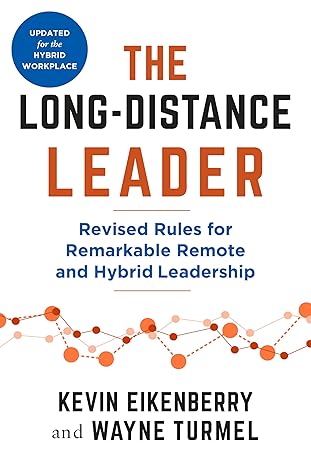
The Long-Distance Leader
Read More
Navigating Talent Stagnation with Khaled Hussein of Betterleap
Guests, Leadership, Surviving Remote Work

Navigating Talent Stagnation with Khaled Hussein of Betterleap

Wayne Turmel dives into the intricacies of the current employment market with Khaled Hussein, a remote work expert and a key player at Betterleap. As the world continues to navigate through phases like the Great Resignation and the Great Compromise, Khaled sheds light on the concept of talent stagnation and the evolving expectations of both employers and employees in a remote and hybrid work environment. Tune in to hear valuable insights on recruiting strategies, the pressure on CEOs to adapt, and the future of remote work.

Key Takeaways

1. Understand Talent Stagnation: Recognize the mismatch between skilled workers and employer expectations in the current market.

2. Embrace Remote Work Benefits: Expand your talent pool by considering remote work options and accessing a wider range of candidates.

3. Decide on Work Models: Choose between fully remote, in-office, or hybrid models based on your company's goals rather than defaulting to a compromise.

4. Be Transparent with Candidates: Clearly communicate your company's remote or hybrid policies to potential hires to ensure mutual understanding and alignment.

5. Support CEO Decision-Making: Encourage leaders to make strategic decisions based on company culture and goals, despite external pressures.

6. Enhance Recruitment Strategies: Focus on recruiting strategies that align with your chosen work model and organizational objectives.

7. Promote Clear Communication: Foster open communication and feedback within your team to maintain a strong and cohesive remote or hybrid work environment.

View Full Transcript

00;00;07;28 - 00;00;34;03
Wayne Turmel
Hi, everybody. Welcome to another episode of The Long Distance Worklife where we help you thrive. Survive, generally, keep the weasels at bay in the crazy world of remote and hybrid work. I am Wayne Turmel your humble servant. My, normal co-host. Marissa is not here this week, which means it's an interview episode, which is always so much fun.

00;00;34;05 - 00;01;03;23
Wayne Turmel
Today we are going to talk about, employment, talent stagnation and how people think about remote work and searching for talent with the very, very talented Khaled Hussein from Betterleap. So far, I've remembered the name and I've remembered the company. We're off to a great start. And talent. Who who has just moved to my city of Las Vegas.

00;01;03;23 - 00;01;04;28
Wayne Turmel
So welcome.

00;01;05;01 - 00;01;14;24
Khaled Hussein
Yes. Thank you so much for having me. And I was like, all right, you nailed the name. And then the company and everything that's like, great, I'm in. Great to be here.

00;01;14;27 - 00;01;40;24
Wayne Turmel
At this hour of the morning. That is no small feat. So when you're talking about talent stagnant, we've been through the great Resignation and we went through the Great Compromise and we've been through a thousand little jargon d'azur waves over the last few years. When you talk about the great stagnation, what are you talking about?

00;01;40;24 - 00;02;08;13
Khaled Hussein
Yeah, I'm really glad you you know, it's kind of setting the stage of what that is. And I think, you know, we're very, we're we're really good at coming up with terms that describe what, you know, what the current employment market is kind of going through right now. We are entering a very interesting stage where, you know, the talent stagnation is it's really, the way I define it is it's a mismatch between the skilled workers and the employers.

00;02;08;15 - 00;02;29;25
Khaled Hussein
expectation and employers demand, growth, demand and so on one hand, you find that, you know, employers that we have the phase of, it was it was really a talent market. And you get to choose who you want to work with. And employers are willing to overpay for the talent and really consider the need for remote and work life balance and all that.

00;02;29;25 - 00;02;50;20
Khaled Hussein
And I think we're going to move to, you know, the other end of the the spectrum right now in different sectors. By the way, this is a very nuanced, you know, element work is is a very nuanced, industry. And so it really, it depends on what sectors. But we kind of move to the other end of the spectrum where we it's pretty much an employer market right now.

00;02;50;20 - 00;03;23;08
Khaled Hussein
And you have talent that is, you know, looking for employment. And a lot of employers are trying to reduce their talent, force their genre, find more efficient ways to, supplement their, their needs and work needs and so forth. And, and, increase their overall productivity or reduce their cost. and, and the talent is kind of starting to look for hey, this was a really good phase where we found, you know, companies that were accommodating and and so forth.

00;03;23;08 - 00;03;27;08
Khaled Hussein
And I think now it's a bit more challenging for, for the talent to find that.

00;03;27;08 - 00;04;00;24
Wayne Turmel
I think it is. And I think that some of this, especially around remote and hybrid work, is that working remotely or the flexibility to work hybrid has been about the only perk available. You know, the money is what it is. you know, and so when when companies think about, well, we're going to be hybrid or we're going to be remote for it's not so much a strategy as a hostage negotiation, right?

00;04;00;27 - 00;04;15;14
Wayne Turmel
How much can we make them come into the office before they quit. And the workers are saying, how much can I not go into the office before they fire me? And that's not terribly strategic or good thinking.

00;04;15;16 - 00;04;16;05
Khaled Hussein
Yeah.

00;04;16;05 - 00;04;37;09
Wayne Turmel
So what I like to do is start at the top with the CEOs and is their their thinking about their their work strategy. And they're thinking about how are we going to be remote or we get it. You know, a lot of times, well, we want the best talent. And what they really mean is we want the best talent that lives within 20 miles of where we are.

00;04;37;13 - 00;04;51;19
Wayne Turmel
Yeah. so what are the CEOs? Those the kind of C-suite. What are they thinking? And what are the the things that are keeping them up night when it comes to recruiting talent?

00;04;51;21 - 00;05;16;10
Khaled Hussein
You know what? When I, I have an answer that I'll share with you. But there is also another thing that I don't think I ever share, that I'm just kind of feeling this right now, so. Oh, cool. I yeah, I literally don't think I ever said that on any other, kind of media, but one thing CEOs think a lot about right now, and I think when we talk about CEOs, you know, there is, you know, fortune 500 CEOs, but there is also the, you know, that that everybody else.

00;05;16;10 - 00;05;37;25
Khaled Hussein
And so, I do think, you know, so this answer is a little bit nuanced, but I do think it applies to both to a degree. I think a big part, big kind of point that CEOs think a lot about is am I doing what everybody else also is doing? So if you get the top ten CEOs, they're starting to bring people back to the office.

00;05;37;25 - 00;05;56;26
Khaled Hussein
And there is some pressure from shareholders and investors to say, hey, it looks like, you know, the CEO of this massive conglomerate is bringing people back to the office. And he's citing all these stacks of, you know, things that are going to be better if you bring people back to the office. Then as a CEO, you kind of feel a little bit of a pressure to follow suit.

00;05;56;29 - 00;05;59;13
Wayne Turmel
And I imagine that's completely true.

00;05;59;16 - 00;06;23;28
Khaled Hussein
And I yeah, there is there is definitely that. And I think even if a lot of CEOs are not, you know, going out there publicly saying that, that they're feeling that pressure, there is definitely an internal pressure that they're, they're, facing. And you see this and the way I know that is, I am I'm very fortunate to have been an investor in many different startups and many different work with many different CEOs, mentor for a lot.

00;06;23;28 - 00;06;40;19
Khaled Hussein
And we have these discussions. We have the discussion of like, I really like my set up being either in office or being for remote or whatever, but then all of my investors are telling me their whole portfolio is going to the other way, and I feel like maybe I should. What do you think? And so there is an element of that.

00;06;40;19 - 00;06;57;25
Khaled Hussein
Is there is that external pressure on CEOs to follow what kind of the new thing is? There was a phase where the new thing is everything is remote and hey, remote is great and you save costs and office space and all that and every CEO all of a sudden move the company to being remote. And then there is the wave is kind of going back to return to office.

00;06;57;25 - 00;07;19;28
Khaled Hussein
And then there is a lot of CEOs coming back too. So there is an element of really just what's happening out there. you don't want to stand out too much. but the other thing is the funny and the irony in that is standing out is actually the advantage. And so being the on the other side is what's going to give you the advantage to attract the talent that like that side.

00;07;20;01 - 00;07;36;15
Khaled Hussein
And so this is kind of, you know, like sticking and it's an identity company culture, identity and all of that is if we are remote, we're sticking to remote. If everybody going back to the office, that's even better for us, because we're going to get the talent that's interested in being remote easier and it's, you know, more accessible for us.

00;07;36;17 - 00;08;01;11
Wayne Turmel
you know, you just said something that's kind of interesting and it's a little bit of a rabbit hole, but it's my show. And if I want to go down the rabbit hole, I can do that. I love it. you said that, you know, CEOs are kind of struggling with this. How comfortable are they on average? And I know it's nuanced and I know it's by industry and all kinds of things, but have they become more comfortable with the whole concept of remote?

00;08;01;11 - 00;08;05;28
Wayne Turmel
You know, before Covid, they were the they were the ones that were convinced this was never going to work.

00;08;05;29 - 00;08;09;09
Khaled Hussein
Yep. So what I see in the market today. Yeah.

00;08;09;10 - 00;08;12;10
Wayne Turmel
And have they gotten more comfortable with it.

00;08;12;12 - 00;08;43;22
Khaled Hussein
Yeah I see a lot of, I see it at different stages. I see a lot of times in the early stage, you know, you have two co-founders and maybe 2 or 3, you know, team members. They are actually comfortable either way. They're comfortable being everybody is in the same room. And they tend to be, you know, friends that got together and they have, you know, and new concept or a new startup and they want to start it or I see that, hey, you know, two co-founders and then they found two other, you know, or three other team members that are remote.

00;08;43;22 - 00;09;02;23
Khaled Hussein
And everybody just pants on. And they're really kind of very efficient. And I, I see, you know, I see both sides 5050. And I think this is really great. As the company continues to grow and you add more and more people and there's more processes and there's a middle management layer and there is, you know, you start to really scale your business.

00;09;02;25 - 00;09;32;21
Khaled Hussein
I see a lot of them become pretty uncomfortable with remote, because they have this little bit of fear. And I think, you know, it's not completely irrational, but they do have this fear of, hey, we can be more efficient and more productive if we bring people to the office, because there's a lot of, you know, the, the hallway conversations that are happening, the information sharing as a CEO, your number one thing is, you know, besides recruiting is making sure everybody has all the right information they need.

00;09;32;23 - 00;10;01;08
Khaled Hussein
And so information entropy happens a lot better if everybody is obviously in, in the office. So I think they're not totally, wrong in that. But the flip side of that is there is also while you share the information, there is actually in a way, depending on the company, there is a little bit of, efficiency loss in the hallway communication, because this is not heads down.

00;10;01;08 - 00;10;24;11
Khaled Hussein
I'm doing my work. And, you know, we're having a chat. and so there is, you know, pros and cons for either, and I think it really goes back to you as founders and as going to C-suite, what type of company we want to build. And I think just remove all other distractions and remove media as saying, you know, employees are the vacations, remote vacations and things of that nature.

00;10;24;11 - 00;10;31;26
Khaled Hussein
You just need to ignore all the noise and focus on kind of building the right company that you want to build and, and was the right, and you stick to that identity.

00;10;31;26 - 00;10;49;07
Wayne Turmel
So what are three things? Let's say if I've decided that I want, at the very least a hybrid culture, right, that people aren't going to be in the office all day, every day, what are three things that we need to think about if we're going to go out and recruit people?

00;10;49;07 - 00;11;10;27
Khaled Hussein
Yeah. So hybrid is interesting. Hybrid is so interesting to me. And I'm having a little bit of, you know, some some thoughts on hybrid. Hybrid is interesting because if it's going to be hybrid then you have to hire people that are within your 20 miles, right. Or 30 miles. So you kind of limited your talent pool. And I have to hire within this.

00;11;11;00 - 00;11;36;03
Wayne Turmel
Although I have heard I have a great example, the federal government and I will not name the agency because I don't want to throw anybody under a bus. But there's one federal agency. The rule is you have to be in the office two days every pay period. So somebody I know actually commutes from Florida to Washington DC to fulfill those two dates.

00;11;36;05 - 00;11;52;23
Khaled Hussein
Wow. Okay. Yeah. And and, you know, interesting to know also how long the pay period. But, yeah, this is this this makes sense. But you know, for the majority of the time you end up if you're thinking of a hybrid, you're kind of thinking of people that are more or less in your city or kind of, you know, easy commute.

00;11;52;23 - 00;12;16;11
Khaled Hussein
And so it limits the talent pool. Personally, I've been kind of telling people, you, you know, it's better to choose one or the other and create more frequency. And so, of getting together. So if you are remote and you're, you know, you get together every quarter making every month, you know, you can make that happen. And so but that way just opens up the talent pool for you.

00;12;16;14 - 00;12;33;07
Khaled Hussein
and, you know, we are we are a remote company. we had an office, and we, we meet in the office every single day for a very long time. And then we ended up kind of hiring. We wanted to expand our talent pool, and we didn't want to restrict the specific job. So we turned the company into remote.

00;12;33;10 - 00;12;50;07
Khaled Hussein
And so, I, you know, doing the hybrid, it felt like work kind of, in many ways, you know, we'll see that there's a lot of, research being done on that. But in many ways, I feel like hybrid misses that the benefits of both sides. It's a you and I.

00;12;50;08 - 00;13;13;27
Wayne Turmel
I completely agree, and I think it goes back to what I said a little bit earlier, which is for most organizations, hybrid is a compromise. It's not a strategy. Right. It's like we want really you. Yeah, one way or the other. And so we'll call ourselves hybrid. But that kind of timid make a decision already you morons. thing.

00;13;13;29 - 00;13;28;20
Khaled Hussein
Exactly. I'm trying to beat around the bush, but you're exactly right, I think. I think he can. I get the worst of both sides here. It's like two is one and just going to stick to it. And there is tooling and systems and processes for each one. Like we know how to work in office. And there is, you know, playbooks for that.

00;13;28;25 - 00;13;39;24
Khaled Hussein
We've also learned how to work remote in the last few years. And that is playbooks for that and tooling and everything down there. We don't really have anything for that thing in the middle. Like, you know, which one is it.

00;13;39;27 - 00;13;50;17
Wayne Turmel
And so and it's so easy for companies to if they are hybrid, they default to the rules that made sense when everybody was in the office.

00;13;50;20 - 00;13;52;00
Khaled Hussein
That's right. That's right.

00;13;52;03 - 00;14;16;25
Wayne Turmel
Okay. So that's on the so make a decision already is what we're trying to say. so now let's talk about the talent pool of folks. Right. What are they finding out there is I I've heard that there's a lot of bait and switch around remote work that, you know, people are kind of promising a degree of flexibility that doesn't really exist.

00;14;16;27 - 00;14;33;02
Wayne Turmel
so, first of all, if I'm out there looking for a job which thankfully, knock on wood, I am not. But if I were out there looking for a job, what am I looking for? What's legit? What are the things that maybe I need to watch out for?

00;14;33;05 - 00;14;56;27
Khaled Hussein
Yeah, you know, I kind of following the thread from before choosing a hybrid company, you know, has its own challenges also because, you know, the different, pros and cons for either side of very well defined. But that middle layer is and honestly there are we do even, you know, for better link when we're hiring. We do talk to a lot of talent that, hey, I like to be around people.

00;14;56;27 - 00;15;13;29
Khaled Hussein
I like to meet people I like. So, you know, that frequency of getting together is really important. I think we're social beings, and I get that there's nothing, wrong about us. Not crazy or anything, but there is also the. Hey, I'd like to be heads down. I like to find talent, and I like to be able to travel.

00;15;13;29 - 00;15;35;18
Khaled Hussein
I like to take care of my family. I like to do this and this and this and that and and I get my work done. And I think that could be done anywhere. I'm fortunate, you know, within tech and all that kind of stuff. And that could be done, anywhere. So I do think talent now are definitely starting to run into CEOs and companies making decision for either hybrid or coming back to office.

00;15;35;18 - 00;16;09;27
Khaled Hussein
So now they have to choose not just the company that they're passionate about, their mission and their product, but they have to choose a company that's within a location that they're willing to via. And so it makes it even harder for them to really find, you know, the right job and the right opportunity. But also on top of that is, you have to you have to think, if I'm going to be remote, then the pool of company is now that is willing to be remote, that will continue that you kind of when you're talking to that C-suite, that that company and you see that they will continue to be because you don't want to

00;16;09;27 - 00;16;28;20
Khaled Hussein
work at a company that six months later they're going to change that policy. And so, you know, you have to kind of test that as a candidate and you have to find a company that. But the pool of those companies have shrunk a lot. right now there is definitely a lot more, a lot less companies that are willing to be fully remote.

00;16;28;20 - 00;16;34;06
Khaled Hussein
And there is a lot more towards coming back to office or some sort of, of a hybrid.

00;16;34;07 - 00;16;55;10
Wayne Turmel
Is the coming back to the office thing. Is that just, you know, the pendulum is going to keep swinging. We're going to all go back to the office and then people are going to get fed up and start working from home again and working remotely. And then somebody in three years is going to get a bug in their hat and they're going to bring everybody back to the office.

00;16;55;17 - 00;17;03;07
Wayne Turmel
I get the sense that it's just this pendulum that keeps swinging more so than conscious decisions being made.

00;17;03;10 - 00;17;22;12
Khaled Hussein
See, I actually feel, this one, you know, I kind of have a slightly different opinion there. I do think we were forced to do remote. I think we had, you know, the external event that kind of forced everybody to be remote. So I don't think it was, you know, somebody that came up with this idea. And then we swung.

00;17;22;12 - 00;17;38;02
Khaled Hussein
So I actually think it was the initial kind of change was an external factor and we had to adapt. Human beings are great at that. And now we realize, well, okay, we ran into all kinds of things here that we kind of maybe let's go back to what we were used to. But I don't think there's a swing here.

00;17;38;02 - 00;17;58;29
Khaled Hussein
I actually think we're just kind of going back to what we're used to. This was just a forced thing. And what I think will happen is not that we kind of go back to being normal, but what I think will happen is different stages. I think we're going to see early stage companies are more open to being remote, and that will continue to be the case.

00;17;58;29 - 00;18;19;14
Khaled Hussein
So I don't think there is a swing yet. I think it will continue to be the case because that the different stages of companies were remote really worked so well. I think those or just will recognize that and will continue to do that. And you'll find the investors even pushing for this. Refine CEOs and founders and playbooks are being decimated about like how do you do that?

00;18;19;16 - 00;18;41;28
Khaled Hussein
And and I think, you know, larger stages, I think, you know, we're seeing right now with, you know, the apples of the world and Amazon that were not there kind of bringing, you know, people back to the office. And I think that will likely can I continue to be that. And then, so I think it's going to depend on which stage you're going to be part of.

00;18;42;01 - 00;18;49;06
Wayne Turmel
So if I want remote to be part of my work, I should be looking at startups as opposed to legacy companies.

00;18;49;08 - 00;18;57;23
Khaled Hussein
I think you will have higher chances of finding the right company with the right culture that is open to remote as you go a little bit earlier stage.

00;18;57;25 - 00;19;28;24
Wayne Turmel
Dang well, this conversation went all kinds of places and I am not mad at that, actually. thank you, Khalid, for, you know, putting us in the C-suite mindset set and letting us know what's going on. if you want to know more about Khalid and about Better Leap and all that good stuff, we will have the, links in the show notes, which I will talk about in a second.

00;19;28;27 - 00;19;31;04
Wayne Turmel
Khalid, anything you want to leave us with?

00;19;31;06 - 00;19;59;03
Khaled Hussein
first of all, thank you so much for having me. You really. I really enjoyed this conversation, and I think, the one thing I'll say is, hey, recruiting is. And kind of the labor force is, is core to our culture and core to our economy. And I think we go through the ups and downs of that. And I think, you know, just, in a time where markets are tough and people are getting laid off and people are getting you know, try to find work life balance and try to find the right job opportunities, things can get tough.

00;19;59;03 - 00;20;17;07
Khaled Hussein
But I want to I want to say that we've been here before and we survived this and and I know we will again. And I think I don't want people to lose hope. There's a lot of opportunities out there. And there is, we just have to be more clever in our approach. And, there is there there's hope.

00;20;17;13 - 00;20;42;23
Wayne Turmel
There is hope. We will take that as our final words. Again, if you are interested in the transcript for this, conversation or learning more about Khalid and better Lee, we will have all of that stuff at long distance work life.com. we are really, really proud of the fact that our numbers are growing. People are listening to us.

00;20;42;24 - 00;21;08;05
Wayne Turmel
You can decide why you decided to do that. but like and subscribe and tell others about the show. We are very excited. We also love to hear from you. We get a lot of show ideas from our listeners. pet peeves, things you want to vent about, things that you want to know that we should look and find good guests like Khalid.

00;21;08;07 - 00;21;32;05
Wayne Turmel
Drop a line to either Marissa. Right. You can find that, you can find us on LinkedIn. You can just email us either Wayne or Marissa at Kevin eikenberry.com. And if you are interested in learning the skills necessary to be a leader in the hybrid remote, ever changing world of work, check out our long distance leadership series.

00;21;32;11 - 00;21;53;01
Wayne Turmel
We do those several times a year. Or if you're interested in bringing that in-house to your company, do that. Darn it, I am done. That's another week of our lives. Khaled, thank you so much for being with us. And, for those of you listening, have a great week. Don't let the weasels get you down.

00;21;53;03 - 00;22;05;05
Unknown


00;22;05;07 - 00;22;06;17
Unknown


Featured Guest

Name: Khaled Hussein

Bio: Khaled Hussein is an expert in talent acquisition and remote work strategies, currently leading at Betterleap. He is renowned for his insights into the modern employment market and innovative recruitment approaches, bridging the gap between skilled professionals and forward-thinking employers.


Timestamps

00:00 Introduction
01:03 Defining Talent Stagnation
03:23 Remote Work as a Perk
05:37 CEO Pressures and Decisions
10:49 Hybrid Work Challenges
14:33 Recruiting in a Hybrid Environment
16:34 Advice for Job Seekers
17:03 The Future of Remote Work
19:28 Conclusion

Related Episodes

Additional Resources

Long-Distance Leadership Series

If you want to dive deeper into the strategies and tools for effectively managing remote teams, check out the Long-Distance Leadership Series by The Kevin Eikenberry Group. This comprehensive series offers valuable insights and practical advice on leading remote and hybrid teams with confidence and success. From mastering virtual communication to fostering team engagement, the Long-Distance Leadership Series has everything you need to become a more effective remote leader. Start transforming your remote leadership skills today!

Read More
Celebrating 100 Episodes: What We've Learned About Remote Work
Ask Wayne Anything

Celebrating 100 Episodes: What We’ve Learned About Remote Work

In this special milestone episode of the Long-Distance Worklife Podcast, hosts Wayne Turmel and Marisa Eikenberry reflect on their journey through 100 episodes. They share the most impactful lessons and insights they've gained about remote work, leadership, and thriving in hybrid teams. From communication strategies to maintaining work-life balance, this episode is a treasure trove of practical advice and thoughtful reflections. Join us as we celebrate this achievement and look forward to many more episodes to come.

Key Points

  • Reflections on reaching 100 episodes
  • Top lessons learned about remote work and leadership
  • Effective communication strategies in remote teams
  • Maintaining work-life balance in a remote environment
  • The evolution of remote work over the course of the podcast
  • Listener feedback and how it has shaped the podcast

View Full Transcript

00;00;07;27 - 00;00;09;18
Marisa Eikenberry
Welcome back to the Long-Distance worklife.

00;00;09;23 - 00;00;18;17
Marisa Eikenberry
We help you lead, work and thrive in remote hybrid teams. I'm Marisa Eikenberry, a fellow remote worker. And joining me is my co-host and remote work expert, Wayne Turmel.

00;00;18;19 - 00;00;22;00
Wayne Turmel
I want hello, lady. How are you?

00;00;22;02 - 00;00;23;27
Marisa Eikenberry
I'm great. How are you?

00;00;24;00 - 00;00;39;11
Wayne Turmel
I am swell. Hello, listeners. I am feeling my mortality today as we realize how long we've been. I've been doing this, and you and I have been doing this right. It's been a while.

00;00;39;18 - 00;00;58;18
Marisa Eikenberry
Yeah. So actually, recently, we not only hit our two year anniversary of the show, which I think was somewhere around March 28th. But in addition to that, we have also crossed our 100th episode and we weren't paying attention to it. So we actually missed what the exact 100th episode is. But we decided we're going to talk about that.

00;00;58;19 - 00;01;09;24
Wayne Turmel
18 when you crank out one of these a week and there are 52 weeks in a year times two years, it's sometime in the last couple of weeks.

00;01;10;00 - 00;01;28;07
Marisa Eikenberry
Yeah, somewhere around in there, something like that. And I know we had some weeks where we didn't release an episode at all. And so at first something's off, but that being said, today we're going to talk about the lessons that we've learned through 100 episodes. And in my case, I've only been on 50 of them.

00;01;28;09 - 00;01;43;18
Wayne Turmel
So but you have listened to and edited and been in on the conversations, even on those. And you've been listening to those as a learner, as our audience hears it.

00;01;43;21 - 00;02;03;19
Marisa Eikenberry
That is true. So thinking about our very first episode, which I'm fairly certain was what is remote work or when did remote work start, you know, what were some of the initial expectations that you had when we started the show?

00;02;03;21 - 00;02;37;22
Wayne Turmel
I mean, there's the cynical, pragmatic, take your pick of words, approach, which was we wanted to get the word out about the work that we did absolutely do. Right. And the work that we do as long distance leader and and the classes, our leadership series. And so there was a mercenary component to this. I think it's important that we also, look at our role as offering some perspective.

00;02;37;25 - 00;02;39;07
Marisa Eikenberry
Right.

00;02;39;10 - 00;02;58;15
Wayne Turmel
And one of the things that I did not expect to have happen, and we've gotten some pushback for this, is I did not expect that the most zealous remote work advocates would get cranky with us on occasion.

00;02;58;18 - 00;03;16;15
Marisa Eikenberry
And they do. yeah. I hadn't thought about that until you said that, but there have definitely been some times where we have pushed back against the zealot way of thinking, and we're seem oddly or thought to be the zealots, and we're not.

00;03;16;17 - 00;03;34;00
Wayne Turmel
And that's the thing, is that at the end of the day, our concern for this show and my concern that has driven my entire career in this business, which is literally this week, 28 years, by the way.

00;03;34;02 - 00;03;35;00
Marisa Eikenberry
Wow.

00;03;35;02 - 00;03;38;22
Wayne Turmel
May 6th, 1996 was my first job in the training industry.

00;03;38;27 - 00;03;45;13
Marisa Eikenberry
To say it, I will not comment on the fact I'm only 32.

00;03;45;15 - 00;04;13;12
Wayne Turmel
A two Berta. but, my concern and what has driven me has always been helping people get through work, and the way that we work is changing. And has changed and will continue to change. And there is always the tension between what needs to be done for the employer, for the business, which is a perfectly legitimate concern.

00;04;13;14 - 00;04;39;18
Wayne Turmel
Business doesn't make money, doesn't keep its stores open, people don't have jobs. Our employees owe their employers right the fruits of their labor, and they get a paycheck in exchange. And and so the circumstances of remote work have changed. And the way that we interact has changed. And I think our job is to help people navigate that and make good choices.

00;04;39;21 - 00;04;41;19
Marisa Eikenberry
Right? Absolutely.

00;04;41;22 - 00;04;53;20
Wayne Turmel
this notion that all jobs can be done remotely, while more true than we ever thought it could be. Yeah, is also not universally true.

00;04;53;22 - 00;04;55;27
Marisa Eikenberry
Right. And we've talked about that a lot on this show.

00;04;55;29 - 00;05;02;09
Wayne Turmel
You can work from home all day long if you can find somebody to pay you to do it right.

00;05;02;12 - 00;05;05;21
Marisa Eikenberry
And there are some jobs that they just they can't be remote.

00;05;05;24 - 00;05;42;06
Wayne Turmel
The job, the the purpose of our show is to help people work where and when it makes sense. And we get lumped in frequently with the zealots. And the truth of the matter is, not all work can be done remotely. Not all work should be done remotely, and not everybody is cut out for it. And if you are going to work remotely, if you are unhappy with being in the office all the time in your experiments, experimenting or exploring the idea of remote work, here's how to do it.

00;05;42;06 - 00;05;58;05
Wayne Turmel
And here's how we can help. And we hope that this gets you through it and keeps the weasels at bay. So you know, we are not zealots, nor are we always on the side of the people who say, go into the office.

00;05;58;07 - 00;05;59;15
Marisa Eikenberry
Right?

00;05;59;17 - 00;06;08;17
Wayne Turmel
You know, it's about navigating the realities and hopefully that's what we're bringing. But we've done some stuff. I mean, 100 episodes, good heavens.

00;06;08;17 - 00;06;22;03
Marisa Eikenberry
There's yeah, we've talked about a lot of stuff and so on that line. So like, what has been the most surprising lesson or maybe like an unexpected discovery while we've been doing this podcast?

00;06;22;05 - 00;06;58;09
Wayne Turmel
I think the unexpected discovery was really how so many timeless concepts are relevant in the context of remote work. And I'm thinking specifically about the Johari Window episode that we did with a lot of people fell into. And, I mean, I dealt with the Johari window when the process first came out in the 80s, and people were looking at it and, you know, it was new to my career, and I did all that, and I taught it, and I talked about it and I thought, oh, it's old news.

00;06;58;09 - 00;07;23;09
Wayne Turmel
Everybody knows it. But the purpose, just for those of you who want to go back and listen to it or don't remember, the Johari window says that we look at the world through this window that has four kind of panes to it. Right? There's what we see and we know we see it, and that's what it is. There's what we see and there's stuff there that we don't know.

00;07;23;15 - 00;07;39;24
Wayne Turmel
There's what people see of us that we're aware of. Right. And stuff that people may not be aware of and everything. And of course that's true regardless. And that was a bad explanation. But you can go back and listen to.

00;07;39;24 - 00;07;41;13
Marisa Eikenberry
Yeah we'll have a link in the show notes.

00;07;41;13 - 00;07;56;10
Wayne Turmel
But the point is that there there's always what you see. And there's something unseen behind it when you work remotely or when you lead people remotely, it is literally unseen.

00;07;56;12 - 00;07;58;13
Marisa Eikenberry
Right?

00;07;58;15 - 00;08;20;15
Wayne Turmel
So not only are the there the normal things. Right? Is she telling me the truth when she says she's on time for that project? But I can't look her in the eye. I can't look over her shoulder and see what she's doing. I can't hear the conversations she's having with her coworkers.

00;08;20;17 - 00;08;22;21
Marisa Eikenberry
Can't see her visibly sweating as she tells.

00;08;22;24 - 00;08;38;22
Wayne Turmel
Can't see her visibly sweating or, you know, rolling her eyes or whatever it is. and so that notion of so much what we do in the remote work space is white space.

00;08;38;25 - 00;08;39;13
Marisa Eikenberry
Yeah.

00;08;39;15 - 00;08;42;02
Wayne Turmel
We don't know what's going on there.

00;08;42;04 - 00;08;43;29
Marisa Eikenberry
We are entering into the void.

00;08;44;02 - 00;09;08;02
Wayne Turmel
We need to actively seek it, and we need to have trust that our communication is clear and that people are understanding. And if there is a problem that they are willing to give us that feedback that we're getting, the feedback we need to do the job, whether they're the individual contributor or the, the manager leader, boss. Right.

00;09;08;04 - 00;09;33;05
Wayne Turmel
And so while I knew that to be true, it. Always amazes me how what is true has always been true and continues to be true and will ever be true. And we get lost sometimes in the minutia of the work and the stress of working in new ways and new environments.

00;09;33;08 - 00;09;50;08
Marisa Eikenberry
Right? Well, and I remember when we even talked about doing that episode, you were like, I know I'm thinking about this and, you know, but I don't know. And I was like, what the heck is that? And it was that moment of, oh, right, there are all these other people that are entering the workforce have no idea what this is.

00;09;50;10 - 00;10;00;27
Marisa Eikenberry
And now it's one of our top episodes. And the clip of us explaining it on our YouTube, I think is one of the top clips we've ever done. So people are clearly interested.

00;10;00;29 - 00;10;25;28
Wayne Turmel
Yeah, it's funny, I remember we did an episode with my friend Trina Halfling and we were talking about what did we get wrong? Right? Because she and I have both been in this space a very long time. We were both, you know, 15 years before Covid, talking about remote work and helping people to make that adjustment. And what did we get wrong?

00;10;25;28 - 00;10;50;14
Wayne Turmel
And I think, you know, some of the things we got wrong were expected, right? We didn't have the technology we did. So the growth of things like teams and slack and and those kinds of collaboration tools, we couldn't have predicted that. I think the biggest thing that we was the jobs that could be done.

00;10;50;16 - 00;10;51;07
Marisa Eikenberry
Yeah.

00;10;51;10 - 00;10;52;16
Wayne Turmel
Remotely.

00;10;52;18 - 00;11;03;11
Marisa Eikenberry
Absolutely. We had no idea how prevalent it was until 2020 happened. And it was like, oh, we thought this could never be done remotely, but it actually can.

00;11;03;13 - 00;11;38;14
Wayne Turmel
Yeah. And, you know, we had a conversation with Alan Whitman, who is the head of an accounting firm, and talk about old hidebound businesses that ran by tradition. Let's talk about CPA firms. And even prior to Covid, he was in the process of and you can listen to this exercise. We'll have links in the show notes, he was in the process of revolutionizing things by saying, you know, you sit at a computer and crunch numbers all day.

00;11;38;16 - 00;11;44;09
Wayne Turmel
The benefits of being in the same crowded room to do that aren't what we thought they were.

00;11;44;11 - 00;11;45;28
Marisa Eikenberry
Right.

00;11;46;01 - 00;11;56;13
Wayne Turmel
And by thinking about remote work differently, you know, yes, you are giving up some things. The office party really sucks, when everybody.

00;11;56;17 - 00;11;57;21
Marisa Eikenberry
Says it's not good.

00;11;57;23 - 00;12;32;17
Wayne Turmel
The pizza isn't that good. And, you know, happy hour is kind of sad and clinically dangerous. But there are advantages, right? Yes. You don't have that everyday communication. There are ways to mitigate that so that you can have real time collaboration and cooperation if you need it. But you can expand the geographic reach. I mean, when companies say we hire the best available people, well, what you mean is you hire the best available people within a 20 mile radius of your office.

00;12;32;19 - 00;12;35;17
Marisa Eikenberry
Right?

00;12;35;19 - 00;13;05;16
Wayne Turmel
When you open yourself up to working remotely, your talent pool expands, your customer pool expands your right. So people that are re thing king. The old ways of thinking and making it work, are interesting to me, and I think Allen's episode was a really good example of that. Yeah, I've also the other thing that does depress me about it.

00;13;05;16 - 00;13;07;10
Marisa Eikenberry
Okay.

00;13;07;12 - 00;13;31;11
Wayne Turmel
Well, I was going to say, you know, and that's when you're looking at the future, it's like, look at the all the good stuff and the positive and, and this is where the remote work folks sometimes get a bit rose colored glasses about the whole thing. Certain things continue to depress me. in many ways it's made the issue of sick days worse.

00;13;31;13 - 00;13;32;14
Marisa Eikenberry
Right. And we've talked.

00;13;32;15 - 00;13;55;25
Wayne Turmel
Americans were always terrible about taking their sick days. Most Americans don't nearly take all the time off that is available to them anyway, and they tend not to take their sick days, because they're saving it up so they can use them for vacation days, which they may then don't take,

00;13;55;28 - 00;14;20;00
Wayne Turmel
But when you're at home, a lot of us are like, well, yeah, I'm sick, but I'm already home. So I'll get on that call or I'll answer those emails or I'll do these things which add can add if you're not careful and mindful to the stress and the burnout and other things that are a legitimate concern about remote work.

00;14;20;03 - 00;14;23;10
Marisa Eikenberry
Right? Absolutely.

00;14;23;12 - 00;14;34;05
Wayne Turmel
What about you, lady? I mean, you it's funny, you are only you are only actively engaged here and half of the shows.

00;14;34;07 - 00;14;35;08
Marisa Eikenberry
Right?

00;14;35;10 - 00;14;51;11
Wayne Turmel
But you edit and listen to and and have sat in on these conversations. And by the way, while I have had a lot of these conversations over the last 28 years, a lot of this is new to you. What have you or what surprised you?

00;14;51;13 - 00;15;16;06
Marisa Eikenberry
Yeah. so this is one of the things that has surprised me, and it's less about what you and I have talked about as far as, like, learning something, but never knowing what's going to resonate from the listener's perspective. So we had an episode, and I'll link to it about their return to office backfire and scare tactics that were being used to get people back into the office.

00;15;16;06 - 00;15;27;06
Marisa Eikenberry
And one of them was this crazy avatar, and her name was Anna, and she looked decrepit and, we made a nice layered joke and it was great.

00;15;27;09 - 00;16;04;22
Wayne Turmel
But content and context. A company in the UK, who had which had a vested interest in getting people back to the office, created this avatar and this. Yeah, they sold office furniture. And it was this whole avatar about, what happens when you work from home remotely. And Anna was this vaguely Jabba the Hutt ish type who was working in bed with, like, food wrappers and all kinds of things, and she had this sickly pallor because, of course, that's what happens when you work from home, right?

00;16;04;25 - 00;16;06;11
Marisa Eikenberry
Right.

00;16;06;13 - 00;16;11;20
Wayne Turmel
but people did. People's reaction to that was pretty vociferous.

00;16;11;20 - 00;16;38;11
Marisa Eikenberry
Was the most wild thing. So not only did that episode kind of had a, I mean, for us, many viral moments on YouTube, and for us, many viral is like it got 7000 views and that was incredible for us, but it just kept getting more views and we weren't expecting that to happen. Like, why did that one take off as opposed to some of the other ones?

00;16;38;13 - 00;16;58;23
Marisa Eikenberry
But some of the comments were interesting too, because we did have some people that were thanking us for talking about that subject and talking about, you know, why it was wrong. And we had others that were like, you know, okay, you guys are fat. Go back to the office. there were some I deleted, you know, or you guys are lazy because you won't go back to the office.

00;16;58;23 - 00;17;07;03
Marisa Eikenberry
And it was like, I'm a hybrid employee, first off. And to, like, we're still doing our job. We're just doing. Yeah. From I think.

00;17;07;03 - 00;17;32;16
Wayne Turmel
That's I think one of the things and by the way, if you haven't figured out by now, we do in fact, listen to you listeners. So, you know, comments, questions, vicious personal attacks. We look at them all and we incorporate them into the show. Some of the most fun episodes we've had are like pet peeves or answering specific questions or, you know, why do you hate virtual meetings, right?

00;17;32;16 - 00;17;33;13
Wayne Turmel
Yeah. Whatever it is.

00;17;33;17 - 00;17;34;27
Marisa Eikenberry
Yeah, yeah.

00;17;34;29 - 00;18;08;17
Wayne Turmel
But I think that. The tension around remote work, is something that if we've done anything really well. Over the last two years, 100 episodes, I think it's being pretty candid about benefits and minuses and what works in order to make it successful. And what do you need to watch out for that may make it less so. And maybe that's not such a good idea.

00;18;08;19 - 00;18;16;00
Wayne Turmel
I think that that's something that we've done pretty well, and I hope that the listeners, agree with us on that.

00;18;16;02 - 00;18;38;17
Marisa Eikenberry
I think some of the other thing that's been really fun, too, is some of the topics that we've talked about where you and I approach the same topic a little differently. A because I've not been doing this nearly as long as you have. I just had my 10th anniversary at the company just last week. And, you know, and I have not worked from home most of that time.

00;18;38;19 - 00;18;56;21
Marisa Eikenberry
All the time I used to be in the office full time. And so there have been some things that as a digital native, I'm going to approach that subject differently than you are. And it doesn't mean that one of us is wrong. It's just a different way of looking at it and a way of us taking both perspectives and learning from each other.

00;18;56;23 - 00;19;24;22
Wayne Turmel
Yeah, I think that the demographic differences are really important. we are at a unique time where we're going from people who had to learn to use a computer to people who practically have implants. You know, that idea of the digital native is a big change in how people approach their work and what it means to be productive.

00;19;24;24 - 00;20;14;15
Wayne Turmel
I think that the demographic changes moving from, you know, the baby boomers through whatever artificial divisions we put in there. Yeah, X, y, Z, millennials, echo boomers, Zoomers, you know, Zoomers. y rabbits, whatever the heck you want to call the different groups of people. Those differences are real, and they have both. Positive benefits that they bring to the workplace and ideas, you know, I remember talking to somebody about meetings and somebody said, you know, these darn kid assets in a sentence that starts with these darn kids.

00;20;14;15 - 00;20;34;05
Wayne Turmel
I usually know I'm going to really enjoy this conversation. Yeah. but it started with these darn kids. You know, they have no attention span and they aren't willing to sit through a meeting knowing that the meetings are going to be awful. But they got to do them. And I said, says who?

00;20;34;07 - 00;20;44;02
Marisa Eikenberry
Right. Why would I sit in a meeting? That's awful and does nothing for me when I could be doing a project that I've also been assigned to do? Yeah.

00;20;44;04 - 00;20;50;10
Wayne Turmel
so maybe what we need to do is make the meetings less awful.

00;20;50;13 - 00;20;52;05
Marisa Eikenberry
A strange concept.

00;20;52;08 - 00;21;03;14
Wayne Turmel
You know, it's like, yes, I have calluses on my butt from sitting for long periods of time, inactive. But that's not a badge of honor, you know?

00;21;03;17 - 00;21;05;13
Marisa Eikenberry
Right.

00;21;05;15 - 00;21;22;09
Wayne Turmel
so I think that our, Even though you are an extremely old soul, I think that the demographic differences make a lot of have a lot of meaning and add a lot to the conversation.

00;21;22;13 - 00;21;43;04
Marisa Eikenberry
Yeah, I think so, too. And, well, and even, like, a funny behind the scenes for some of you that are listening, like we did have a conversation once and I will have to look and find out what the episode was because I do not remember stuff I had. But you know, we were talking about the differences between the generations and how they work from home.

00;21;43;06 - 00;22;07;29
Marisa Eikenberry
And you had asked me about, well, how do your friends feel about it? How do and I don't have friends that work from home like none of my immediate friends work from home. They've all got jobs that they go into the office for because they have to, or in medicine or whatever. And I remember having a moment of, I can't just tell them like, I don't have I'm trying to make up something on the spot.

00;22;07;29 - 00;22;10;14
Marisa Eikenberry
So, you know, that was that was super fun.

00;22;10;16 - 00;22;19;09
Wayne Turmel
but something you didn't have to make up. I loved the episode that we did where we used you as the guinea pig for the, gaming avatar.

00;22;19;10 - 00;22;40;21
Marisa Eikenberry
I had so much fun, that it was like I got to have my hobbies and my interests and everything all wrapped up into one, and it was a it was a beautiful thing we still use. So work in that organization today. and we still have fun with it. So there's that. So so I'll link to that to.

00;22;40;24 - 00;23;05;15
Wayne Turmel
Yeah. So I know we could go on about this forever. And self-congratulatory anniversary episodes are usually painless. what do you think, listeners, what have you learned from the show? What do you enjoy about it? What do you hate about it? tell us, what do you want to hear more of? This is a really good time to take stock and assess.

00;23;05;17 - 00;23;12;12
Wayne Turmel
Are we bringing you what you want to hear? So let us know. And that is not lip service. We need to know that stuff.

00;23;12;18 - 00;23;32;18
Marisa Eikenberry
Yeah I was going to say I legitimately look at every comment that we get on all of our social media platforms. And as long as you're not a jerk, I don't delete the comment. So and usually respond. But that being said, Wayne, thank you so much for 100 episodes and here's to 100 more literally.

00;23;32;18 - 00;23;39;07
Wayne Turmel
Would not have been possible without you lady. So, you do all the heavy, heavy lifting on the back end.

00;23;39;07 - 00;23;42;10
Marisa Eikenberry
So when someone told you to do it.

00;23;42;12 - 00;24;06;19
Wayne Turmel
Plus you're the one that told me to do it. thank you to Marissa. Thank you to Kevin and the team at the Kevin Eikenberry Group who keep us afloat and paid. And thank you to you listeners. you know, we want to do what you need from us. That's what we do here. So, thank you for listening.

00;24;06;22 - 00;24;08;19
Wayne Turmel
Marissa, bring us home.

00;24;08;21 - 00;24;28;09
Marisa Eikenberry
Well, as I said, thank you so much for listening and for show notes, transcripts and other resources from this show or any other of our episodes, visit long distance work life.com. If you haven't yet, subscribe to the show so you don't miss any future episodes. While you're there, be sure to like and review. This helps us know what you love about our show.

00;24;28;12 - 00;24;44;23
Marisa Eikenberry
Feel free to contact us via email or LinkedIn with the links in our show notes. Let us know you listen to this episode, what you liked, what you hated. We'll listen to both and even suggest a topic for Wayne and I to tackle in a future episode. We really want to hear from you, and we really want to talk about the topics.

00;24;44;25 - 00;25;06;04
Marisa Eikenberry
You want to talk about. And before we sign off, I want to tell you about our long distance leadership series at Kevin nike.com/ld. Liz. Whether you're a seasoned leader or stepping into remotely leadership role for the first time, this series offers practical tools and expert advice to help you succeed. It's great for individuals or for your whole leadership team.

00;25;06;11 - 00;25;24;13
Marisa Eikenberry
Again, that's Kevin eichenberg.com/l d. Let's start strengthening your remote leadership skills today. Thank you so much for joining us for over 100 episodes. Whether this is your first one or you've been with us for a long time. And this way I'd like to say don't let the voices get you down.

00;25;24;15 - 00;25;29;05


Timestamps

0:00 Introduction
1:00 Celebrating 100 Episodes
2:30 Top Lessons on Remote Work
5:00 Effective Communication Strategies
8:00 Work-Life Balance Tips
12:00 Evolution of Remote Work
15:30 Listener Feedback and Impact
18:00 Looking Forward to Future Episodes

Related Episodes

Additional Resources

Long-Distance Leadership Series

If you want to dive deeper into the strategies and tools for effectively managing remote teams, check out the Long-Distance Leadership Series by The Kevin Eikenberry Group. This comprehensive series offers valuable insights and practical advice on leading remote and hybrid teams with confidence and success. From mastering virtual communication to fostering team engagement, the Long-Distance Leadership Series has everything you need to become a more effective remote leader. Start transforming your remote leadership skills today!

Read More
Fantasized Talent: How Remote Work Changes Self-Perception
Guests, Leadership

Fantasized Talent: How Remote Work Changes Self-Perception with Jim Frawley

In this episode of the Long-Distance Worklife Podcast, Wayne Turmel interviews Jim Frawley, the author of "Fantasized Talent" and an expert in executive development. Jim delves into the concept of fantasized talent, a term he coined to describe a specific type of overconfidence that can emerge in the absence of real feedback, particularly in remote work settings. Wayne and Jim discuss the challenges of receiving and giving feedback remotely, the psychological aspects of imposter syndrome and fantasized talent, and practical strategies for both individuals and leaders to navigate these challenges effectively.

Key Points

  • Introduction to fantasized talent and its implications.
  • Comparison between imposter syndrome and fantasized talent.
  • The importance of feedback in maintaining a realistic self-perception.
  • How remote work can exacerbate the lack of feedback.
  • Strategies for individuals to seek meaningful feedback.
  • Tips for leaders to provide effective feedback in a remote environment.
  • The role of social cues and context in communication and feedback.

View Full Transcript

00;00;08;06 - 00;00;43;24
Wayne Turmel
Hello. Hello, everybody. Welcome to another episode of Long Distance Worklife, the podcast where we try to help you thrive, survive, generally keep the weasels at bay in this crazy world of remote and hybrid. And whatever your work situation Sean is. my name is Wayne Tremmel. I am with Kevin Eikenberry Group, my regular co-host. Marissa. I can Barry is not with us today, which means it's an interview episode and we have a really good one for you today.

00;00;44;00 - 00;01;05;29
Wayne Turmel
I think you're going to enjoy this conversation. So before I run over my intro and get all redundant on you, I am going to call in Jim Frawley. Jim is, the author of Fantasized Talent. And Jim, who are you? What should we know about you? And then we'll jump in.

00;01;06;01 - 00;01;30;07
Jim Frawley
Sure. My name is Jim Frawley. I run an organization called bellwether, and we do executive development. We're based in New York, and we, really do executive development from the top, straight on down throughout the organization. My background was in executive communications, mostly in the financial industry. So that's where I really earned my chops. And as we take a look, our real sweet spot is how do you get people to prepare for change when they don't know what change is coming?

00;01;30;10 - 00;01;39;11
Jim Frawley
And part of that is the remote work that we saw with with Covid and everything else, and the way that the workplace has changed over time. So we really help people adapt to that.

00;01;39;14 - 00;01;58;12
Wayne Turmel
Now there is a cool phrase which you have adopted called fantasize talent, which sounds extremely consultancy and and gimmicky, but there's an actual really, really excellent point here that I would love you to kind of define for us and tell us what we're in for.

00;01;58;15 - 00;02;18;24
Jim Frawley
Yeah, it, so the term fantasized talent and it came up, I was giving a presentation in Vegas at an HR conference, and someone asked if, imposter syndrome was getting increased with all this work from home. And what I've actually seen as I thought about it was this idea of fantasize talent, fantasize talent comes. There's an assessment.

00;02;18;26 - 00;02;51;06
Jim Frawley
It's a great assessment called The Hogan. It's a leadership assessment that has all kind of full gamut of how are you when you're at your best? What do people see when you're at your worst? then there's another report you can get on your values, your motivations of I mean, it really covers the whole kind of circle. And one of the areas to look out for, for some people, is this idea of fantasized talent, which is believing that you either are born for greatness or you have this really, original, inventive, unique.

00;02;51;06 - 00;03;12;20
Jim Frawley
You are special. and it can be perceived as a very arrogant, attribute of you when we're really under stress. Sometimes this can, if this is one of your your noted components of a Hogan, this can be seen when you're under stress. It's one of those negative behaviors that people can see because you think that you're destined for this greatness that can push other people down.

00;03;12;20 - 00;03;27;28
Jim Frawley
And, and we are seeing I'm, I'm seeing anyway, this increase in this idea, I love the term of fantasize talent that we're better than we are, because we're not getting the real feedback that we need to really fit into. a bigger picture.

00;03;28;01 - 00;03;50;10
Wayne Turmel
Now, there's two things that you just said there which fascinate me. One is this is kind of the flip side of impostor syndrome. Imposter syndrome is I suck. They're going to find out any minute. I'm going to be busted. You know, I I'm I'm a big fat fraud. The flip side of this is I'm a genius. And the sooner they realize that, the better.

00;03;50;10 - 00;04;12;04
Wayne Turmel
So that's kind of the first thing. And the second thing, which is super important, is that we get that sense of reality, right. Whether I'm as good as I am or I'm a horrible, awful human being. Based on feedback and without feedback, you're left with the voices in your head making that decision.

00;04;12;06 - 00;04;31;13
Jim Frawley
Yeah, it's you know what? It's the flipped. I could say it's the flip side of imposter syndrome, but they're from they're on the same coin. They're both forms of insecurity. I would say, you know, you're not really imposter syndrome. You're not really tapping into reality of what other people are actually seeing. If you get this promotion, if you do this work, there's a reason for it.

00;04;31;15 - 00;04;47;16
Jim Frawley
And we always have the self-doubt and everything. That's a healthy self-doubt. So when we're dealing with imposter syndrome, it's what are people actually seeing? There's a reason I'm here. Am I living up to those expectations? And there's this fear to drive us to kind of continually be better on the same side. This fantasized talent is you're not getting the feedback you need.

00;04;47;16 - 00;05;04;27
Jim Frawley
You're not matching reality. You're not really seeing you think you're doing a great job, but you're not necessarily picking up what what really leverage you have. And so when we're working remotely and feedback comes in so many different forms, we want this feedback. We want to be told how we are, but we don't necessarily believe the words that we're told.

00;05;05;00 - 00;05;24;14
Jim Frawley
And so when we think about feedback, you know, I could tell you ten different ways how great you're doing. We still don't necessarily believe it. And feedback comes in so many different forms with, social cues, verbal cues, the the way that people look at you, the little shrugs, the facial expressions that people make when you're in a room with other people.

00;05;24;17 - 00;05;46;22
Jim Frawley
And so feedback comes in so many different forms that have been removed when working remotely. We're going through the screen now. We don't get the rest of the room as you're talking one on one with someone or in the hallway or something else. How's that idea really picked up? And so it is kind of the same coin in terms of how are we actually landing on other people to remain relevant as the workplace changes.

00;05;46;24 - 00;05;57;22
Wayne Turmel
And of course, the challenge here is the same as it is with everything having to do with remote work, which is it's not like we were great at this when we were all together.

00;05;57;24 - 00;06;18;10
Jim Frawley
No. Yeah, right. Most people, nobody likes to give negative feedback. Nobody likes to tell you how to to improve. it's the biggest complaint that people have in so many when I'm working one on one with coaches or with teams, I don't get the feedback that I need is something I always hear, but the first question I ask them is, how are you going to get your feedback?

00;06;18;10 - 00;06;35;16
Jim Frawley
How are you asking for feedback? How are you giving context? Feedback is not just this extrinsic, external kind of give it to me. I'm waiting for you to come to me. You have to meet them halfway. It's not just, how am I doing? Oh, you're doing fine. It's. Hey, look, I want to become a chief marketing officer or a chief operating officer.

00;06;35;16 - 00;06;51;15
Jim Frawley
Do you think I'm taking the right kind of steps? It's a very different type of question. We can say, oh, now that I know where you want to go, I can give you feedback relevant to where you actually want to go. So there is this, there is this accountability also on the individual to get the actual feedback that you want.

00;06;51;15 - 00;07;08;18
Jim Frawley
And when we're not in person, you know, when you give a presentation to a senior group of people and you look around the room and you're just asking your boss later, how did that go? But you know how it went because you know how people are sitting and changing and leaning into your questions and asking questions and are really interested in what you're presenting.

00;07;08;23 - 00;07;14;23
Jim Frawley
It's a very different, way to communicate that. We seem to have lost when we're working remotely.

00;07;14;25 - 00;07;44;07
Wayne Turmel
Yeah. And it seems like I mean, everything is based on the question you ask, right? How did it go is a wide open question. It's you're really asking, did they like it or are they going to take action? Did I do my job? Did you know there are a whole bunch of micro questions inside that seemingly innocent enough question.

00;07;44;10 - 00;08;03;08
Jim Frawley
And and one of the things I love to talk to groups about is do you understand the definition of a question? And most people don't. Most people cannot define what a question is and the way I define it. And I've pulled this from a couple of different places. It's a request for information where you legitimately do not know the answer.

00;08;03;10 - 00;08;22;18
Jim Frawley
And so when you're requesting information where you say, how am I doing? It's not really giving the framework to get something that's really tangible for you to do, right? You're asking for something from a different person's perspective. You have to line them up and guide them to get the actual information that you want and ask a really meaningful question.

00;08;22;20 - 00;08;36;06
Jim Frawley
that and ask ourselves the same types of questions where there's no judgment involved in terms of the way we ask our question. It has to be purely a request for answer where we are, a request for an answer where we do not know what that answer is going to be.

00;08;36;08 - 00;09;01;26
Wayne Turmel
Wow. That is that is big. Because so often when we hear the answer, we're putting it through that filter of do I think I'm a genius or do I think I'm a big fat liar? And we're going to hear because human beings do this, right, it's rationalization 101. We hear what confirms our bias is to start with.

00;09;01;29 - 00;09;19;01
Jim Frawley
And also what confirms our biases because we think we know. I mean, so many people will go and give a pitch, you know, for a new product and they come out and say, that went horribly. And then they find out that everybody loved it or vice versa. That was amazing. And then they do it. What we do, though, is there's so much we don't know, because we don't know everybody else's perspectives.

00;09;19;01 - 00;09;38;01
Jim Frawley
And the way that they interpret things. I mean, the 5 million people listening to this podcast, some are going to say, this is really insightful. Other people are going to say this was a waste of time because they may have already known, based on their perspective or whatever it is. And so we have to lose judgment. We fill in the gaps where we don't know what other people's perspectives are.

00;09;38;07 - 00;09;55;26
Jim Frawley
We fill in gaps. If you if you ask me, how am I doing? I'm filling in the gaps of what the context is. On why you're asking. If you want to give me feedback, you're filling in the gaps based on your perspective of where you are, where you wish to go, and everything else where we have to line people up to say, these are my expectations.

00;09;55;26 - 00;10;02;14
Jim Frawley
These are my intentions. This is what I want so that we can kind of fill in those gaps for them so we can get the feedback that we actually need.

00;10;02;17 - 00;10;20;18
Wayne Turmel
Yeah, I think the number one challenge with remote work is that there is so much white space around us, and in fact, you know, in lieu of real evidence, we tend to make up what fills that white space, whether that's positive or negative. Delusional.

00;10;20;21 - 00;10;20;27
Jim Frawley
Yeah.

00;10;20;28 - 00;10;29;19
Wayne Turmel
Whatever that is. Right. We're creating unless we're unless we're proven otherwise, we're going to fill that up with our own assumptions and biases.

00;10;29;24 - 00;10;45;29
Jim Frawley
And and working from home. We're doing an amazing job, right? If you're sitting there digging a tunnel and you say, I'm working really hard and I'm working extra hours and I'm digging this tunnel, but then from left field, somebody says, what are you building a tunnel for? You need a bridge. You say, I'm completely out of, you know, I've done the completely wrong thing.

00;10;45;29 - 00;11;08;24
Jim Frawley
I'm in the completely wrong place. And I've spoken to many people, have lost their jobs over the last few years because it's happening a lot. And I've heard this from multiple people. I had no idea how out of touch I really was. I had no idea how irrelevant I really was, how I was becoming so further away from the mark because they weren't asking questions, they weren't inserting themselves, they weren't getting in front of the right types of people.

00;11;08;27 - 00;11;23;16
Jim Frawley
And then they wake up one day, there's a massive layoff, and they say, I was working so hard. I was doing crazy hours, I was doing good work. And so this part of the business is no longer relevant. We're cutting it out. You're gone. And so we have to ask these types of questions on remaining relevant. And that's really the hard part.

00;11;23;16 - 00;11;30;21
Jim Frawley
When you're working remotely, how do you remain relevant and make people aware of you. And we have to do this by asking really good questions.

00;11;30;23 - 00;11;40;03
Wayne Turmel
Yeah, I call those wily coyote moments where you're running and you're off the cliff and you're way off the cliff, and you don't know it until you look down. You do a.

00;11;40;03 - 00;11;41;21
Jim Frawley
Couple blinks and you're stuck.

00;11;41;21 - 00;12;12;18
Wayne Turmel
Exactly. I just everybody should be issued a little sign that says, yikes. okay, so there are two things that kind of came to mind, as you were saying, that, and one is from the leader's side and one is from the employee's side. So clearly we need the feedback. Let's start with the individual. Right. How do we consciously, intentionally get the feedback that we require.

00;12;12;18 - 00;12;21;00
Wayne Turmel
And this applies no matter how or where you work. But it is particularly important in remote environment.

00;12;21;02 - 00;12;41;12
Jim Frawley
So the first thing we have to recognize is that feedback is a social exercise. And so we have to surround ourselves with the people who can give us the good, honest feedback that we need. And this is a social exercise. It helps to be in person, but if it's not a person, then we can do it remotely. Obviously, your direct manager, you want to get it from them.

00;12;41;18 - 00;13;01;21
Jim Frawley
You've got peers, you've got other allies within the organization. You've got people that you naturally trust. Ideally, you've had people throughout your career. Even if you're young in your career, you've got people who have had a major impact on you becoming the type of executive or worker that brings out the best in you. These are people that you want to surround yourself with completely.

00;13;01;21 - 00;13;16;24
Jim Frawley
And when you surround yourself with these types of people, we then have to teach them how to give us feedback. We have to give them the context on where we wish to go, what we wish to do. What are you really asking for? Are you asking for feedback? Why? Because you want a promotion. Because you want to raise?

00;13;16;27 - 00;13;35;14
Jim Frawley
Because you want to make sure you're doing a good job. Because you're afraid of being laid off. Whatever the context is driving your request for feedback, you need to have a solid answer on why. And one of the exercises you can do, it's almost like this, root cause analysis that you'll see in work is I always tell people S5 was, how am I doing?

00;13;35;14 - 00;13;52;12
Jim Frawley
Why are you asking that question? Because I want to find out how I'm doing. Why? Because I want to see if I can get a promotion. Why? Because I want to. You know, and if you go through five questions, five whys, eventually you're going to get to some kind of root cause as to why you want this type of feedback.

00;13;52;12 - 00;14;09;00
Jim Frawley
And what's driving your question. Then suddenly you have a context that you can give most people when we're communicating, we don't give context. And this goes to leaders or individuals. We don't give kind of, why did you do that? It's not a question. That's a judgment. You want to kind of cue them up so that you can cut them down.

00;14;09;07 - 00;14;23;07
Jim Frawley
So how can you ask? Tell Me More allows you to get some context so that you can give the proper answer that that people are actually looking for. So we have to give context to why we're asking for feedback, so that people can give you the feedback that you really, really want.

00;14;23;10 - 00;14;48;10
Wayne Turmel
You said something really important. I mean, setting context is critical, but you said something important that kind of got glided over, and I want to make sure that our listeners pay attention to that which is feedback comes from all kinds of places. When we hear feedback, we assume many people assume that that's my boss giving me performance evaluation feedback.

00;14;48;15 - 00;15;06;08
Wayne Turmel
I'm doing a good job, I'm doing a bad job. But in fact, feedback takes all kinds of forms from all kinds of places. And very often we don't give feedback to our peers, to our colleagues, to whatever, because that's not our place, right?

00;15;06;08 - 00;15;26;29
Jim Frawley
Yeah. We don't want to over summer bounds. We love to, pass judgment. We're thinking about how other people are doing, but we never want to tell them. but also, you know, depending on who your audience is for feedback and getting feedback, I mean, whether it's a senior person, your direct boss, people who report to you, people who are peers, the type of feedback can be different.

00;15;26;29 - 00;15;43;20
Jim Frawley
It's not just, how am I doing, right? You're not going to ask a person reporting to you, I want to be a chief marketing officer. How do you think I'm doing? feedback comes in many different types of questions. So you can get these, you know, did we, tackle what we wanted to achieve in that meeting? How do you think that went?

00;15;43;22 - 00;16;03;01
Jim Frawley
how would you have done it differently? What what do you think that meaning means for us today? And is there something that you saw in that meeting that maybe I didn't? All of this is feedback, that it's data that we can absorb to say, wow, this person saw something that I did not even think about, that I should probably incorporate into my presentation next time or into my meeting next time, or something like that.

00;16;03;06 - 00;16;25;04
Jim Frawley
So the types of questions we ask run the full gamut, but we want honest feedback, and we need to lay the groundwork where people can be honest with us. And it's not this personal kind of, you were good or you were bad or you were this. Ask them for their interpretation of it, because then suddenly, if you give the context and ask for their interpretation, people will talk your ear off because they love to talk about the way they think about things.

00;16;25;04 - 00;16;47;16
Jim Frawley
So why did they approach things and these different perspectives? That's feedback. That's the social kind of network that you want around you to give that valuable perspective, to challenge your belief systems, to challenge your assumptions. Every assumption you have is probably wrong. And so how do you take these assumptions and get the feedback? You need to challenge it so that you can be better in the next, the next round.

00;16;47;19 - 00;17;10;20
Wayne Turmel
So as an individual, it's about create contact. When you're seeking feedback, create context for it. I'm pretty sure I know the answer to this, but let's put the shoe on the other foot. I'm the manager, right? I'm the leader. Whatever. And I need to give feedback. What do I need to be aware of? Watch out for.

00;17;10;23 - 00;17;29;08
Jim Frawley
First two things I would say. One is you have to create the expectation, right? If you want an expectation of brilliance, you need to say, I expect brilliance, and I'm going to cut every string so that you can be as brilliant as you are, but recognize when you don't hit this, I'm going to come out and I'm going to tell you that you didn't hit it right.

00;17;29;08 - 00;17;55;02
Jim Frawley
So if you properly set it up at the beginning to say, these are my expectations, then it's easier to have the conversation later. That's one. But then secondly, you have to create an environment and someone call this psychological safety. Some would call it other things where your teaching people. If you're a manager, you want to teach your people to be asking legitimate questions of themselves because you want them to be asking themselves.

00;17;55;02 - 00;18;16;27
Jim Frawley
These questions before you ask the question of them. And so after every meaning, they should be saying, what, could I have done better in that meeting? Or what went really well in that meeting? They should be asking this on a constant developmental, spin. And I have some clients who start every meeting now with three simple questions or five simple questions.

00;18;16;27 - 00;18;45;05
Jim Frawley
What did you learn this week? what challenges are you working on this week? what's your biggest challenge this week? And how can anybody help? Right. And if you start facilitating these types of questions where people know that that's what's expected of them, no judgment, just pure questions. A real question has no judgment where your perspective is given, suddenly people are more open to answering these types of questions and asking more questions and saying, I have this idea, and how about this?

00;18;45;12 - 00;18;50;19
Jim Frawley
So you're facilitating a type of discussion where people can ask really, really good questions.

00;18;50;22 - 00;18;55;04
Wayne Turmel
Jim, we could go on for ages. This topic is fascinating.

00;18;55;05 - 00;18;55;25
Jim Frawley
I love this stuff.

00;18;55;27 - 00;19;23;04
Wayne Turmel
And we're geeks about this stuff. And we can talk about this for much longer than anybody wants to listen to it. But thank you so much. the whole concept of fantasized talent and, you know, what we believe about ourselves should be evidence based. And are we getting feedback that supports or doesn't is such a, uniquely phrased thing which we don't hear very often in this business.

00;19;23;04 - 00;19;28;24
Wayne Turmel
So thank you for creating that easily stolen concept. we we like that.

00;19;28;27 - 00;19;38;02
Jim Frawley
Yes. It's good. I'll give credit to Hogan, but I love it. I love the term right. Fantasize that it's so relevant right now. It's it's because we just don't know.

00;19;38;04 - 00;20;06;20
Wayne Turmel
Indeed. ladies and gentlemen, if you have enjoyed this conversation, and I can't believe you didn't please, listen to other episodes, like, and subscribe if you want to take another look at this. If you want links to Jim's business bellwether, to Jim himself, all of that good stuff, check out long distance work life.com. That's where we keep our transcripts, past episodes, all of that good stuff.

00;20;06;23 - 00;20;31;08
Wayne Turmel
If you have an idea for a show, if you have a comment, you know, if you have feedback for us, whether that's legit feedback or vicious personal attacks, which may be legit, we're good with it. reach out to either myself or Marissa Wayne at Kevin Eikenberry. Marissa at Kevin Eikenberry, find us on LinkedIn. We love to interact with our listeners.

00;20;31;10 - 00;21;01;07
Wayne Turmel
Pet peeves, future topics, future guests. We want to hear from you. And if you want to learn more about delivering feedback, you can certainly talk to Jim. Not for nothing. At the Kevin Eikenberry Group, we have our longest leadership series that's available in-house for our clients or as an open enrollment program. If you want to learn the nuts and bolts of being a good leader in a remote and hybrid environment, check us out.

00;21;01;09 - 00;21;14;29
Wayne Turmel
links are also on the show notes. Jim, thank you for being with us. We really appreciate your time, man. And for everybody else, thank you for listening. Don't let the weasels get you down. Hey.


Featured Guest

Jim Frawley

Name: Jim Frawley

Bio: Jim Frawley is the founder and CEO of Bellwether, an executive development firm based in New York. With extensive experience in executive communications in the financial industry, Jim specializes in preparing leaders for change. He is the author of "Fantasized Talent," focusing on the impact of overconfidence and the importance of feedback in the workplace.


Timestamps

0:00 Introduction
1:00 Meet Jim Frawley
2:00 What is Fantasized Talent?
4:30 Fantasized Talent vs. Imposter Syndrome
7:00 The Role of Feedback in Self-Perception
9:15 Challenges of Receiving Feedback Remotely
11:45 Strategies for Seeking Meaningful Feedback
15:00 Tips for Leaders on Giving Feedback
18:30 The Importance of Social Cues and Context
21:00 Closing Thoughts

Related Episodes

Additional Resources

Long-Distance Leadership Series

If you want to dive deeper into the strategies and tools for effectively managing remote teams, check out the Long-Distance Leadership Series by The Kevin Eikenberry Group. This comprehensive series offers valuable insights and practical advice on leading remote and hybrid teams with confidence and success. From mastering virtual communication to fostering team engagement, the Long-Distance Leadership Series has everything you need to become a more effective remote leader. Start transforming your remote leadership skills today!

Read More
Supporting Mental Health in Remote Teams
Ask Wayne Anything, Surviving Remote Work, Working Remotely

Supporting Mental Health in Remote Teams

Marisa Eikenberry and Wayne Turmel dive deep into the relationship between mental health and remote work. They explore the roles organizations play in supporting the mental well-being of remote employees and discuss various strategies and initiatives that can help. From the benefits of remote work for individuals with social anxiety to the challenges of isolation and blurred work-life boundaries, this episode provides practical advice for both leaders and team members. Tune in to discover how to foster a healthier remote work environment.

Key Points

  • The role of organizations in supporting the mental health of remote employees.
  • Examples of effective policies and initiatives, including health insurance and mental health apps.
  • The importance of regular check-ins and open communication in remote teams.
  • The dual nature of isolation in remote work: its benefits and drawbacks.
  • Managing stressors unique to remote work environments.
  • How remote work can serve as a safe haven for individuals with social anxiety.
  • The significance of self-awareness and checking in with oneself and others.
  • View Full Transcript

    00;00;08;06 - 00;00;18;28
    Marisa Eikenberry
    Welcome back to the long distance work life. We help you live, work and thrive in remote and hybrid teams. I'm Marisa Eikenberry, a fellow remote worker. And joining me is my co-host and remote work expert, Wayne Turmel.

    00;00;19;02 - 00;00;21;27
    Wayne Turmel
    Hello, Marisa. How are you today?

    00;00;21;28 - 00;00;23;08
    Marisa Eikenberry
    I'm great. How are you?

    00;00;23;10 - 00;00;31;28
    Wayne Turmel
    I am, I am well today. Actually, I've thought about it and I've taken inventory. Yes, I am up and taking nourishment. And life is good.

    00;00;32;01 - 00;00;56;11
    Marisa Eikenberry
    Well, thank God for that. And speaking of taking inventories of ourselves, we are actually going to talk about how mental health and remote work kind of go together. so one of the things like kind of wanted to start with and, Wayne, I know you did some research for this episode before we even got here, but, what roles do organizations play in supporting mental health of remote employees?

    00;00;56;12 - 00;00;58;17
    Marisa Eikenberry
    Is that their job?

    00;00;58;19 - 00;01;22;04
    Wayne Turmel
    see, that is the great question, right? Is what do employers owe their employees? What do their employees owe their employers? And in a strictly capitalist labor is services in exchange for money world. Technically, employers don't owe their employees much.

    00;01;22;06 - 00;01;27;11
    Marisa Eikenberry
    Right? Which I'm sure will thrilled the people that are listening to. Well, right now.

    00;01;27;13 - 00;01;54;03
    Wayne Turmel
    There is a much larger conversation to be had about what do we owe each other? Right? Is there a social contract? But to be purely technical, if we're just looking at the letter of the law, your employer doesn't owe you squat. Now, is it in the employer's best interest? Right. You have employees who can function at a high level and do good work and be productive.

    00;01;54;03 - 00;02;17;19
    Wayne Turmel
    And the answer is yes. And so somewhere, like so much in this world, there is a balance where they say you know, we really need to support our employees, partly because we're not complete ogres, but also because it helps people get the work done. And that's what we're paying them for. That's so that an imbalance is always there.

    00;02;17;19 - 00;02;38;23
    Wayne Turmel
    And some organizations take it very seriously. They offer lots of, benefits, support, mental health resources, which statistically is easy and inexpensive for them to do because most people do not take advantage of them.

    00;02;38;25 - 00;02;46;08
    Marisa Eikenberry
    Right. So have you seen some examples or of policies or initiatives that companies have done that have made this effective?

    00;02;46;10 - 00;02;55;12
    Wayne Turmel
    Sure. Well, here in America, it usually takes the form of, health insurance. That includes mental health.

    00;02;55;18 - 00;02;58;04
    Marisa Eikenberry
    Support, which is huge by itself.

    00;02;58;07 - 00;03;28;17
    Wayne Turmel
    Which is not to be sneezed. That, the big thing is that there are services out there which companies partner with and they say, hey, you know, as part of your employment package, you have access to X amount of counseling through this particular service, or you can get this particular package of resources and very often and those tend to be much larger companies.

    00;03;28;20 - 00;03;57;18
    Wayne Turmel
    but they're there and it's important I mean I don't need to say this because if you listen to us for 30s, you understand that we are not mental health professionals and understand, dear listener, that we are speaking as lay people and people who care about you. and we are not doctors, so, you know, that needs to be said.

    00;03;57;20 - 00;04;04;07
    Wayne Turmel
    everything we say needs to be examined and run through that filter.

    00;04;04;10 - 00;04;27;05
    Marisa Eikenberry
    Well, and you were talking about different programs and things that, some companies do. One of the other things that I've seen some companies mention, or people mentioning that their companies are doing, would even be things like having a year long access to the calm app or the headspace app as like this kind of meditation can chill out for a second kind of thing.

    00;04;27;08 - 00;04;36;10
    Wayne Turmel
    Yeah. And again, that gets done on an individual company and an individual team kind of basis.

    00;04;36;13 - 00;04;37;28
    Marisa Eikenberry
    Right.

    00;04;38;00 - 00;05;16;08
    Wayne Turmel
    you know, and there are things managers are doing. But one of the things that I think we need to to bear in mind is that there are benefits, there are mental health benefits to remote work, and there are some challenges. And leaders are often really uncomfortable because they aren't experts, either they aren't psychiatrists or psychologists, and they very often are dealing with their own feelings, thoughts, ideas.

    00;05;16;11 - 00;05;48;14
    Wayne Turmel
    And so it is very difficult for them unless there is a really good communication process and unless we check in with each other on a regular basis, and pick up on what's happening, it's really easy for things, especially in a remote environment, for things to go unnoticed. I mean, if I'm in the office and Alice breaks down sobbing over her keyboard.

    00;05;48;16 - 00;05;49;10
    Marisa Eikenberry
    Right.

    00;05;49;12 - 00;05;54;05
    Wayne Turmel
    Right. It's pretty easy for me to go, oh, there's a problem here.

    00;05;54;07 - 00;05;55;26
    Marisa Eikenberry
    All right. Alice, are you okay?

    00;05;55;28 - 00;06;17;14
    Wayne Turmel
    And we're not being flippant about this. I mean, we see this every day in the workplace. Everybody is dealing with their own stuff. if Alice can hold it together for the 20 minutes of a zoom call, I have no idea if she's slumped over her keyboard when the camera's off.

    00;06;17;17 - 00;06;32;04
    Marisa Eikenberry
    Right. Or to that point, too, because, you know, some people will do zoom meetings with cameras off to begin with. And if you haven't seen Joe in three weeks because he never turned his camera on, like you may have no idea that he's going through something.

    00;06;32;06 - 00;06;44;00
    Wayne Turmel
    Yeah. So I, I think it's important that we look at, you know, what are some of the positive aspect. How does this positively affect mental health and how does it not.

    00;06;44;02 - 00;07;07;00
    Marisa Eikenberry
    Right. So I know we've talked about some of these things before. So things like isolation or having blurred boundaries between, you know, when you're working and when you're home. but one of the other things is like, you know, obviously we have a bunch of stressors. So what are some stressors for remote workers that you've noticed and how can they be effectively managed?

    00;07;07;02 - 00;07;42;21
    Wayne Turmel
    Well, one of the big stressors for remote workers is that they are very often torn. I mean, we saw this during Covid. This became blatantly aware, during Covid where people were dealing with death and illness and, you know, those types of things that were going on in the background of, oh, and by the, you know, I need to get my kids schooled and I need to look after my parents, and I need and I don't feel that good myself.

    00;07;42;25 - 00;08;18;04
    Wayne Turmel
    And oh, by the way, I need to keep my job. And so I need to put on a good face or they'll make me go back into the office right? Right. And and so that split loyalty for some people, it's very easy. They can compartmentalize very well. Again, not everybody can of course. Right. And to say, oh, we gave you the same chance we give everybody else may well be true and it may save your conscience.

    00;08;18;06 - 00;08;40;22
    Wayne Turmel
    I'm not entirely sure it's the best way to look at it. for managers and leaders out there. I know that I myself and I've told a similar story to this before. I used to kind of judge everybody's actions and effectiveness and motives by what was going on with me.

    00;08;40;25 - 00;08;42;01
    Marisa Eikenberry
    Don't we all?

    00;08;42;03 - 00;08;42;23
    Wayne Turmel
    Well.

    00;08;42;25 - 00;08;44;20
    Marisa Eikenberry
    At least to start, until we know.

    00;08;44;20 - 00;09;09;25
    Wayne Turmel
    That that self-awareness is really, really important, right? I remember very early in my career, I was talking to my boss's wife, who happened to be part of the business, and she was very judgmental. Somebody was having what was clearly a mental health episode, although we didn't call it that at the time. Right. and she goes, well, I wish I had time for that.

    00;09;09;28 - 00;09;19;13
    Wayne Turmel
    You know, I was busy raising a child and running a business, and bye bye bye bye bye. And I just didn't have time to whine and feel sorry for myself, was how she phrased it.

    00;09;19;16 - 00;09;22;05
    Marisa Eikenberry
    Wow, she sounds delightful.

    00;09;22;08 - 00;09;34;29
    Wayne Turmel
    And you know what she is? She is a lovely person, but she white knuckled her way through most of the crises in her life. And if she can do it, why can't everybody else?

    00;09;35;01 - 00;09;36;18
    Marisa Eikenberry
    And but I just not like that.

    00;09;36;25 - 00;10;03;08
    Wayne Turmel
    Well, I came across an analogy and it was during the Northridge earthquake. Okay. We lived in Southern California in in Northridge, in the center of the quake zone. And the ground, if you can picture taking a carpet and kind of flipping one end of it and it rolls, that's what the ground did. And as a result, the house, there were three houses next to each other.

    00;10;03;08 - 00;10;09;03
    Wayne Turmel
    We were in the middle. The house on one side was almost completely destroyed.

    00;10;09;06 - 00;10;10;07
    Marisa Eikenberry
    Wow.

    00;10;10;10 - 00;10;20;24
    Wayne Turmel
    Our house suffered damage but was functional and we could live in it and all that good stuff. And the house next to us got almost nothing.

    00;10;20;26 - 00;10;21;26
    Marisa Eikenberry
    Wow.

    00;10;21;29 - 00;10;33;22
    Wayne Turmel
    All three houses were the same builder. They were built at the same time. They had the same floor or plan and got hit by the same earthquake.

    00;10;33;25 - 00;10;35;18
    Marisa Eikenberry
    With three different outcomes.

    00;10;35;20 - 00;10;41;00
    Wayne Turmel
    And yet had completely different results.

    00;10;41;02 - 00;10;41;29
    Marisa Eikenberry
    Right?

    00;10;42;01 - 00;11;13;25
    Wayne Turmel
    Three different outcomes. And that analogy has stuck with me when we're talking about this. And so, you know, you take something like isolation. for one person, isolation might be the best thing I can get my work done. My work requires focus. And being able to work and maybe listening to my body a little bit. So sometimes a day work better than others, and I don't get bothered by people like that.

    00;11;14;00 - 00;11;42;19
    Wayne Turmel
    So isolation, or at least being more alone makes sense. And that works for me. For other people, it exacerbates what other problems they have. Again, during Covid and not making light of anything. The number of teens harming themselves during Covid during the the school shutdown here in Clark County, double.

    00;11;42;21 - 00;11;45;24
    Marisa Eikenberry
    Yeah, I'm not surprised.

    00;11;45;26 - 00;12;08;01
    Wayne Turmel
    Well and so isolation is really tough. And as a leader how do you manage that with your team. Right. Is somebody quiet because they're quiet. Are they quiet because there's something else going on. And so check ins and I don't mean you have to put them on a couch and ask deep, you know.

    00;12;08;02 - 00;12;08;18
    Marisa Eikenberry
    Yeah.

    00;12;08;21 - 00;12;16;12
    Wayne Turmel
    Probing questions about your psyche. but legitimately checking it.

    00;12;16;14 - 00;12;20;24
    Marisa Eikenberry
    Absolutely. And that's why one on one so. Right.

    00;12;21;01 - 00;12;23;16
    Wayne Turmel
    It's it's really, really critical.

    00;12;23;18 - 00;12;38;07
    Marisa Eikenberry
    Changing direction directions a little bit and going into some of the benefits, that remote work can have with mental health. So can you discuss how remote work might actually act as like a safe haven for individuals with social anxiety?

    00;12;38;10 - 00;13;12;09
    Wayne Turmel
    Yeah. Exactly. Right. It's, you know, the number of people who. Experience social anxiety is higher than we've ever thought, because people have always just kind of white knuckled their way through it. What remote work has allowed people to do is not have to deal with some of those stressors, that we have to work with. You know, commutes are horribly stressful.

    00;13;12;09 - 00;13;54;21
    Wayne Turmel
    By the time you get to the office, you're already freaked out. we are experiencing an era where, people are afraid to speak up for whatever reasons. social tensions on things like politics and what's going on in the world and all that stuff is making the workplace a very stressful environment. And for those who are, well, bullying, for lack of a better word, which sounds very grad school but goes on in the workplace all the time, is actually on absolutely.

    00;13;54;24 - 00;14;32;04
    Wayne Turmel
    What we've experienced is that remote work removes some of that. And I'll give you an example. we're hearing that and this is all anecdotal, but it's pretty widely documented that people who traditionally don't speak up. Right, whether because they are socially anxious, whether because there's a power imbalance, whatever that is, are more comfortable speaking up because I don't have to sit in a conference room with Bob staring daggers at me if I disagree with his idea.

    00;14;32;11 - 00;14;37;20
    Wayne Turmel
    And oh, by the way, Bob is going to follow me all the way back to my desk, haranguing me for it.

    00;14;37;22 - 00;14;59;23
    Marisa Eikenberry
    Right? Yeah. Well, and to give you another perspective too, because like, I mean, I, I have a fair amount of social anxiety. I am an anxious person by nature. This will shock no one who actually knows me. but for me, I'm not necessarily like, obviously I've worked on our team for ten years. I trust the team members.

    00;14;59;23 - 00;15;21;19
    Marisa Eikenberry
    I trust our coworkers. I know that it's not a, you know, waves, not staring daggers at me across the room. Like, don't you dare say anything. Like, that's not happening. But for me, I'm somebody that I want to work so hard not to interrupt a conversation. So if we're all at a conference table and everybody's talking, or even during a team meeting on the web, everybody's talking all at once.

    00;15;21;19 - 00;15;38;17
    Marisa Eikenberry
    I have something to say. But there's no breath for me to do it. And if there's no breath, I'll never say it. But now I can open up a chat window and I can post it in there, and somebody might be able to see it and then go, oh, hey, she just said this and it can get added to the conversation.

    00;15;38;17 - 00;15;44;10
    Marisa Eikenberry
    And then maybe that gives me an opportunity to go off mute and say something else.

    00;15;44;12 - 00;16;27;04
    Wayne Turmel
    Yeah. Which brings us to the power of you're absolutely right. The chat feature in meetings is frequently, underutilized and underappreciated. It allows those who maybe aren't as comfortable speaking up or can't find a good time. Like me says, making air quotes to to contribute allows them to do that. There is also the asynchronous component of things like teams and chat and slack, where you don't have to have that brilliant idea right there in the middle of the conversation.

    00;16;27;06 - 00;17;02;16
    Wayne Turmel
    You have time to think about it. You can actually use AI to. There are so many tools now that you can say, hey, I want you using Grammarly, for example. Yeah. you know, I want this to sound friendly or I want this to sound professional or whatever. You can write what you're doing and it will adjust the tone for you till it sounds like you think it should sound so that you are not lashing out anymore.

    00;17;02;19 - 00;17;38;01
    Wayne Turmel
    Right? This is this is actually an ability to communicate more effectively, not display your anxiety. not add to anyone else's. Because very often, and those of us who tend to make jokes, those of us who tend to be, a little more assertive than others frequently add to other people's burdens without meaning to write. you didn't have to agree that quickly.

    00;17;38;04 - 00;17;39;22
    Marisa Eikenberry
    I mean.

    00;17;39;24 - 00;17;41;09
    Wayne Turmel
    And it's true.

    00;17;41;12 - 00;17;43;19
    Marisa Eikenberry
    Yeah.

    00;17;43;22 - 00;18;03;09
    Wayne Turmel
    So, you know, and we could go on for a long time about this, but I think that the key here is that as individuals, we need to kind of take inventory periodically. How am I doing.

    00;18;03;12 - 00;18;04;18
    Marisa Eikenberry
    Right. Right.

    00;18;04;20 - 00;18;08;00
    Wayne Turmel
    Why am I doing that way? Why am I doing that.

    00;18;08;02 - 00;18;11;09
    Marisa Eikenberry
    Yeah, right. Is it something on my end or. It's something.

    00;18;11;11 - 00;18;46;28
    Wayne Turmel
    Trivial? Is it something identifiable that I can deal with or that I need help dealing with? Is it a more general sense of anxiety or fear or whatever it is? It starts there, right? As leaders, are we checking in even if we don't have high priced psychological resources and mental health benefits and all of that stuff? We can check in and say, how are you doing?

    00;18;47;00 - 00;18;49;16
    Marisa Eikenberry
    Yeah, it's as simple as that.

    00;18;49;18 - 00;19;12;20
    Wayne Turmel
    It's really important and that we listen to the answer without judgment. I, I, I have worked from home for most of my career, pretty much full time, almost 20 years, and I have had times when I'm doing great and times when I'm not doing so great.

    00;19;12;23 - 00;19;16;00
    Marisa Eikenberry
    Yeah, me too. And I've done half that time.

    00;19;16;02 - 00;19;43;21
    Wayne Turmel
    And it takes courage. And that's a word that gets thrown around a lot. But it takes courage to raise your hand and say, hey, this is not working for me. I mean, very recently I said to Kevin, I need to stop doing this. Yeah. Certain things because this is not working. Right. There are projects that I was working on.

    00;19;43;29 - 00;20;03;19
    Wayne Turmel
    I can't do that right now. I am not, and I'm a grown man who has done this a lot. And it's, you know, but I was completely overwhelmed and I wasn't I wasn't moral in terms of what's on my plate. It wasn't worse than anybody else has. You have a busier agenda than I do most days.

    00;20;03;21 - 00;20;20;26
    Marisa Eikenberry
    But to be honest, the thing, you know what? Everybody's perspective is going to be a little different, like what your busy is and what my business might look different, what I can handle versus what you can handle might look different. And that's okay. That doesn't mean that one of us is better or not than the other person.

    00;20;20;28 - 00;20;54;21
    Wayne Turmel
    And that's the thing is the removal of judgment. We have to stop judging ourselves and be observant of what's happening and why it's happening, and be as honest with ourselves as we can. When others reach out to us, we need to be honest to them. You don't need to share everything right? But understand that they're coming from a place of they want to help and it may be that remote work is not great for you.

    00;20;54;23 - 00;21;11;13
    Wayne Turmel
    It may be that being in the office every day and fighting the commute and dealing with the crowds and all that stuff, maybe you need to back off a little bit and think about, maybe a more flexible work schedule.

    00;21;11;16 - 00;21;14;09
    Marisa Eikenberry
    yeah, maybe a hybrid is the thing that works the best for you.

    00;21;14;11 - 00;21;37;06
    Wayne Turmel
    Yeah, nothing is one size fits all. But if we leave you with nothing else in this session, I think we need to recognize that how we work is a part of our life. It is not all of our life. If it is, you need to reexamine some things.

    00;21;37;08 - 00;21;37;28
    Marisa Eikenberry
    Right?

    00;21;38;01 - 00;22;10;17
    Wayne Turmel
    how and why and what we do as work is part of our life, and you can't just portion it off from everything else. Absolutely. And good leaders understand that. Good organizations consider that when they're looking at the the health and, state of their employees. And as individuals, we need to think about that as well. And so there are things like apps that can help us be more mindful.

    00;22;10;24 - 00;22;42;15
    Wayne Turmel
    There are things like meditation. There are things like, getting off your chair and going to that office function even when you don't want to. If that's going to help get you out of whatever you're in. so I hope that was helpful for folks. The big thing that I want people to remember is, whatever it is, it's not just you.

    00;22;42;18 - 00;23;04;20
    Marisa Eikenberry
    Amen to that. Wayne. Thank you so much for this episode. this was really great conversation. I really hope that it's helpful to our listeners and listeners. Thank you so much for listening to the Long Distance work life. Our show notes, transcripts, and other resources. Make sure to visit Long Distance Work life.com if you haven't yet, subscribe to the show so you don't miss any future episodes.

    00;23;04;28 - 00;23;19;29
    Marisa Eikenberry
    While you're there, be sure to like and review. This helps us know what you like about our show. Feel free to contact us via email or LinkedIn with the links in our show notes, and let us know you listen to this episode, or even suggest a topic for Wayne and I to tackle in a future episode. We'd love to hear from you!

    00;23;20;02 - 00;23;46;01
    Marisa Eikenberry
    And before we sign off, I want to tell you about our long distance Leadership series at Kevineikenberry.com/ldls. Whether you're a seasoned leader or stepping into a remote leadership role for the first time, this series offers practical tools and expert advice to help you succeed. It's great for individuals or your whole leadership team. Again, that's Kevineikenberry.com/ldls. Let's start strengthening your remote leadership skills today.

    00;23;46;04 - 00;23;54;03
    Marisa Eikenberry
    Thank you so much for joining us. And as Wayne likes to say don't let the weasels get you down.

    00;23;54;06 - 00;23;58;20


    00;23;58;22 - 00;23;59;13


    Timestamps

    0:00 Introduction
    1:00 The Role of Organizations in Mental Health
    3:40 Examples of Effective Mental Health Policies
    6:30 Benefits and Challenges of Isolation
    8:00 Managing Stressors in Remote Work
    11:15 Remote Work as a Safe Haven for Social Anxiety
    14:30 Importance of Self-Awareness and Check-Ins
    17:45 Practical Tips for Leaders
    20:30 Closing Thoughts

    Related Episodes

    Additional Resources

    Long-Distance Leadership Series

    If you want to dive deeper into the strategies and tools for effectively managing remote teams, check out the Long-Distance Leadership Series by The Kevin Eikenberry Group. This comprehensive series offers valuable insights and practical advice on leading remote and hybrid teams with confidence and success. From mastering virtual communication to fostering team engagement, the Long-Distance Leadership Series has everything you need to become a more effective remote leader. Start transforming your remote leadership skills today!

    Read More